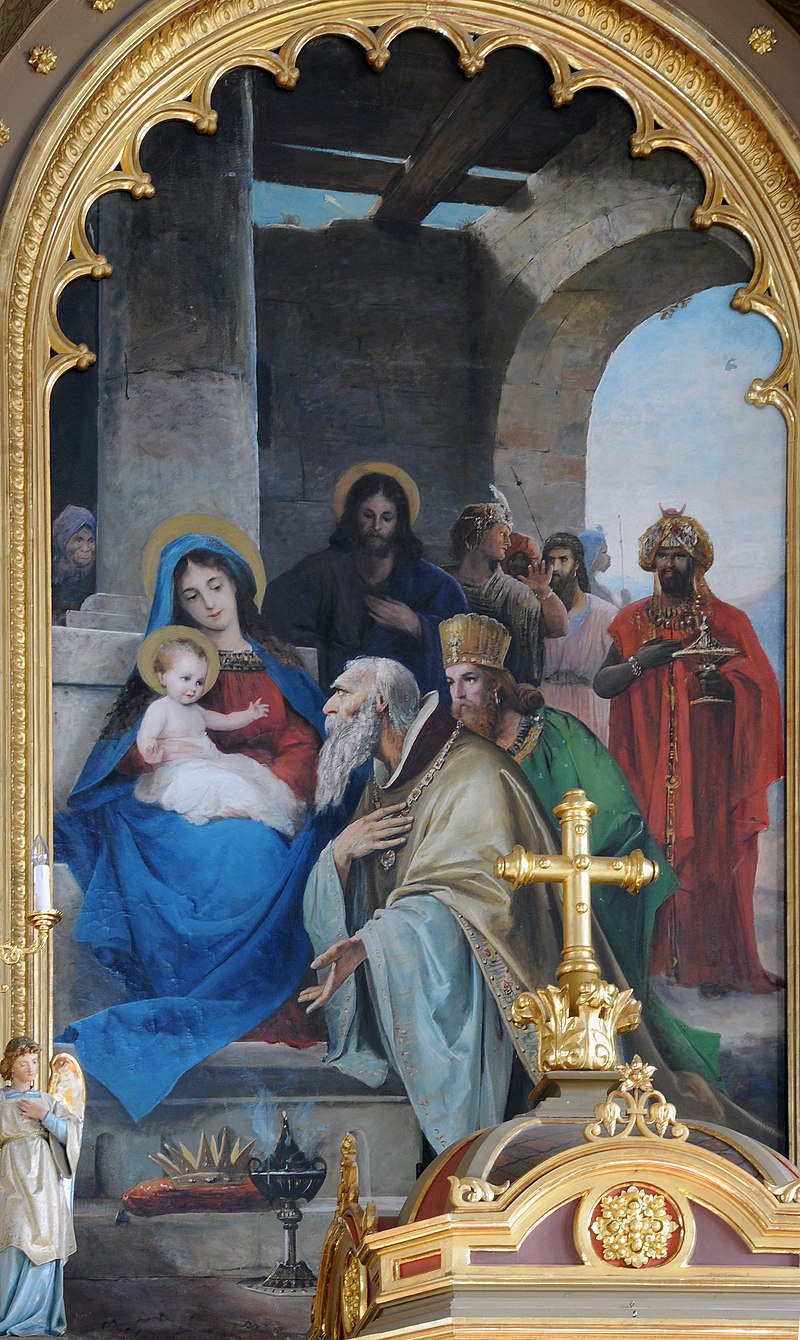
File:Lusenberg-wise-men.jpg · Wikimedia Commons · See Wikimedia Commons
January
Sign in to saveAlso known as Jan, 1. month
January is the first month of the year in the Julian and Gregorian calendars. Its length is 31 days. The first day of the month is known as New Year's Day. It is, on average, the coldest month of the year within most of the Northern Hemisphere (where it is the second month of winter) and the warmest month of the year within most of the Southern Hemisphere (where it is the second month of summer). In the Southern hemisphere, January is the seasonal equivalent of July in the Northern hemisphere and vice versa.
January is the first month of the year in both the Julian and Gregorian calendars, containing 31 days and beginning with New Year's Day. It matters because it marks the start of the calendar year and represents opposite seasons in the two hemispheres—typically the coldest month in the Northern Hemisphere and the warmest in the Southern Hemisphere.
AI-generated from the Wikipedia summary — may contain errors.
Wikidata facts
- Part of
- Swedish calendar
- Has part
- January 7
- Named after
- New Year
- Followed by
- February
- Follows
- December
- Image
- 15th-century unknown painters - Grimani Breviary - The Month of January - WGA15775.jpg
Show 13 more facts
- Commons category
- January
- topic's main category
- Category:January
- Commons gallery
- January
- name
- ledna
- time index
- 0.5
- different from
- 1st month
- topic has template
- Template:January calendar
- on focus list of Wikimedia project
- Wikipedia:Vital articles/Level/4
- short name
- Ιαν.
- NCI Thesaurus ID
- C106180
- maintained by WikiProject
- WikiProject Chronology
- category for births in this time period
- Category:People born in January
- category for deaths in this time period
- Category:People dead in January
Sources (2)
via Wikidata · CC0
~16 min read
Encyclopedic overview
10 sectionsContents
- History
- Symbols
- Observances
- Month-long
- Food months in the United States
- Non-Gregorian
- Moveable
- Fixed
- References
- External links
January is the first month of the year in the Julian and Gregorian calendars. Its length is 31 days. The first day of the month is known as New Year's Day. It is, on average, the coldest month of the year within most of the Northern Hemisphere (where it is the second month of winter) and the warmest month of the year within most of the Southern Hemisphere (where it is the second month of summer). In the Southern hemisphere, January is the seasonal equivalent of July in the Northern hemisphere and vice versa.
Ancient Roman observances during this month include Cervula and Juvenalia, celebrated January 1, as well as one of three Agonalia, celebrated January 9, and Carmentalia, celebrated January 11. These dates do not correspond to the modern Gregorian calendar.
Excerpted from Wikipedia’s “January” article, available under the CC BY-SA 4.0 licence.
Gallery (27)
Available in 282 languages
- Español
- Français
- Deutsch
- 中文
- 日本語
- Русский
- Português
- Italiano
- العربية
- हिन्दी
- Abkhazian
- Adyghe
- Afrikaans
- Akan
- Akan
- Albanian
- Albanian
- Amharic
Show 263 more
- Angika
- Aragonese
- Aramaic
- Armenian
- Arpitan
- Assamese
- Asturian
- Atikamekw
- Avaric
- Awadhi
- Aymara
- azb
- Azerbaijani
- Bahasa Indonesia
- Balinese
- Bangla
- Banjar
- Bashkir
- Basque
- bat_smg
- Batak Toba
- Bavarian
- be_x_old
- Belarusian
- Betawi
- Bhojpuri
- Bikol
- Bosnian
- Breton
- btm
- Buginese
- Bulgarian
- Buriat
- Burmese
- Catalan
- cbk_zam
- cdo
- Cebuano
- Central Kurdish
- Chamorro
- Chechen
- Cherokee
- Chuvash
- Colognian
- Cornish
- Corsican
- Crimean Tatar
- Croatian
- Czech
- dag
- Danish
- Divehi
- Egyptian Arabic
- eml
- Erzya
- Esperanto
- Estonian
- Ewe
- Extremaduran
- Faroese
- Fiji Hindi
- Fijian
- Filipino
- Finnish
- fiu_vro
- Fon
- Frafra
- Friulian
- Gagauz
- Galician
- Gan Chinese
- Ganda
- gcr
- Georgian
- Gorontalo
- Gothic
- gpe
- Greek
- Guarani
- Gujarati
- Haitian Creole
- Hakka Chinese
- Hausa
- Hawaiian
- Hebrew
- Hungarian
- hyw
- Iban
- Icelandic
- Ido
- Igbo
- Iloko
- Inari Sami
- Ingush
- Interlingua
- Interlingue
- Inuktitut
- Irish
- Jamaican Creole English
- Javanese
- Jju
- Kabyle
- Kalmyk
- Kannada
- Kara-Kalpak
- Karachay-Balkar
- Kashmiri
- Kashubian
- Kazakh
- kbp
- kge
- Khmer
- Kinyarwanda
- Komi
- Komi-Permyak
- Kongo
- Kotava
- Kurdish
- Ladino
- Lao
- Latgalian
- Latin
- Latvian
- lbe
- Lezghian
- Ligurian
- Limburgish
- Lingala
- Lithuanian
- lld
- Lojban
- Lombard
- Low German
- Lower Sorbian
- Luxembourgish
- Macedonian
- Maithili
- Malagasy
- Malay
- Malayalam
- Maltese
- Manipuri
- Manx
- Māori
- map_bms
- Marathi
- Mari
- Mazanderani
- Minangkabau
- Mingrelian
- Mirandese
- Moksha
- Mongolian
- Moroccan Arabic
- N’Ko
- nah
- nds_nl
- Neapolitan
- Nederlands
- Nepali
- Newari
- Northern Frisian
- Northern Sami
- Northern Sotho
- Norwegian
- Norwegian Nynorsk
- Novial
- nrm
- Occitan
- Odia
- Old English
- olo
- Ossetic
- Pampanga
- Papiamento
- Pashto
- Pennsylvania German
- Piedmontese
- Polski
- Pontic
- Punjabi
- Quechua
- roa_rup
- roa_tara
- Romanian
- Rusyn
- Samoan
- Sanskrit
- Santali
- Sardinian
- Scots
- Scottish Gaelic
- Serbian
- Serbian (Latin)
- Shan
- Shona
- Sicilian
- Silesian
- simple
- Sindhi
- Sinhala
- skr
- Slovak
- Slovenian
- Somali
- Southern Altai
- Standard Moroccan Tamazight
- Sundanese
- Svenska
- Swahili
- Swati
- Tachelhit
- Tajik
- Talysh
- Tamil
- Tatar
- tay
- tdd
- Telugu
- Tetum
- Tibetan
- Tiếng Việt
- Tok Pisin
- Tsonga
- Tulu
- Tumbuka
- Türkçe
- Turkmen
- Tyap
- Udmurt
- Ukrainian
- Upper Sorbian
- Urdu
- Uyghur
- Uzbek
- Venetian
- Veps
- Volapük
- Walloon
- Waray
- Wayuu
- Welsh
- West Flemish
- Western Frisian
- Western Mari
- Western Panjabi
- wikifunctions
- Wolof
- Wu Chinese
- Xhosa
- Yakut
- Yiddish
- Yoruba
- Zaza
- Zeelandic
- zh_classical
- zh_min_nan
- zh_yue
- Zhuang
- Zulu
- فارسی
- ไทย
- 한국어
via Wikidata sitelinks · CC0