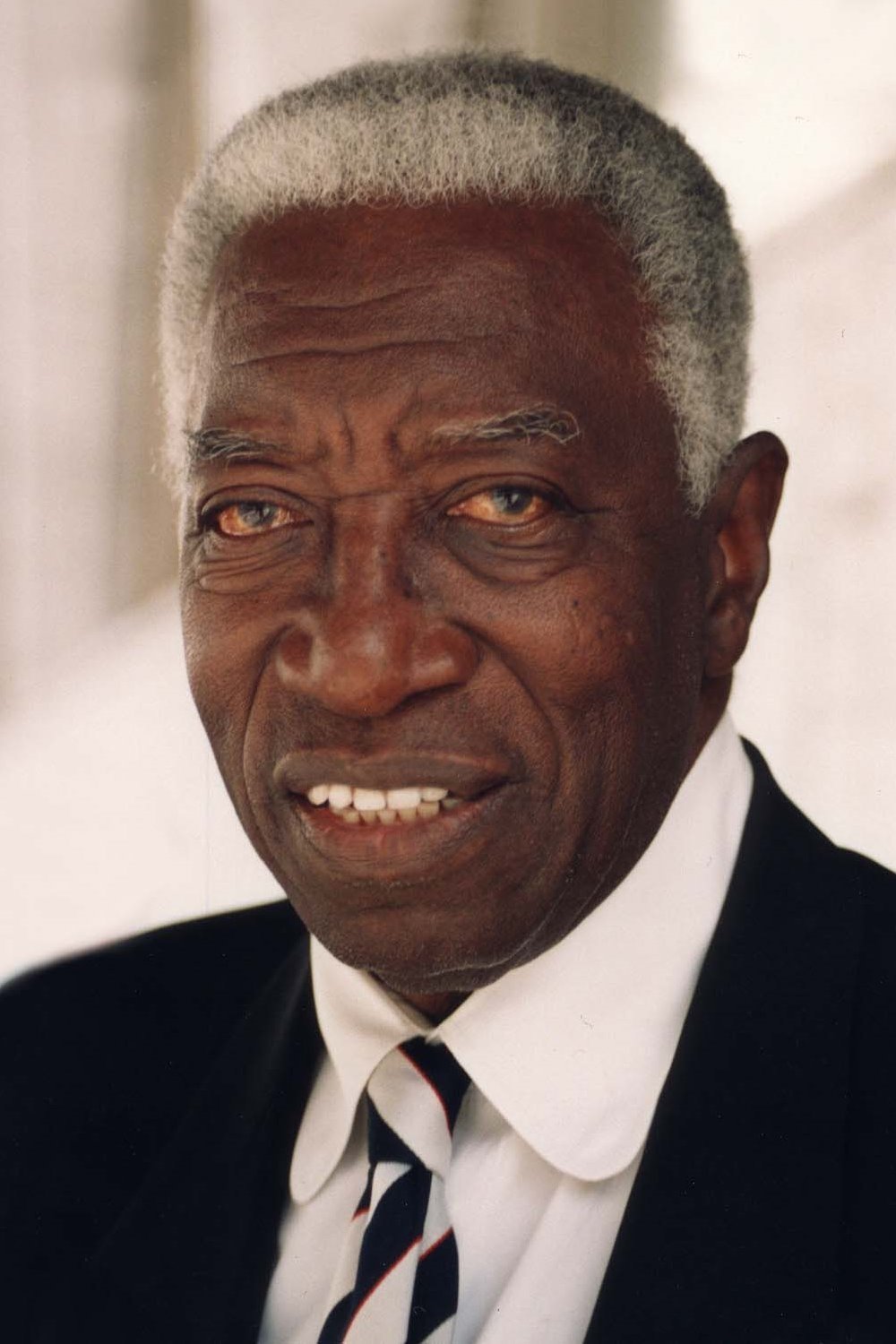
Profile via TMDB · Courtesy of TMDB
OverviewAI-generated
Joe Williams was a jazz singer whose professional career spanned from 1930 to 1998. He was born on December 12, 1918, and died on March 29, 1999, following a collapse in Las Vegas. His death was reported by the Los Angeles Times in an article titled "Jazz Singer Joe Williams Dies After Collapsing in Las Vegas."
Williams is recognized in the Hollywood Walk Of Fame collection.
Synthesized by Vinony from 9 facts across 3 sources: Wikidata, Firecrawl, Vinony collections. Generated from structured data (not the Wikipedia text) and checked against those facts — may still contain errors.
Film & TV
Cordele. Georgia, USA
Known for
- Irving Berlin's 100th Birthday Celebration — Self1988
- Sesame Street: Put Down the Duckie — Self1988
- American Masters — Self1986
- The Cosby Show — Al Hanks1984
- Petey Wheatstraw — D.J.1977
- Lou Grant1977
- Sing Sing Thanksgiving — Self1974
- The Moonshine War — Aaron1970
- The Dick Cavett Show — Self - Guest1968
- The Strolling '20s — Self1966
via TMDB
Described at

Jazz Singer Joe Williams Dies After Collapsing in Las Vegas - Los Angeles Times
Joe Williams, considered by many to be the finest jazz singer of his generation, died on a Las Vegas street after collapsing while apparently trying to walk home from a hospital.
latimes.com →Williams was found Monday afternoon a few blocks from his home after hospital personnel alerted police that he was missing. Williams’ manager, John Levy, said the singer had been in the city’s Sunrise Hospital for the last few days and was hospitalized earlier in Seattle because of breathing problems. Levy said Williams became angry, thinking hospital medication gave him the shakes, and Monday called his wife, Jillean, to take him home. Before she arrived, according to Levy, Williams “just walked out.” Levy said Williams walked about two miles from the hospital, became disoriented and “in the heat, and without an oxygen tank, he just didn’t make it.” The manager said Williams had experienced respiratory difficulty during a performance run at the Jazz Alley in Seattle about a week ago. Levy said Williams had a history of such bouts but always recovered with oxygen and other treatment. Williams’ international visibility traces back to his years with the Count Basie Orchestra from 1954 to 1961. With Basie, Williams recorded his hit, “Ev’ry Day I Have the Blues,” now a National Academy of Recording Arts & Sciences Hall of Fame recording. But Williams had been active in jazz since the late 1930s, with a CBS radio show in 1937, and a succession of performances with Jimmy Noone, Coleman Hawkins and Lionel Hampton. He toured with Andy Kirk in 1946 and ’47. Born Joseph Goreed in Cordele, Ga., on Dec. 12, 1918, Williams was raised in Chicago by his mother and grandmother. His first exposure to music came at a Methodist church where his mother was the organist. When he was 14, Williams organized a gospel quartet, the Jubilee Temple Boys of the Colored Methodist Episcopal Church, and they sang at many area churches. With his own voice transforming into a rich baritone, he began singing with bands that played for dances for black society on Chicago’s South Side. Williams’ partnership with the Basie orchestra represented one of the most perfect combinations of singer and instrumentalist in all of jazz history. And it came at a time when Williams and Basie were in need of career springboards. Basie had just reorganized his big band after working for a few years with smaller ensembles. But he was doing it at a time when big bands were on the way out, as young audiences turned to Elvis Presley and rock music. Williams, at 36, still hadn’t had the breakthrough hit to establish him as a major artist. “During a single two-day marathon, they recorded a series of blues hits that did as much for the band’s reputation as Basie had done by rescuing Williams from years of semi-obscurity. Overnight, the songs leaped . . . to the history books: ‘Ev’ry Day I Have the Blues,’ ‘The Comeback,’ ‘All Right, OK, You Win,’ ‘In the Evenin’,’ ‘Teach Me Tonight,’ and others, including Joe Turner’s ‘Roll ‘em Pete.’ Virtually all became an essential part of Williams’ repertoire with the Basie band, and later when he moved on to pursue his own career.” On his own, Williams’ singing blossomed, often via collaborations with artists such as Harry “Sweets” Edison, Julian “Cannonball” Adderley, the Thad Jones-Mel Lewis Orchestra and occasional Basie reunions. In January, he performed to rave reviews at the Cerritos Center for the Performing Arts with a frequent associate, George Shearing. Seattle Times theater critic Misha Berson described his Jazz Alley appearance as “crisp and caressing, gallant yet roguish, funky and fine.” “Joe was not just a legendary jazz artist,” said Hugh Hefner, Playboy founder, “and he was not just a gentleman. He was a gentle man, a one of a kind performer who was loved and respected by his audiences, other musicians, promoters, producers--in short, all who had the privilege of knowing and working with him.” Despite his many successes, Williams--like other African American male singers such as Al Hibbler, Billy Eckstine and Johnny Hartman--never quite managed to break through to the wider popular music audience in a fashion compara
Excerpt from a page describing this subject · 16,829 chars · not written by Vinony
Wikidata facts
- Instance of
- human
- Family name
- Williams
- Gender
- male
- Citizenship
- United States
- Place of birth
- Cordele
- Place of death
- Las Vegas
- Occupation
- singer
- Languages spoken
- English language
- Award
- NEA Jazz Masters
- Genre
- swing
- Instrument
- voice
- Record label
- Blue Note
- Image
- Joe Williams.jpg
Show 8 more facts
- start of work period
- 1930-00-00
- end of work period
- 1998-00-00
- time period
- 20th century
- date of birth
- 1918-12-12
- date of death
- 1999-03-29
- Commons category
- Joe Williams
- ethnic group
- African Americans
Sources (3)
via Wikidata · CC0
Available in 15 languages
- Español
- Français
- Deutsch
- Русский
- Português
- Italiano
- Czech
- Egyptian Arabic
- Esperanto
- Hungarian
- Macedonian
- Nederlands
- Polski
- zh_yue
via Wikidata sitelinks · CC0