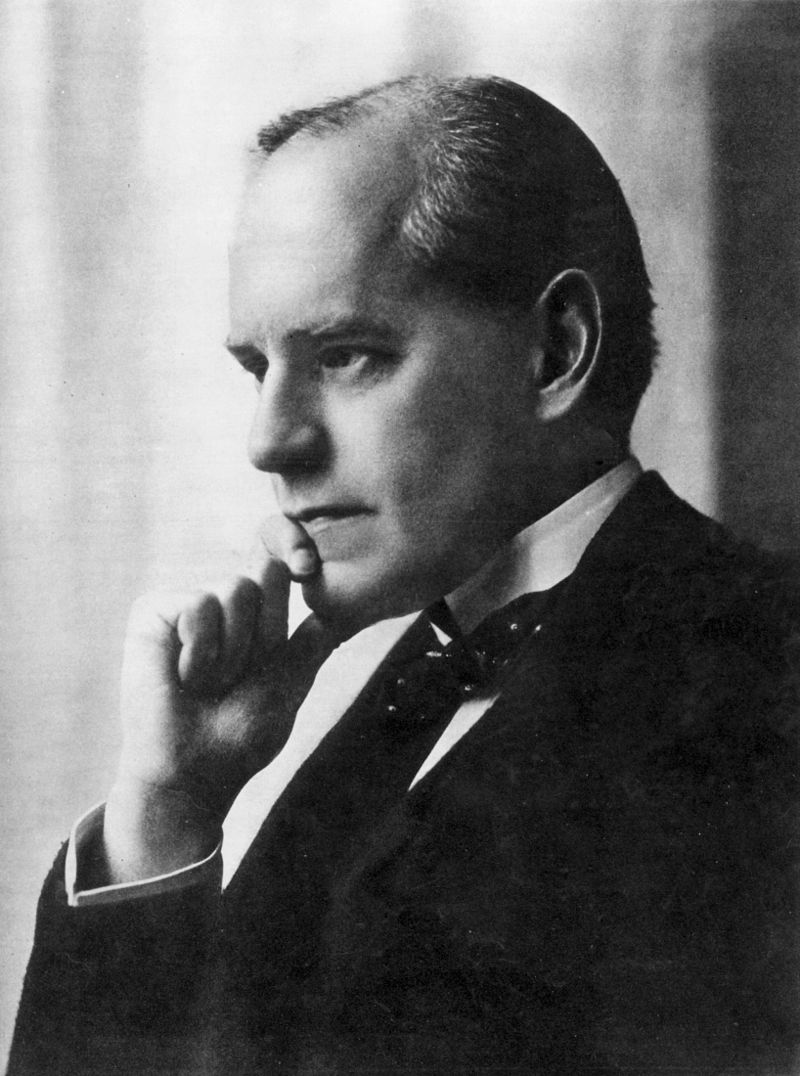
File:John_galsworthy.jpg · Wikimedia Commons · See Wikimedia Commons
OverviewAI-generated
John Galsworthy was born in 1867 and died in 1933. He wrote under the pseudonym John Sinjohn. His body of work includes 36 items.
He received the Nobel Prize in Literature once. His work is recognized in the Nobel Literature collection. It is also included in the American Academy Arts Sciences collection.
Synthesized by Vinony from 8 facts across 4 sources: Wikidata, Europeana Sparql, Nobel Prize, Vinony collections. Generated from structured data (not the Wikipedia text) and checked against those facts — may still contain errors.
Film & TV
Known for
- Island Wives — Lester1922
- School Days — Mr. Hadley1921
via TMDB
Nobel Prize
- The Nobel Prize in Literature1932
“for his distinguished art of narration which takes its highest form in The Forsyte Saga”
Wikidata facts
- Instance of
- human
- Given name
- John
- Gender
- male
- Citizenship
- United Kingdom of Great Britain and Ireland
- Place of birth
- London
- Place of death
- London
- Occupation
- prose writer
- Position held
- president
- Educated at
- New College
- Languages spoken
- English language
- Field of work
- prose
- Image
- Photo Portrait of the British writer John Galsworthy correcting a manuscript 1930 - Touring Club Italiano 11 5336.jpg
Show 15 more facts
- Commons category
- John Galsworthy
- date of birth
- 1867-00-00
- date of death
- 1933-01-31
- topic's main category
- Category:John Galsworthy
- manner of death
- natural causes
- nominated for
- Nobel Prize in Literature
- pseudonym
- John Sinjohn
- place of burial
- Highgate Cemetery
- writing language
- English language
- Commons Creator page
- John Galsworthy
- ethnic group
- English people
- has written for
- The Atlantic
- has works in the collection
- Anne Frank House
Sources (7)
via Wikidata · CC0
Works in European collections
36 objects attributed to John Galsworthy, held across European museums, libraries & archives · via Europeana
Letter from John Galsworthy and Unknown of PEN & lt; London & gt; to Gerhart Hauptmann
Letter from John Galsworthy and Unknown to Gerhart Hauptmann
Letter from John Galsworthy and Unknown of P.E.N. Club & lt; London & gt; to Gerhart Hauptmann.
Letter from John Galsworthy to Gerhart Hauptmann
Letter from John Galsworthy to Gerhart Hauptmann
Letter from John Galsworthy of P.E.N. Club & lt; London & gt; to Gerhart Hauptmann.
Letter from John Galsworthy to Gerhart Hauptmann
Letter from John Galsworthy to Gerhart Hauptmann
Untitled
Untitled
Untitled
Untitled
Untitled
Untitled
Untitled
Untitled
Untitled
Untitled
Untitled
Untitled
Untitled
Untitled
Untitled
Untitled
Untitled
Untitled
Untitled
Untitled
Untitled
Untitled
Untitled
Untitled
Untitled
Untitled
Untitled
Untitled
~40 min read
Encyclopedic overview
John Galsworthy (/ˈɡɔːlzwɜːrði/; 14 August 1867 – 31 January 1933) was an English novelist and playwright. He is best known for his trilogy of novels collectively called The Forsyte Saga (1906, 1920, 1921), and two later trilogies, A Modern Comedy and End of the Chapter. He was awarded the 1932 Nobel Prize in Literature.
Born to a prosperous upper-middle-class family, Galsworthy was destined for a career as a lawyer, but found it uncongenial and turned instead to writing. He was thirty before his first book was published in 1897, and did not achieve real success until 1906, when The Man of Property, the first of his novels about the Forsyte family was published. In the same year his first play, The Silver Box was staged in London. As a dramatist, he became known for plays with a social message, reflecting, among other themes, the struggle of workers against exploitation, the use of solitary confinement in prisons, the repression of women, jingoism and the politics and morality of war.
Excerpted from Wikipedia’s “John Galsworthy” article, available under the CC BY-SA 4.0 licence.
Gallery (12)
Available in 89 languages
- Español
- Français
- Deutsch
- 中文
- 日本語
- Русский
- Português
- Italiano
- العربية
- हिन्दी
- Afrikaans
- Albanian
- Aragonese
- Armenian
- azb
- Azerbaijani
- Bahasa Indonesia
- Bangla
Show 70 more
- Basque
- be_x_old
- Belarusian
- Bulgarian
- Burmese
- Catalan
- Croatian
- Czech
- Danish
- Egyptian Arabic
- Esperanto
- Estonian
- Finnish
- Galician
- Georgian
- Greek
- Hakka Chinese
- Hebrew
- Hungarian
- Icelandic
- Ido
- Iloko
- Irish
- Kannada
- Kazakh
- Kotava
- Kurdish
- Kyrgyz
- Latin
- Latvian
- Lingua Franca Nova
- Macedonian
- Malay
- Malayalam
- Mazanderani
- Mingrelian
- Nederlands
- Norwegian
- Norwegian Nynorsk
- Occitan
- Polski
- Punjabi
- Romanian
- Scots
- Scottish Gaelic
- Serbian
- Serbian (Latin)
- simple
- Slovak
- Svenska
- Swahili
- Tajik
- Tamil
- Tatar
- Tiếng Việt
- Türkçe
- Ukrainian
- Urdu
- Uzbek
- Waray
- Welsh
- Western Panjabi
- Wu Chinese
- Yoruba
- Zaza
- zh_min_nan
- zh_yue
- فارسی
- ไทย
- 한국어
via Wikidata sitelinks · CC0