
File:John_William_Draper.jpg · Wikimedia Commons · See Wikimedia Commons
John William Draper
Sign in to saveAlso known as John Wm. Draper, John W. Draper
British-American academic (1811-1882)
Key facts
- Born
- ( 1811-05-05 ) May 5, 1811, St. Helens , Lancashire, England, United Kingdom
- Died
- January 4, 1882 (1882-01-04) (aged 70), Hastings-on-Hudson , New York, United States
- Alma mater
- University College London , University of Pennsylvania
- Known for
- Photochemistry , Draper point , Grotthuss–Draper law
- Awards
- Rumford Medal (1875)
via Wikipedia infobox
Wikidata facts
- Instance of
- human
- Given name
- John
- Gender
- male
- Citizenship
- United States
- Place of birth
- St Helens
- Place of death
- Hastings-on-Hudson
- Occupation
- physiologist
- Educated at
- University College London
- Employer
- New York University
- Languages spoken
- English language
- Award
- Rumford Prize
- Image
- John William Draper.jpg
- Work location
- New York City
Show 10 more facts
- writing language
- English language
- Commons category
- John William Draper
- date of birth
- 1811-00-00
- described by source
- The Nuttall Encyclopædia
- date of death
- 1882-00-00
- place of burial
- Green-Wood Cemetery
- Commons Creator page
- John William Draper
- name in native language
- John William Draper
- floruit
- 1840-01-01
- contributed to creative work
- Popular Science
Sources (2)
via Wikidata · CC0
Works in European collections
15 objects attributed to John William Draper, held across European museums, libraries & archives · via Europeana



~14 min read
Encyclopedic overview
John William Draper (May 5, 1811 – January 4, 1882) was an English polymath: a scientist, philosopher, physician, chemist, historian and photographer. He is credited with pioneering portrait photography (1839–40) and producing the first detailed photograph of the moon in 1840. He was also the first president of the American Chemical Society (1876–77) and a founder of the New York University School of Medicine.
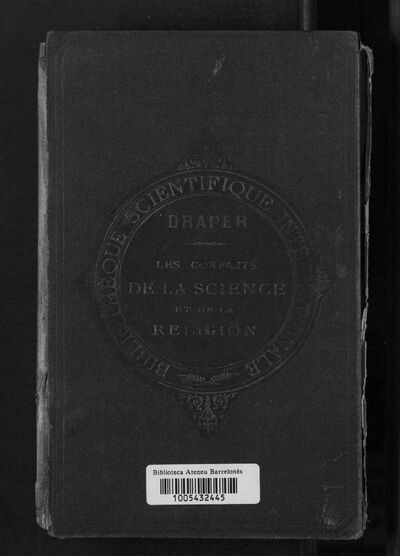
One of Draper's books, the History of the Conflict between Religion and Science, popularised the conflict thesis proposing intrinsic hostility in the relationship between religion and science. It was widely read and was translated into several languages. It makes minimal use of primary sources and is now recognized as thoroughly inaccurate .
Excerpted from Wikipedia’s “John William Draper” article, available under the CC BY-SA 4.0 licence.