
Joseph Stalin
Sign in to saveAlso known as Ioseb Besarionis dze Dzhugashvili, Stalin, Josef Stalin, Joseph Vissarionovich Stalin, Joseph Vissarionovitch Stalin, Koba, Iosif Vissarionovich Dzhugashvili, Joey Stalin
Joseph Vissarionovich Stalin was a Soviet revolutionary and politician who led the Soviet Union from 1924 until his death in 1953. He held office as general secretary of the Communist Party from 1922 to 1952 and as premier from 1941 until his death. Despite initially governing the country as part of a collective leadership, he eventually consolidated power to become a dictator by the 1930s. Stalin codified the Communist Party's official interpretation of Marxism as Marxism–Leninism, and his version of it is referred to as Stalinism.
OverviewAI-generated
Joseph Stalin was a politician, revolutionary, and statesperson who was a member of the Communist Party of the Soviet Union and other socialist factions. He was educated at the Tbilisi Theological Seminary and worked in Saint Petersburg and Moscow. His political affiliations included the Russian Social Democratic Labour Party and the Russian Social Democratic Labour Party (bolshevik). He was a member of the Council of Ministers of the USSR, the All-Russian Central Executive Committee, and the Council of People's Commissars. He was also a member of the Russian Academy of Sciences.
Born in Gori in 1878, he held citizenship in the Russian Empire, the Russian Socialist Federative Soviet Republic, the Soviet Union, and Russia. His native language was Georgian, and he also spoke Russian. He used the pseudonyms Сталин, Staline, and Koba. His notable works include *Anarkhizm ili sotsializm?*, *Probleme des Leninismus*, and *On the draft constitution of the U.S.S.R.* He was married to Ekaterina Svanidze and Nadezhda Alliluyeva and had children Yakov Dzhugashvili, Konstantin Kuzakov, Vasily Dzhugashvili, and Artem Sergeev.
Stalin died on 5 March 1953 at Kuntsevo Dacha. He is buried in Lenin's Mausoleum and the Kremlin Wall Necropolis. He was associated with the movement of Marxism–Leninism. His father was Besarion Jughashvili and his mother was Keke Geladze. He is described by the Granat Encyclopedic Dictionary.
Synthesized by Vinony from 38 facts across 4 sources: Wikidata, Open Library, Firecrawl, VIAF. Generated from structured data (not the Wikipedia text) and checked against those facts — may still contain errors.
Person · Open Library
- Born
- 18 December [O.S. 6 December] 1878
- Died
- 5 March 1953
- Works
- 725
Top works
- 論列寧主義基礎
- O zadachakh khozi︠a︡ĭstvennikov
- Neizvestnyĭ Stalin
- Rechi na predvybornykh sobranii︠a︡kh izbirateleĭ Stalinskogo izbiratelńogo okruga g. Moskvy 11 dekabri︠a︡ 1937 g. i 9 fevrali︠a︡ 1946 g.
- Rossiĭskai︠a︡ sotsial-demokraticheskai︠a︡ partii︠a︡ i ee blizhaĭshie zadachi
via Open Library + Wikidata
Film & TV
Gori, Caucasus, Russian Empire [now Georgia]
Iosif Vissarionovich Stalin (real name Dzhugashvili) was born in Gori, Tiflis province, Russian Empire - a Soviet political, statesman, military and party figure, a Russian revolutionary. Actual leader of the USSR. General Secretary of the Central Committee of the CPSU (1922-1953). Marshal of the Soviet Union (1943), Generalissimo of the Soviet Union (1945). People's Commissar of Defense of the…
Known for
- A State Film — Self (archive footage)2026
- Our Man with the Enemy — Self (archive footage)2026
- Orwell: 2+2=5 — Self (archive footage)2025
- L'Unità. Storia di un archivio — Archive footage2025
- The Mummy — Self (archive footage)2025
- The Bloody Hundredth — Self (archive footage)2024
- A Nation Denied: Ukraine's Battle for History — Self (archive footage)2024
- Russia, China, Iran: The Axis of Revenge — Self (archive footage)2024
- Trouble in the Barbary — as self (Archive footage)2024
- USSR (1917-1991) — Self (archive footage)2024
via TMDB
Authority record · VIAF
- Lifespan
- 1879–1953
- Nationality
- RU, GE, SU, RUS, GEO
- Role / Field
- Virsnieks, Valstsvirs, Revolutionnaires, Revolucionars, Politycy, Valstu vaditaji padomju savieniba
- Language
- rus, geo
- Gender
- Male
Recorded by 46 libraries
via VIAF · OCLC
Wikipedia views (30d)
367,504 totalvia Wikimedia Pageviews API
Described at
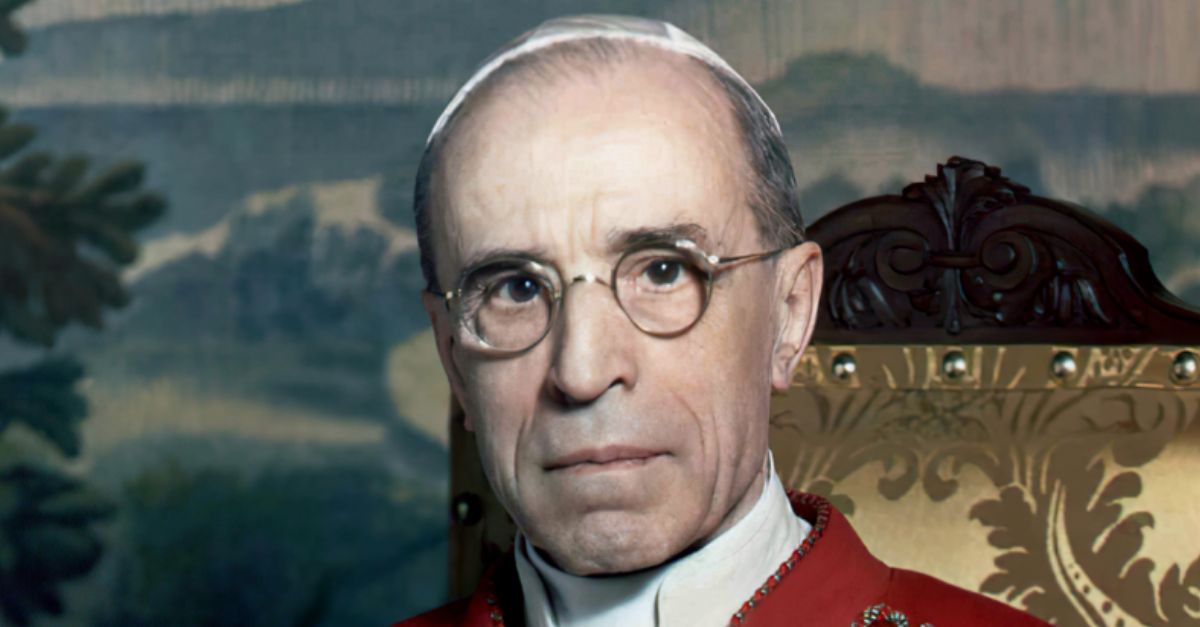
Historical Figures Who Kept Their True Evil Hidden From The World
History often cloaked its villains in garments of greatness, only for time to strip away the illusion and reveal what truly lay beneath. Many figures celebrated as heroes or visionaries left behind a far darker imprint than their admirers ever suspected.
factinate.com →Link to a page describing this subject · 40,000 chars · not written by Vinony
Wikidata facts
- Instance of
- human
- Named after
- Joseph
- Gender
- male
- Citizenship
- Russia
- Place of birth
- Gori
- Place of death
- Kuntsevo Dacha
- Spouse
- Nadezhda Alliluyeva
- Child
- Svetlana Alliluyeva
- Father
- Besarion Jughashvili
- Mother
- Keke Geladze
- Occupation
- official
- Employer
- organ of state
- Political party
- Russian Social Democratic Labour Party (bolshevik)
- Languages spoken
- Russian
- Native language
- Georgian
- Participant in
- 13th Congress of the Russian Communist Party
- Field of work
- opinion journalist
- Hair colour
- brown hair
- Movement
- Marxism–Leninism
- Conflict
- Korean War
- Military branch
- Red Army
- Military rank
- Generalissimus of the Soviet Union
- Image
- Joseph Stalin in 1932 (4) (cropped)(2).jpg
Show 33 more facts
- Height
- 163
- Work location
- Moscow
- Residence
- Moscow
- Political ideology
- Stalinism
- Commons category
- Joseph Stalin
- date of birth
- 1871-12-21
- date of death
- 1953-03-05
- topic's main category
- Category:Joseph Stalin
- place of burial
- Kremlin Wall Necropolis
- member of
- Orgburo
- pseudonym
- Koba
- manner of death
- homicide
- Commons gallery
- Joseph Vissarionovich Stalin
- nominated for
- Nobel Peace Prize
- name in native language
- Иосиф Виссарионович Джугашвили
- influenced by
- Vladimir Lenin
- nickname
- Uncle Joe
- commander of (DEPRECATED)
- State Defense Committee
- birth name
- იოსებ ბესარიონის ძე ჯუღაშვილი
- on focus list of Wikimedia project
- Wikipedia:Vital articles/Level/4
- allegiance
- Soviet Union
- vehicle normally used
- ZIS-115
- start of work period
- 1895-00-00
- facial hair
- walrus moustache
- cause of death
- cerebral hemorrhage
- has works in the collection
- NIOD Institute for War, Holocaust and Genocide Studies
- writing language
- Russian
- partner in business or sport
- Franklin D. Roosevelt
- significant person
- Vladimir Lenin
- P12749
- Gestel
- end of work period
- 1953-00-00
- described at URL
- www.factinate.com/history/when-these-historical-figures-were-alive-history-adored-them-time-exposed-their-darkness
- hashtag
- joseph_stalin
Sources (14)
via Wikidata · CC0
~40 min read
Encyclopedic overview
Joseph Vissarionovich Stalin (né Dzhugashvili; 18 December [O.S. 6 December] 1878 – 5 March 1953) was a Soviet revolutionary and politician who led the Soviet Union from 1924 until his death in 1953. He held office as the General Secretary of the Communist Party from 1922 to 1952 and as the premier from 1941 until his death. Despite initially governing the country as part of a collective leadership, he eventually consolidated power to become a dictator by the 1930s. Stalin codified the Communist Party's official interpretation of Marxism as Marxism–Leninism, and his version of it is referred to as Stalinism.
Born into a poor Georgian family in Gori, Russian Empire, Stalin attended the Tiflis Theological Seminary before joining the Marxist Russian Social Democratic Labour Party. He raised funds for Vladimir Lenin's Bolshevik faction through bank robberies and other crimes, and edited the party's newspaper, Pravda. He was repeatedly arrested and underwent several exiles to Siberia. After the Bolsheviks seized power in the October Revolution of 1917, Stalin served as a member of the Politburo and, from 1922, used his position as the General Secretary to gain control over the party bureaucracy.
Excerpted from Wikipedia’s “Joseph Stalin” article, available under the CC BY-SA 4.0 licence.
Gallery (14)
Available in 208 languages
- Español
- Français
- Deutsch
- 中文
- 日本語
- Русский
- Português
- Italiano
- العربية
- हिन्दी
- Abkhazian
- Adyghe
- Afrikaans
- Albanian
- Albanian
- Amharic
- Angika
- Aragonese
Show 189 more
- Aramaic
- Armenian
- Assamese
- Asturian
- Awadhi
- Aymara
- azb
- Azerbaijani
- Bahasa Indonesia
- Balinese
- Bangla
- Bashkir
- Basque
- bat_smg
- Bavarian
- be_x_old
- Belarusian
- Bhojpuri
- Bikol
- Bosnian
- Breton
- btm
- Bulgarian
- Buriat
- Burmese
- Catalan
- cbk_zam
- cdo
- Cebuano
- Central Kurdish
- Chechen
- Chuvash
- Cornish
- Corsican
- Crimean Tatar
- Croatian
- Czech
- Danish
- Egyptian Arabic
- eml
- Esperanto
- Estonian
- Extremaduran
- Faroese
- Fiji Hindi
- Filipino
- Finnish
- fiu_vro
- Friulian
- Galician
- Gan Chinese
- gcr
- Georgian
- Goan Konkani
- Greek
- Guarani
- Gujarati
- Haitian Creole
- Hakka Chinese
- Hausa
- Hebrew
- Hungarian
- hyw
- Iban
- Icelandic
- Ido
- Igbo
- Iloko
- Interlingua
- Irish
- Jamaican Creole English
- Javanese
- Kabyle
- Kannada
- Kanuri
- Kara-Kalpak
- Kashmiri
- Kashubian
- Kazakh
- kbp
- Khmer
- Komi
- Kotava
- Kurdish
- Kyrgyz
- Ladino
- Lao
- Latin
- Latvian
- Lezghian
- Limburgish
- Lingua Franca Nova
- Lithuanian
- Lojban
- Lombard
- Low German
- Lower Sorbian
- Luxembourgish
- Macedonian
- Madurese
- Maithili
- Malagasy
- Malay
- Malayalam
- Maltese
- Manx
- Marathi
- Mazanderani
- Mingrelian
- Mirandese
- Moksha
- Mongolian
- Moroccan Arabic
- N’Ko
- nah
- nds_nl
- Neapolitan
- Nederlands
- Nepali
- Newari
- Northern Frisian
- Norwegian
- Norwegian Nynorsk
- Occitan
- Old English
- olo
- Ossetic
- Papiamento
- Pashto
- Piedmontese
- Polski
- Punjabi
- Quechua
- Romanian
- Rusyn
- Sanskrit
- Santali
- Sardinian
- Scots
- Scottish Gaelic
- Serbian
- Serbian (Latin)
- Sicilian
- Silesian
- simple
- Sindhi
- Sinhala
- Slovak
- Slovenian
- Somali
- Southern Sotho
- Svenska
- Swahili
- szy
- Tajik
- Talysh
- Tamil
- Tatar
- Telugu
- Tiếng Việt
- Toki Pona
- Türkçe
- Tuvinian
- Ukrainian
- Upper Sorbian
- Urdu
- Uyghur
- Uzbek
- Venetian
- Veps
- Volapük
- Walloon
- Waray
- Welsh
- Western Frisian
- Western Panjabi
- Wu Chinese
- Yakut
- Yiddish
- Yoruba
- Zaza
- zh_classical
- zh_min_nan
- zh_yue
- Zhuang
- Zulu
- فارسی
- ไทย
- 한국어
via Wikidata sitelinks · CC0