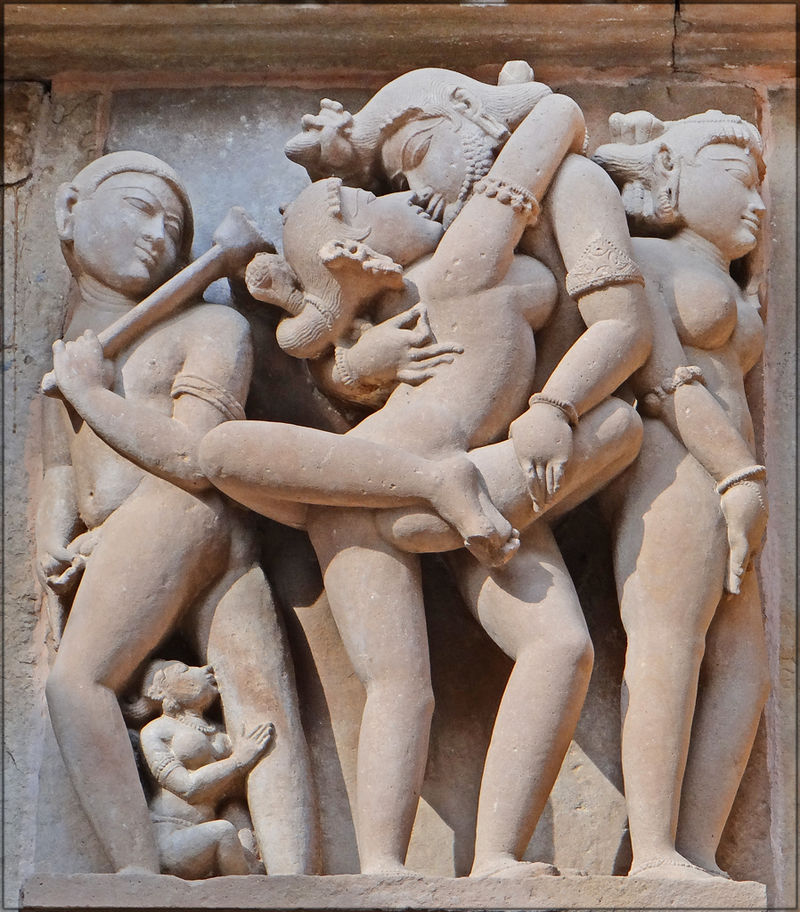
File:2_Erotic_Kama_statues_of_Khajuraho_Hindu_Temple_de_Lakshmana_Khajurâho_India_2013.jpg · Wikimedia Commons · See Wikimedia Commons
Kama
Sign in to saveKama (Sanskrit: काम, ) is the concept of pleasure, enjoyment and desire in Hinduism, Buddhism, Jainism, and Sikhism. It can also refer to "desire, wish, longing" in Hindu, Buddhist, Jain, and Sikh literature. However, the term is also used in a technical sense to refer to any sensory enjoyment, emotional attraction or aesthetic pleasure experienced in connection with the arts, dance, music, painting, sculpture, and nature.
Wikidata facts
Sources (1)
via Wikidata · CC0
~16 min read
Encyclopedic overview
15 sectionsContents
- Definition in Hinduism
- Importance of kama in Hinduism
- Relative precedence among artha and dharma
- Necessity for existence
- Holistic
- Stages of life
- Deity
- In Buddhism
- Kama in Buddhist cosmology
- Kama in Buddhist doctrine
- Kama in monastic law and precepts
- See also
- References
- Sources
- External links
Kama (Sanskrit: काम, ) is the concept of pleasure, enjoyment and desire in Hinduism, Buddhism, Jainism, and Sikhism. It can also refer to "desire, wish, longing" in Hindu, Buddhist, Jain, and Sikh literature. However, the term is also used in a technical sense to refer to any sensory enjoyment, emotional attraction or aesthetic pleasure experienced in connection with the arts, dance, music, painting, sculpture, and nature.
In contemporary literature kama is often used to connote sexual desire and emotional longing, but the ancient concept is more expansive, and broadly refers to any desire, wish, passion, pleasure, or enjoyment of art and beauty, the aesthetic, enjoyment of life, affection, love and connection, and enjoyment of love with or without sexual connotations.
Excerpted from Wikipedia’s “Kama” article, available under the CC BY-SA 4.0 licence.