Encyclopedia of Life · EOL (see source)
Labeobarbus
Sign in to saveAlso known as yellowfish
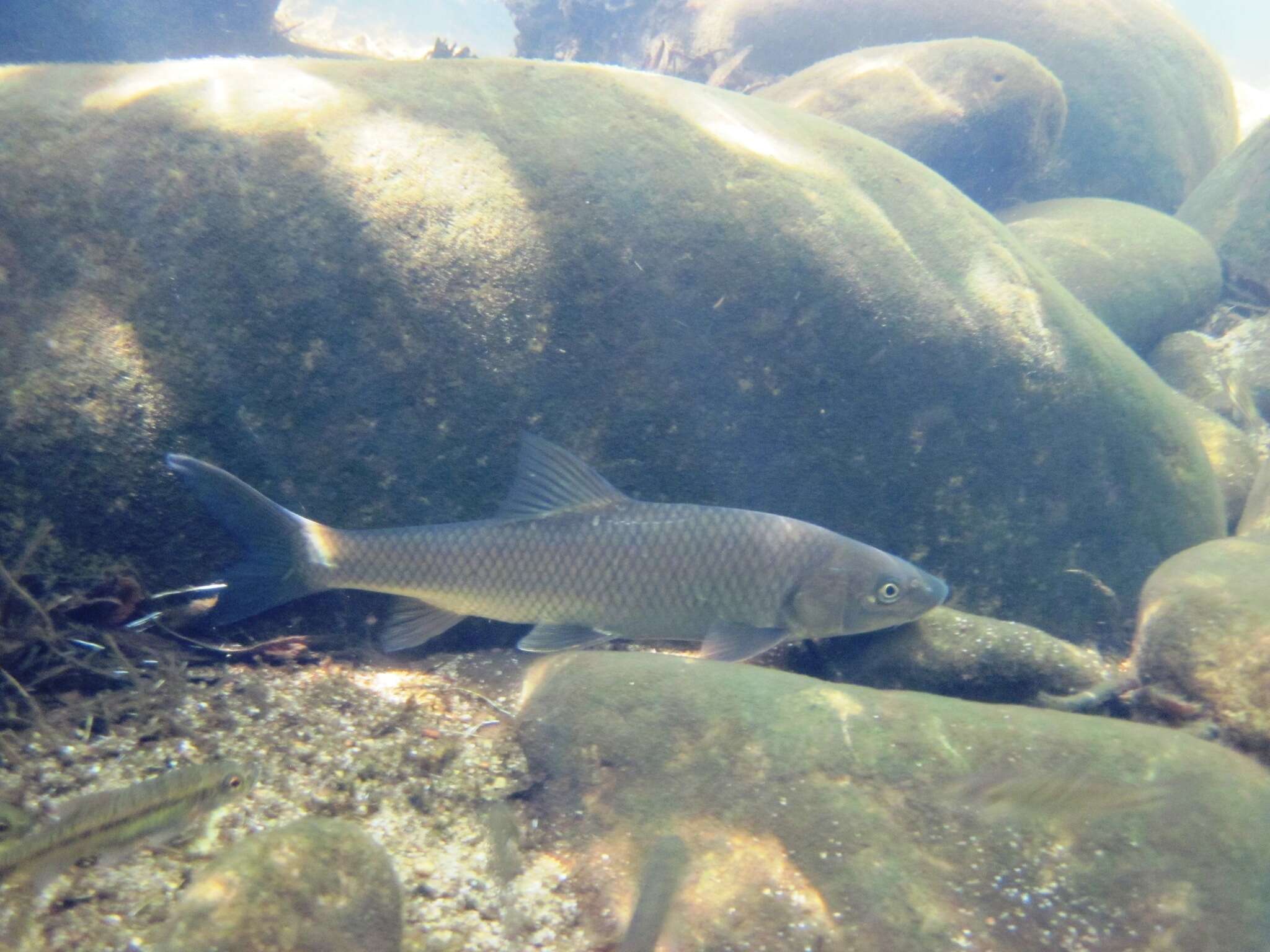
Labeobarbus is a mid-sized ray-finned fish genus in the family Cyprinidae. Its species are widely distributed throughout eastern Africa and especially southern Africa, but also in Lake Tana in Ethiopia. A common name, in particular for the southern species, is yellowfish. The scientific name refers to the fact that these large barbs recall the fairly closely related "carps" in the genus Labeo in size and shape. As far as can be told, all Labeobarbus species are hexaploid. One species, L. microbarbis from Rwanda, is known to have gone extinct in recent times.
Species
GENUS
- KingdomAnimalia
- PhylumChordata
- ClassTeleostei
- OrderCypriniformes
- FamilyCyprinidae
Labeobarbus is een geslacht van straalvinnige vissen uit de familie van eigenlijke karpers (Cyprinidae).
via GBIF
Museum specimens
- Specimen records
- 111
- Family
- Cyprinidae
- Collections
- CAS, CUMV
- Recorded in
- Malaysia, Gabon, Congo, The Democratic Republic Of The, Tanzania, Congo, Cameroon, Thailand
Wikidata facts
- Instance of
- taxon
- Parent taxon
- Labeoninae
- Image
- Labeobarbus capensis.jpg
Show 4 more facts
- taxon rank
- genus
- Commons category
- Labeobarbus
- taxon name
- Labeobarbus
- topic's main category
- Category:Labeobarbus
Sources (1)
via Wikidata · CC0
~8 min read
Encyclopedic overview
4 sectionsContents
- Systematics
- Species
- Footnotes
- References
Labeobarbus is a mid-sized ray-finned fish genus in the family Cyprinidae. Its species are widely distributed throughout eastern Africa and especially southern Africa, but also in Lake Tana in Ethiopia. A common name, in particular for the southern species, is yellowfish. The scientific name refers to the fact that these large barbs recall the fairly closely related "carps" in the genus Labeo in size and shape. As far as can be told, all Labeobarbus species are hexaploid. One species, L. microbarbis from Rwanda, is known to have gone extinct in recent times.
== Systematics == Like many other "barbs", it was long included in Barbus. It appears to be a fairly close relative of the typical barbels and relatives – the genus Barbus proper – but closer still to the large Near Eastern species nowadays separated in Carasobarbus. Barbus has been split to account for the improved phylogenetic knowledge which indicated it was highly paraphyletic in its wide circumscription; it may be that Carasobarbus and some other closely related "barbs" (e.g. Labeobarbus reinii) are now included in Labeobarbus to avoid a profusion of very small genera.
Excerpted from Wikipedia’s “Labeobarbus” article, available under the CC BY-SA 4.0 licence.
Available in 16 languages
- Español
- Français
- Deutsch
- 中文
- Afrikaans
- Bahasa Indonesia
- Catalan
- Cebuano
- Nederlands
- Polski
- Sundanese
- Svenska
- Tiếng Việt
- Türkçe
- Waray
via Wikidata sitelinks · CC0