File:Gay_Pride_Flag.svg · Wikimedia Commons · See Wikimedia Commons
LGBTQ pride flag
Sign in to saveAlso known as LGBT flag, gay flag, gay pride flag, pride flag, rainbow flag, LGBTQ flag, 🏳️🌈
symbol of LGBT movement
Key facts
- Use
- Association with the LGBTQ community
- Design
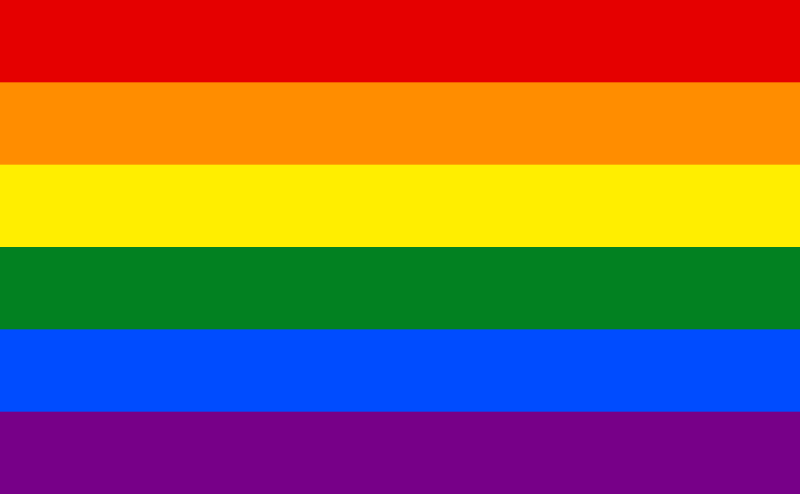
- Striped flag, typically six colors (from top to bottom): red, orange, yellow, green, blue, and violet.
- Designed by
- Gilbert Baker
via Wikipedia infobox
Wikidata facts
- Subclass of
- pride flag
- Designed by
- Gilbert Baker
- Image
- Gay Pride Flag.svg
Show 7 more facts
- Commons gallery
- Rainbow flag
- Unicode character
- 🏳️🌈
- inception
- 1978-00-00
- Commons category
- LGBT pride flags
- color
- purple
- different from
- Rainbow flag
- represents
- LGBTQ movements
Sources (3)
via Wikidata · CC0
~32 min read
Encyclopedic overview
The rainbow flag is a symbol of lesbian, gay, bisexual, transgender, and queer (LGBTQ) pride and LGBTQ movements in use since the 1970s.
The rainbow flag or pride flag (formerly gay pride flag) is a symbol of LGBTQ pride and LGBTQ social movements, as well as a peace symbol. The colors reflect the diversity of the LGBTQ community and the spectrum of human sexuality and gender. Using a rainbow flag as a symbol of LGBTQ pride began in San Francisco, California and subsequently became common at LGBTQ rights events worldwide.
Excerpted from Wikipedia’s “LGBTQ pride flag” article, available under the CC BY-SA 4.0 licence.