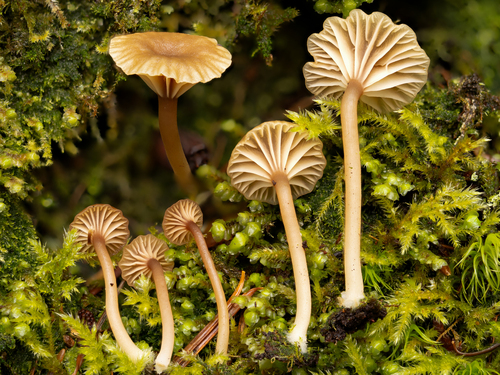
(c) Matthew Gilbert Koons, some rights reserved (CC BY-ND), uploaded by Matthew Gilbert Koons · cc-by-nd
Lichenomphalia
Sign in to saveLichenomphalia is both a basidiolichen and an agaric genus. Most of the species have inconspicuous lichenized thalli that consist of scattered, small, loose, nearly microscopic green balls or foliose small flakes containing single-celled green algae in the genus Coccomyxa, all interconnected by a loose network of hyphae. The agaric fruit bodies themselves are nonlichenized and resemble other types of omphalinoid mushrooms. These agarics lack clamp connections and do not form hymenial cystidia. The basidiospores are hyaline, smooth, thin-walled, and nonamyloid. Most of the species were original
Species
Lichen Agaric
GENUS
- KingdomFungi
- PhylumBasidiomycota
- ClassAgaricomycetes
- OrderAgaricales
- FamilyHygrophoraceae
Лихеномфа́лия (лат. Lichenomphalia) — род лихенизированных грибов-базидиомицетов из семейства Гигрофоровых (Hygrophoraceae). Фитобионты — водоросли из рода Coccomyxa.
via GBIF
Museum specimens
- Specimen records
- 501
- With media
- 22
- Family
- Hygrophoraceae
- Collections
- MEL, COLO, O, TROM, DUKE, DBG
- Recorded in
- Australia, United States, Norway, France
Wikidata facts
- Instance of
- taxon
- Parent taxon
- Hygrophoraceae
- Image
- Lichenomphalia umbellifera - Lindsey 1a.jpg
Show 6 more facts
- Commons category
- Lichenomphalia
- taxon rank
- genus
- taxon name
- Lichenomphalia
- topic's main category
- Category:Lichenomphalia
- taxonomic type
- Lichenomphalia hudsoniana
- taxon author citation
- Lutzoni, Redhead, Moncalvo & Vilgalys
via Wikidata · CC0
~5 min read
Encyclopedic overview
7 sectionsContents
- Etymology
- Thallus names and nomenclature
- Photobionts
- Species
- See also
- References
- External links
Lichenomphalia is both a basidiolichen and an agaric genus. Most of the species have inconspicuous lichenized thalli that consist of scattered, small, loose, nearly microscopic green balls or foliose small flakes containing single-celled green algae in the genus Coccomyxa, all interconnected by a loose network of hyphae. The agaric fruit bodies themselves are nonlichenized and resemble other types of omphalinoid mushrooms. These agarics lack clamp connections and do not form hymenial cystidia. The basidiospores are hyaline, smooth, thin-walled, and nonamyloid. Most of the species were originally classified in the genera Omphalina or Gerronema. Historically the species were classified with those other genera in the family, the Tricholomataceae together with the nonlichenized species. Lichenomphalia species can be grouped into brightly colored taxa, with vivid yellow and orange colors, versus the grey brown group, depending upon the microscopic pigmentation deposits. Molecular research comparing DNA sequences now place Lichenomphalia close to the redefined genus Arrhenia, which together with several other genera not traditionally considered to be related, fall within the newly redefined Hygrophoraceae.
==Etymology==
Excerpted from Wikipedia’s “Lichenomphalia” article, available under the CC BY-SA 4.0 licence.