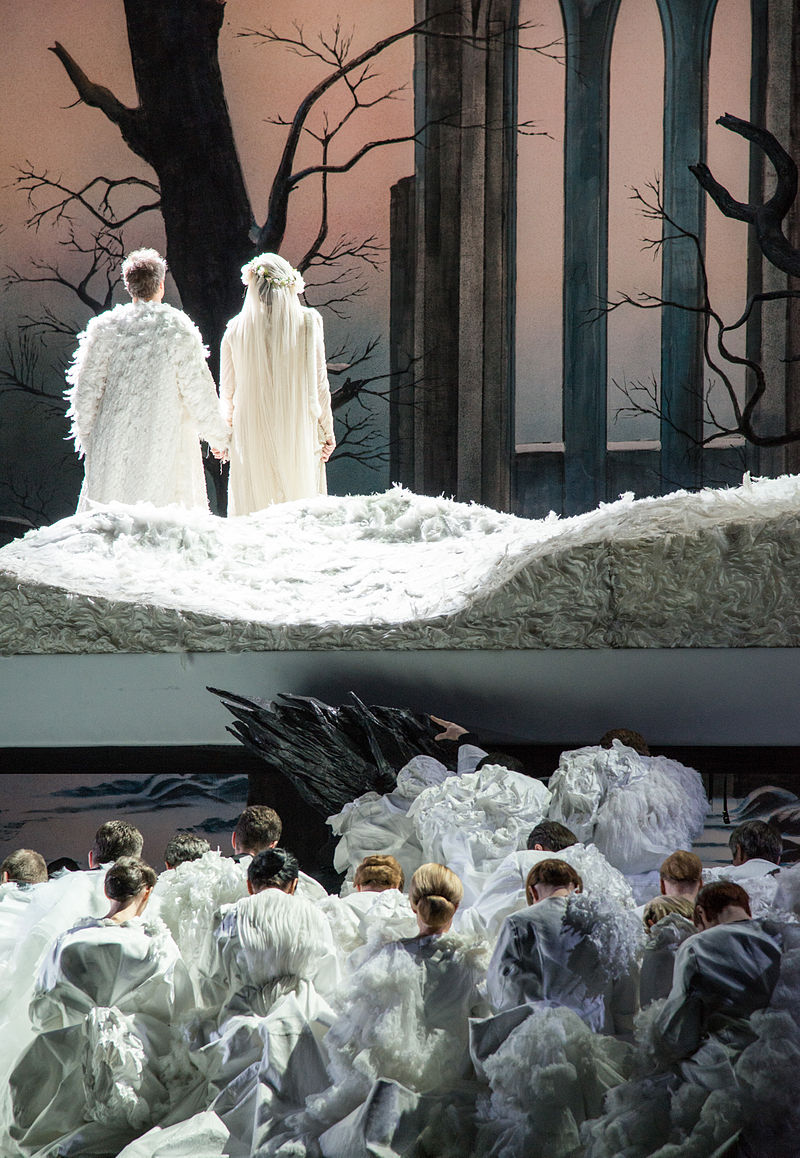
File:Lohengrin_8420-Peralta.jpg · Wikimedia Commons · See Wikimedia Commons
Key facts
- Librettist
- Richard Wagner
- Language
- German
- Based on
- Medieval German Romance
- Premiere
- 28 August 1850 ( 1850-08-28 ) , Deutsches Nationaltheater Weimar
via Wikipedia infobox
Wikidata facts
- Genre
- opera
- Based on
- Knight of the Swan
- Composer
- Richard Wagner
- Librettist
- Richard Wagner
- Lyrics by
- Richard Wagner
- Image
- Lohengrin (tenore), figurino di Alfredo Edel per Lohengrin (1888) - Archivio Storico Ricordi ICON004383.jpg
Show 15 more facts
- described at URL
- www.digitalarchivioricordi.com/en/works/display/53
- Commons category
- Lohengrin
- date of first performance
- 1850-08-28
- instrumentation
- organ
- inception
- 1848-00-00
- number of parts of this work
- 3
- title
- Lohengrin
- language of work or name
- German
- catalog
- Wagner-Werk-Verzeichnis
- copyright status
- public domain
- publication date
- 1850-00-00
- different from
- Lohengrin
- catalog code
- 75
- form of creative work
- opera
- native label
- Lohengrin
via Wikidata · CC0
~32 min read
Encyclopedic overview
Lohengrin ( pronounced [ˈloːənˌɡʁiːn] in German), WWV 75, is a Romantic opera in three acts composed and written by Richard Wagner, first performed in 1850. The story of the eponymous character is taken from medieval German romance, notably the Parzival of Wolfram von Eschenbach, and its sequel Lohengrin, itself inspired by the epic of Garin le Loherain. It is part of the Knight of the Swan legend.
King Ludwig II of Bavaria, whose patronage later gave Wagner the means not only to complete the epic cycle Der Ring des Nibelungen but also to build the monumental Bayreuth Festspielhaus upon which to stage it, named his own Neuschwanstein Castle after the Swan Knight.
Excerpted from Wikipedia’s “Lohengrin” article, available under the CC BY-SA 4.0 licence.