Lomatium · Kew POWO · Kew Plants of the World Online
Lomatium
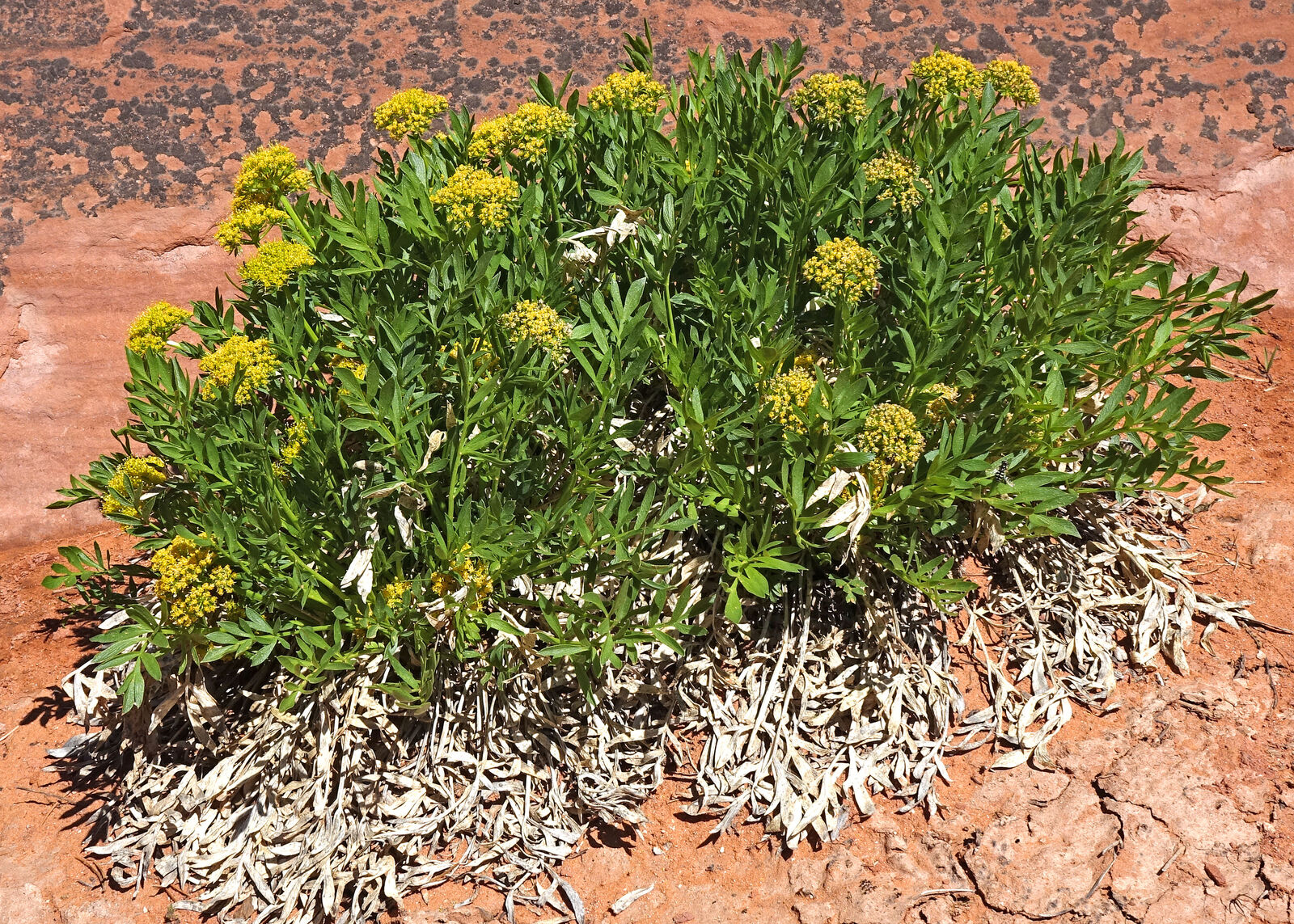
Sign in to saveLomatium is a genus in the family Apiaceae. It consists of about 100 species. Its common names include biscuitroot, Indian parsley, and desert parsley. It is in the family Apiaceae and therefore related to many familiar edible species such as carrots and celery. Native to western Northern America and northern Mexico, some Lomatium species are extensively used by Native Americans in the inland Pacific Northwest as a staple food.
Species
GENUS
- KingdomPlantae
- PhylumTracheophyta
- ClassMagnoliopsida
- OrderApiales
- FamilyApiaceae
via GBIF · Kew POWO
Museum specimens
- Specimen records
- 1,431
- With media
- 1,241
- Family
- Apiaceae
- Collections
- CAS, RENO, UNIVERSITY OF ALBERTA MUSEUMS
- Recorded in
- United States, Canada
Wikidata facts
Show 6 more facts
- Commons category
- Lomatium
- topic's main category
- Category:Lomatium
- taxon name
- Lomatium
- taxon rank
- genus
- taxon common name
- desertparsley
Sources (1)
via Wikidata · CC0
~8 min read
Encyclopedic overview
9 sectionsContents
- Description
- Taxonomy
- Selected species
- Distribution and habitat
- Ecology
- Conservation
- Uses
- References
- External links
Lomatium is a genus in the family Apiaceae. It consists of about 100 species. Its common names include biscuitroot, Indian parsley, and desert parsley. It is in the family Apiaceae and therefore related to many familiar edible species such as carrots and celery. Native to western Northern America and northern Mexico, some Lomatium species are extensively used by Native Americans in the inland Pacific Northwest as a staple food.
==Description== Lomatium roots range from woody taproots to more fleshy underground tuberous-thickened roots. The plants are green and grow the most during the spring when water is available, and many species then set seed and dry out completely above ground before the hottest part of the year, while storing the energy they gained from photosynthesizing while water was available to them in their deep roots. For most of the year, the plant is not visible; the brown tops often are blown off or easily crushed, but it lies dormant underground for the next spring.
Excerpted from Wikipedia’s “Lomatium” article, available under the CC BY-SA 4.0 licence.