Magdalena Ventura with Her Husband and Son
Also known as The Bearded Woman, La Mujer Barbuda
The Bearded Lady; 1631 oil on canvas painting by Jusepe de Ribera
Described at
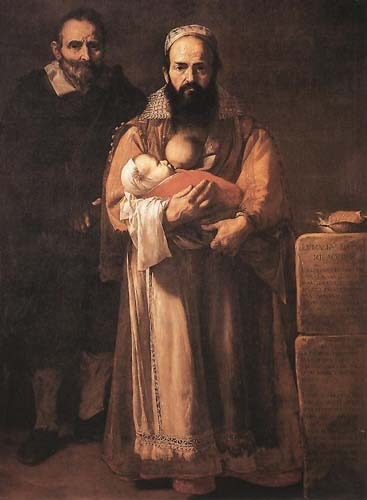
This painting is also known by its Spanish name, La Mujer Barbuda. Certainly one of the strangest, most foreboding images in the history of art, Ribera's painting is the portrait of the fifty-two-year-old Magdalena Ventura from Abruzzi with her husband and a newborn baby. This is one case where pictures certainly speak louder than words, because as anyone can tell at a glance, Magdalena Ventura was far from a typical wife and mother: the unfortunate woman sports a beard even longer and more luxurious than that of her husband, who gazes forlornly at the viewer from the murky, shadowy background. The stone tablet at the right of the picture bears a Latin inscription which tells us more about this unlikely trio: the inscription describes the "The Bearded lady of Abruzzi" as "a great wonder of nature" who bore her husband three sons before sprouting a bushy, undeniably masculine beard at the age of thirty-seven. As the inscription helpfully points out, Magdalena's shock of facial hair "seems more like that of any bearded master than that of a woman who has borne three sons. " This odd painting was commissioned in 1631 by the Duke of Alcalá, the Viceroy of Naples and one of Ribera's most faithful patrons. The Duke's painting collection reveals that the collector was rather fond of paintings of unusual subjects and especially of bizarre figures engaged in even stranger behaviors, and given Ribera's oeuvre, the painter had the same strange proclivities. This genre of painting may have abounded during the Baroque period but Ribera's painting is different, invested with certain characteristics that elevate it to the level of a masterpiece. Ribera's The Bearded Woman is particularly notable for the following qualities; Composition: Characteristic of Ribera's style, as well as the style of the other major painters of the Spanish Baroque, is his careful attention to naturalistic detail. Note the precise, masterfully executed details such as the folds and stitches of Magdalena's simple outfit, her creased, utterly masculine face and the pained expression of her husband. The tone: What differentiates Ribera's paintings of this type of subject matter, however, is the grave, even empathetic tone of the image. While many artists resorted to buffoonery and mockery in their depiction of these "freaks," Ribera, perhaps taking a page out of the dignified representations of low-life subjects by northern Italian artists like Annibale Carracci and Caravaggio, creates a painting utterly devoid of humor. The Bearded Woman is thus invested with a psychological depth that makes the painting more than just an inconsequential curiosity. Magdalena's grave, resigned demeanor and the worried, forlorn expression of her husband make the viewer feel sympathy for the sitter, as opposed to disgust or amusement. Use of technique: Executed in 1631, The Bearded Woman was painted during the early, Caravaggesque phase of Ribera's style. This intense, dramatic tenebrism is particularly suited to grave, slightly sinister subject matter: Ribera was a master of creating a dark, ominous atmosphere through effects of light and shade, using the technique of chiaroscuro. Theme: One of the underlying themes of The Bearded Woman is Ribera's attempt to subtly reinforce Magdalena's femininity. This is most strongly suggested by the exposure of her strange, Cyclops-like breast as she nurses a newborn infant. By the time this painting was executed, Magdalena was fifty-two years old and her three sons were assuredly no longer breastfeeding; this baby is thus symbolic, serving to emphasis the fact that, despite her luxurious beard, the subject of this portrait is emphatically a woman. Brush work: Ribera uses thick, defined to portray his subjects and fabrics. Every wrinkle and detail is precisely captured in this work. There are deep psychological undertones of drama and emotion in this piece which has a moving intensity. The lighting adds to the intensity of the image an