Malawi
Sign in to saveAlso known as Republic of Malawi, mw, MAW
thumb|250px|Various scenes around the country, 2018
OverviewAI-generated
Malawi is a landlocked republic in Eastern Africa, named after Lake Malawi. Its capital is Lilongwe, with Zomba also listed as a capital. The country shares borders with Zambia, Tanzania, and Mozambique. Official languages include English, Chewa, and Tumbuka. The head of state is Lazarus Chakwera, and Peter Mutharika is also noted in this role. The currency is the Malawian kwacha, and the Malawian pound.
The population is recorded as 20,734,262 and 21,655,286. The area is 118,484. Malawi contains the Central Region, Northern Region, and Southern Region. The highest point is the Mulanje Massif. It is a member of the United Nations, Commonwealth of Nations, African Union, and World Trade Organization. The top-level Internet domain is .mw, and the telephone country code is 265. The anthem is Mulungu dalitsa Malaŵi.
Synthesized by Vinony from 67 facts across 9 sources: Wikidata, REST Countries, Openweathermap, Open Meteo, World Bank, OpenStreetMap, PubMed, Vinony graph, Geo. Generated from structured data (not the Wikipedia text) and checked against those facts — may still contain errors.
In the Vinony graph
Malawi is indexed among the 215 entries in Vinony's Countries collection.
Within Vinony's link graph, Malawi is referenced by 9,598 other articles, and connects out to Zimbabwe, African Union and Chewa.
The entry is geolocated on the map in city, across 6 mapped points.
It sits within the topics 1964 establishments in Malawi, Countries and territories where English is an official language and Countries in Africa.
Weather now
cached 15h ago7-day forecast
via Open-Meteo
Country
- Capital
- Lilongwe
- Population
- 20,734,262
- Region
- Africa · Eastern Africa
- Demonym
- Malawian
- Currencies
- MWK (MK)
- Languages
- English, Chewa
- Calling code
- +265
- Drives on
- Left
- Gini
- 44.7 (2016)
- FIFA code
- MWI
- TLD
- .mw
- Timezones
- UTC+02:00
- Borders
- MOZ, TZA, ZMB
via REST Countries
Indicators · World Bank
- GDP
- $11.3B(2024)
- Population
- 21,655,286(2024)
- Life expectancy
- 67.6 yrs(2024)
- Unemployment
- 5.1 %(2025)
- Urban population
- 17.3 %(2024)
- Internet users
- 19 %(2024)
- Forest area
- 22.4 %(2023)
- Renewable energy
- 62.9 %(2022)
via World Bank Open Data · CC BY 4.0
Wikipedia views (30d)
66,682 totalvia Wikimedia Pageviews API
Key facts
- Country.conventional_long_name
- Republic of Malawi
- Country.common_name
- Malawi
- Country.native_name
- (Chichewa) (Chitumbuka)
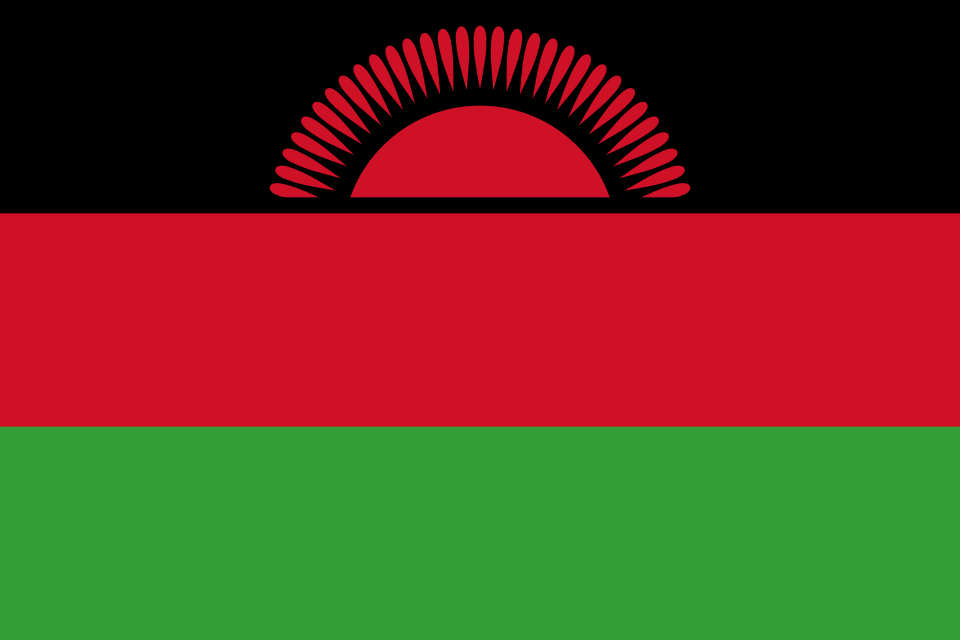
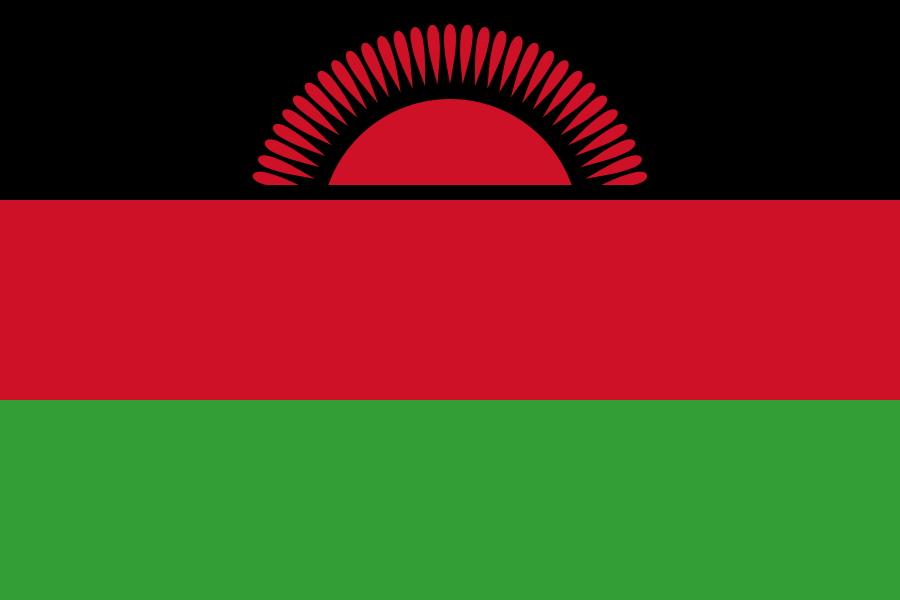
- Country.image_flag
- Flag of Malawi.svg
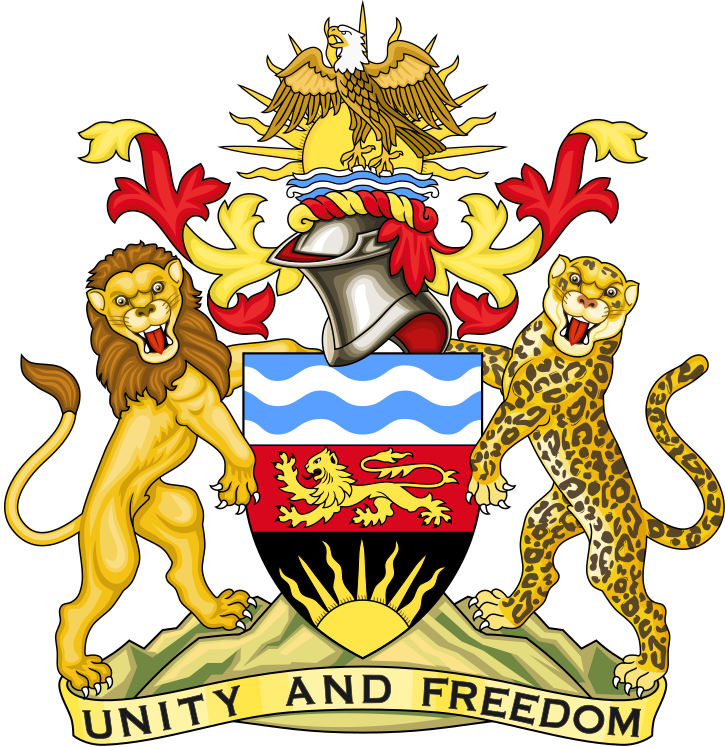
- Country.image_coat
- Coat of arms of Malawi.svg
- Country.national_motto
- "Unity and Freedom"
- Country.national_anthem
- Mulungu dalitsani Malaŵi
- Country.map_caption
- Location of Malawi (dark green) in southeast Africa
- Country.capital
- Lilongwe
- Country.largest_city
- Lilongwe
- Country.national_languages
- (none at national level)
- Country.ethnic_groups_year
- 2024 census
- Country.religion_year
- 2018 census
- Country.demonym
- Malawian
- Country.government_type
- Unitary presidential republic
- Country.leader_title1
- President
- Country.leader_name1
- Peter Mutharika
- Country.leader_title2
- Vice-President
via Wikipedia infobox
Research
16,231 papers- Malawi: What are the implications that aspartame is now a "possible carcinogen"?Malawi medical journal : the journal of Medical Association of Malawi · 2023Muula ASDOI: 10.4314/mmj.v35i2.1
- Malawi.Department of State publication. Background notes series · 1985United States. Department of State. Bureau of Public Affairs
- Malawi.Department of State publication. Background notes series · 1989United States. Department of State. Bureau of Public Affairs
- Donor coordination to support universal health coverage in Malawi.ReviewHealth policy and planning · 2024Sharma L, Heung S, Twea P et al.DOI: 10.1093/heapol/czad102
- Genomic Surveillance of Climate-Amplified Cholera Outbreak, Malawi, 2022-2023.ReviewEmerging infectious diseases · 2025Chabuka L, Choga WT, Mavian CN et al.DOI: 10.3201/eid3106.240930
- Potential of Malawi's medicinal plants in Covid-19 disease management: A review.ReviewMalawi medical journal : the journal of Medical Association of Malawi · 2021Chikowe I, Mtewa AG, Tembo D et al.DOI: 10.4314/mmj.v33i2.4
- The paradox of Malawi's health workforce shortage: pragmatic and unpopular decisions are needed.Malawi medical journal : the journal of Medical Association of Malawi · 2023Muula ASDOI: 10.4314/mmj.v35i1.1
- Improving dairy production in Malawi: a literature review.ReviewTropical animal health and production · 2017Baur I, Tabin L, Banda M et al.DOI: 10.1007/s11250-016-1184-5
via PubMed
Wikidata facts
- Instance of
- country
- Part of
- Southeast Africa
- Named after
- Lake Malawi
- Official name
- la République du Malawi
- Demonym
- Malávach
- Country
- Malawi
- Contains
- Northern Region
- Continent
- Africa
- Capital
- Zomba
- Official language
- Chewa
- Currency
- Malawian pound
- Population
- 17563749
- Area
- 118484
- Head of government
- Lazarus Chakwera
- Head of state
- Peter Mutharika
- Legislature
- National Assembly
- Shares border with
- Mozambique
- Highest point
- Mulanje Massif
- Follows
- Commonwealth realm of Malawi
- Official website
- www.malawi.gov.mw
- Image
- Malawi - Location Map (2013) - MWI - UNOCHA.svg
- Life expectancy
- 63.223
- Nominal GDP
- 13164667627
- Unemployment rate
- 8
Show 59 more facts
- Calling code
- +265
- Licence plate code
- MW
- Electrical plug type
- BS 1363
- Mains voltage
- 230
- Motto
- Undod a Rhyddid
- Flag
- flag of Malawi
- Coat of arms
- coat of arms of Malawi
- top-level Internet domain
- .mw
- Commons category
- Malawi
- member of
- African Continental Free Trade Area
- topic's main category
- Category:Malawi
- category for people born here
- Category:Births in Malawi
- category for people who died here
- Category:Deaths in Malawi
- category for films shot at this location
- Category:Films shot in Malawi
- category of associated people
- Category:Malawian people
- diplomatic relation
- Kosovo
- Commons gallery
- Malaŵi
- lowest point
- Shire River
- mobile country code
- 650
- driving side
- left
- geography of topic
- Geography of Malawi
- topic's main Wikimedia portal
- Portal:Malawi
- office held by head of government
- Prime Minister of Malawi
- language used
- English language
- history of topic
- history of Malawi
- office held by head of state
- President of Malawi
- executive body
- Cabinet of Malawi
- number of out-of-school children
- 936883
- located in/on physical feature
- East Africa
- total fertility rate
- 5.129
- maritime identification digits
- 655
- native label
- Charu cha Malaŵi
- inception
- 1964-07-06
- Unicode character
- 🇲🇼
- replaces
- Commonwealth realm of Malawi
- central bank
- Reserve Bank of Malawi
- VAT rate
- 16.5
- different from
- Marawi
- BTI Status Index
- 5.47
- BTI Governance Index
- 5.64
- economy of topic
- economy of Malawi
- demographics of topic
- demographics of Malawi
- Democracy Index
- 5.74
- Human Development Index
- 0.512
- P11012
- 42 BC
- hashtag
- Malawi
- on focus list of Wikimedia project
- Wikipedia:Vital articles/Level/4
- Happy Planet Index score
- 38.7
- Gini coefficient
- 38.5
- Inequality-adjusted Human Development Index
- 0.377
- P12749
- Kosovo and Metohija
- birth rate
- 32.611
- male population
- 9924861
- death rate
- 6.934
- rural population
- 16736441
- female population
- 10480456
- urban population
- 3668876
- P8168
- 1911 Giro d'Italia
- Commonwealth Sport country code
- MAW
Sources (15)
via Wikidata · CC0
Travel guide
Get in
thumb|375px|Countries in dark green can travel to Malawi visa free, those in yellow can obtain a visa on arrival and those in light green can apply for an e-visa
Get around
thumb|M1 highway
Compared to its neighbours, the main roads in Malawi are in surprisingly good shape and travel times between major destinations should be reasonable. The volume of traffic is low and most people drive reasonably slowly. Road travel after dark is not advisable as road markings are poor to non-existent and not all cars have headlights. While there are few vehicles travelling at night a very significant number of their drivers will be heavily intoxicated, particularly outside of Lilongwe and Blantyre.
The Malawian police force have roadblocks, checkpoints and speeding checks along many of the major roadways and at the airports. By and large, they are looking for illegal activities and bribes. Expect to be stopped on occasion, particularly if you are clearly not local, and asked where you are going. Fines for traffic offences range from 2,000 MK for poor tyres or faulty lighting, to 8000 MK for speeding, to seizure of the vehicle for licensing/registration/insurance offences. Payment is expected to be made to a bursar at the roadside, and a numbered receipt from a duplicate book should be given. If a passenger in a vehicle being driven by a local the police may question the driver or other passengers in a local dialect in order to establish what can be got from you. You should not have any problems if you are polite and have the correct documentation (passport, driver's licence, permission to use the vehicle, etc.) available if they ask. Before using any vehicl…
See
thumb|Canoes on Lake Malawi thumb|Zomba plateau Malawi has a massive diversity of beautiful landscapes. The highest peaks in Malawi touch 10,000 ft (3,000 m) while the lowest point is barely above sea level. This range of altitudes in a small area help to make the landscape of Malawi one of the most varied in all Africa. It is generally a green, lush country, with plateaux, highlands, forests, mountains, plains, escarpments and dramatic river valleys.
The Rift Valley is the dominant feature, providing the vast chasm that Lake Malawi fills, and extending to the south of the country following the Shire River that drains the Lake. The flatter areas of the Rift Valley in South Malawi are home to some important wetlands, including Elephant Marsh, down in the Lower Shire Valley.
To the west of the Lake and either side of the Shire Valley in the south is the Central African Plateau. The transition from Rift Valley floor up to the Central African Plateau is characterised by a series of dramatic escarpments, such as at Nkhotakota Wildlife Reserve, a protected area of rugged, unspoilt wilderness. The Central African Plateau itself is gently undulating land between 1,600ft (490m) and 5,000ft (1,500m), with the occasional lake (such as Lake Chilwa) and punctuated by more dramatic hills and forests.
It is the widespread highlands and forests that provide the most impressive of the Malawi's varied scenery. Up where the air is fresh and cool are clear mountain streams, heaths, rolling mo…
Do
thumb|Baboons in Nyika National Park For a small country, Malawi has a quite remarkable array of activities to offer visitors. The magnificent Lake Malawi is a haven for boat activities and watersports, as well as having some of the best freshwater diving sites in the world, right in Nkhata Bay. Eight land-based national parks and wildlife reserves offer all type of safaris in a wide variety of natural wilderness environments. Liwonde National Park, along the Shire River, has hippos (including an albino one!), crocodiles, lions, elephants and even leopards (apparently). The mixed terrain and varied landscapes also provide for excellent outdoor activities, including trekking and mountain biking, particularly in the highland areas. Those seeking cultural experiences are also well served by sites of historical interest and simple village visits to meet the ever-smiling Malawians in their daily life. You can visit the Carlsberg factory in Blantyre, climb Mount Mulanje (a series of high hills, mountains - making a good trek), drive up or climb Zomba Plateau, go horseback riding in Kande or Nyika, or just relax on the beaches of Cape Maclear.
Specialist tours/activities include yoga holidays, tea factory tours and art safaris. Pottery classes are available at two centres in Dedza and Nkhotakota. In the summer months of Malawi (September/October) there is the Lake of Stars international music festival on the beaches of Sunbird Nkopola Lodge in Mangochi. This is a good festival, whe…
Eat
thumb|Nsima/sima with three relishes: rape and peanut (top left), cabbage (bottom left) and kapenta (bottom right)
Traditional Malawian food revolves around one staple, maize, served in one form, nsima/sima (n'SEE-ma/SEE-ma). Nsima/Sima is basically a type of thick porridge, rolled into balls with your right hand and dipped into a variety of stews known as relishes. Those who can afford them eat relishes of beef, chicken or fish, but the many who can't make do with beans, tiny dried fish (usipa), pumpkin leaves (chibwabwa) and other vegetables. At breakfast, nsima/sima can be served watered down into a soup, maybe with a little sugar. Local restaurants will serve nsima/sima and relish for less than MK600.
Food options in the major cities of Lilongwe, Mzuzu and Blantyre are good. Fast food — to include burgers, pizza, and fried chicken — is very popular in Malawi. For sit-down meals, ethnic eateries (thanks to a significant ex-pat population) are popular. In many restaurants, pork products are not served to accommodate the Muslim population.
Outside the larger cities, however, you might be a little underwhelmed with food options. Along the major roadways, you will find "tuck shops" featuring packaged cookies or Take Away Meals — meat pies or sausage rolls, for instance — which may or may not satisfy you.
Finally, in terms of hygiene outside the major cities, you are unlikely to find a proper washroom with running water. You will probably be given a …
Sleep
Western-standard hotels can be found in Blantyre, Lilongwe, Zomba and Mzuzu, as well as along the shores of Lake Malawi. The Lake Malawi resort hotels cater primarily to international tourists.
There are Backpacker Hostels in many places in Malawi with dorm beds from US$10 per person.
There are high-level five-star resort hotels in some rural areas charging western prices.
Stay safe
Malawi has been known for years as "The Warm Heart of Africa", and Malawians are known for their friendliness and hospitality. Malawi is not known as a particularly dangerous travel destination for western tourists and expatriates. Muggings and robberies have occurred in the larger cities, most especially Lilongwe, as well as in some notorious places along the main tourist routes. It is advisable to avoid walking alone at night. If you go out for the evening, make sure you know how you're going back home. Car-jackings happen occasionally so be sure to keep windows shut and doors locked during evening and night journeys (though night driving is not advised - most cars have broken headlights and Malawians tend to walk in the middle of the road at night) and exercise reasonable caution you would anywhere. Roads are less safe because many drivers are unlicensed and inexperienced and many vehicles are not inspection-ready; there is also the factor of drunk driving, especially in the evenings, so be cautious. However even half the taxi drivers you will get at night will be drunk.
There are a lot of pickpockets operating in nightclubs and bars. Just exercise caution, don't bring too much money and cameras, etc.so don't bring hordes of cash with you.
Homosexuality is prohibited by the law, and LGBT couples should exercise discretion when travelling to Malawi. It took a presidential pardon to release a gay couple who were arrested for homosexuality and sentenced to 14 years of hard …
Stay healthy
As with its neighbouring countries malaria can be a problem. The lake is freshwater and is prone to bilharzia, especially in the Cape Maclear area. Symptoms of bilharzia can take months to surface. If you think you've been exposed to it you can get a very cheap pill from the local pharmacists that will kill it before it even shows its face. It's a good idea to take care of this before leaving Malawi, as it will be much more expensive back home.
The adult HIV prevalence in the country is at 14% or 1 in 7 adults. Do not have unprotected sex. Do not use injecting drugs.
Tap water in major cities like Lilongwe, Blantyre, Zomba and Mzuzu is generally safe. Ask at the lodge/house you're at. Travellers with weaker stomachs should avoid this drinking water. Bottled water is plentiful in all the major shops.
Dogs, cats and other animals can spread rabies.
Respect
thumb|War memorial in Blantyre Malawi has both patriarchal and matriarchal ethnicities and cultures. In the cities, men tend to be more respected than women, but the reverse might be true in the rural villages depending on ethnicity. Whites tend to be well-respected, a holdover from colonial times, but this is largely a Malawian's way of being courteous. Accept their hospitality. They are an exceptionally friendly people.
Malawians, especially those from very rural areas where they don't see many whites, can be quite curious when they do come upon a white traveller. To a Western mindset, this might be interpreted as unnecessarily staring at you or talking about you in front of you. Be prepared to be greeted by kids yelling mzungu, mzungu! and to answer lots of questions about yourself. Even relatively mundane items like mechanical pencils can draw a crowd of onlookers.
Malawians are in general extremely courteous, and a part of that courtesy is shaking hands, speaking softly, and referring to travellers and others with respect. Malawians avoid rudeness. It is common for Malawi men to hold hands when they've gathered together to chat, and this shouldn't be given a sexual interpretation when it is encountered.
Culturally, women should not wear shorts or mini-skirts, especially when travelling outside the lodge or camp. A woman in shorts or a short skirt is considered to be provocative, as well as rude. Many female visitors wear wraps that are available in the stores and mark…
Go next
Tanzania South Luangwa National Park — Kiboko Camp and some other travel agencies run roundtrip safaris from Lilongwe to this fantastic national park in Zambia. Mozambique
Travel guide from Wikivoyage (CC BY-SA 4.0)
~40 min read
Encyclopedic overview
37 sectionsContents
- Etymology
- History
- Pre-colonial history
- Colonialisation (1859–1960)
- Hastings Kamuzu Banda era (1961–1993)
- Multi-party democracy (1993–present)
- Government and politics
- Administrative divisions
- Foreign relations
- Human rights
- Geography
- Flora and fauna
- Economy
- Agriculture and industry
- Infrastructure
- Science and technology
- Research trends
- Policy framework
- Women in Malawi
- Demographics
- Population
- Cities
- Ethnic groups
- Languages
- Religion
- Health
- Education
- Military
- Culture
- Media
- Sports
- Cuisine
- See also
- Notes
- References
- Sources
- External links
Malawi, officially the Republic of Malawi, is a landlocked country in Southeast Africa. It is bordered by Zambia to the west, Tanzania to the north and northeast, and Mozambique to the east, south, and southwest. Malawi spans over 118,484 km (45,747 sq mi) and has a population of 22,224,282 (as of July 2025). Lilongwe is its capital and largest city.
The part of Africa now known as Malawi was settled around the 10th century by the Akafula, also known as the Abathwa. Later, the Bantu groups came and drove out the Akafula and formed various kingdoms such as the Maravi and Nkhamanga kingdoms, that flourished from the 16th century. The British Empire began to consolidate control of the area following the 1890 British Ultimatum against the Portuguese, who had claimed the area between Angola and Mozambique in the 1885 Pink Map. In 1891, the area was designated by the British as the British Central African Protectorate, renamed Nyasaland in 1907. In 1964, Nyasaland became independent under Prime Minister Hastings Banda and was renamed Malawi. Two years later, Banda became president by converting the country into a one-party presidential republic. Banda was declared president for life in 1971. Malawi's first few decades of independence was characterized by Banda's highly repressive dictatorship. After the introduction of a multi-party system in 1993, Banda lost the 1994 general election, and the country has continued to experience peaceful transitions of power. Malawi has a democratic, multi-party republic headed by an elected president. According to the 2024 V-Dem Democracy indices, Malawi is ranked 74th electoral democracy worldwide and 11th electoral democracy in Africa. The country maintains diplomatic relations with most countries and participates in several international organisations, including the United Nations, the Commonwealth of Nations, the Southern African Development Community, the Common Market for Eastern and Southern Africa, and the African Union.
Excerpted from Wikipedia’s “Malawi” article, available under the CC BY-SA 4.0 licence.
Gallery (59)
On the map
6 mapped locations
Available in 243 languages
- Español
- Français
- Deutsch
- 中文
- 日本語
- Русский
- Português
- Italiano
- العربية
- हिन्दी
- Abkhazian
- Achinese
- Afrikaans
- Akan
- Albanian
- Albanian
- Amharic
- ami
Show 224 more
- Angika
- Aragonese
- Armenian
- Arpitan
- Asturian
- azb
- Azerbaijani
- Bahasa Indonesia
- Balinese
- Bambara
- Bangla
- Banjar
- Bashkir
- Basque
- bat_smg
- Bavarian
- be_x_old
- Belarusian
- Betawi
- Bhojpuri
- Bikol
- Bishnupriya
- Bislama
- Bosnian
- Breton
- Bulgarian
- Buriat
- Burmese
- Catalan
- cbk_zam
- cdo
- Cebuano
- Central Kurdish
- Chechen
- Cheyenne
- Chuvash
- Cornish
- Corsican
- Crimean Tatar
- Croatian
- Czech
- Danish
- Divehi
- dty
- Egyptian Arabic
- Esperanto
- Estonian
- Ewe
- Extremaduran
- Faroese
- Fiji Hindi
- Filipino
- Finnish
- fiu_vro
- Frafra
- Fula
- Gagauz
- Galician
- Ganda
- gcr
- Georgian
- Gilaki
- gpe
- Greek
- Guarani
- Haitian Creole
- Hakka Chinese
- Hausa
- Hebrew
- Hungarian
- Icelandic
- Ido
- Igbo
- Iloko
- Inari Sami
- Interlingua
- Interlingue
- Irish
- Jamaican Creole English
- Javanese
- Kabyle
- kai
- Kannada
- Kanuri
- Kara-Kalpak
- Karachay-Balkar
- Kazakh
- kbp
- Khmer
- Kikuyu
- Kinyarwanda
- Kongo
- Kotava
- Kurdish
- Kyrgyz
- Ladino
- Latgalian
- Latin
- Latvian
- Lezghian
- Ligurian
- Limburgish
- Lingala
- Lingua Franca Nova
- Lithuanian
- lld
- Lombard
- Low German
- Lower Sorbian
- Luxembourgish
- Macedonian
- Malagasy
- Malay
- Malayalam
- Maltese
- Manipuri
- Manx
- Māori
- Marathi
- Mazanderani
- Minangkabau
- Mingrelian
- Moksha
- Mongolian
- Moroccan Arabic
- Navajo
- nds_nl
- Nederlands
- Nepali
- Newari
- Northern Frisian
- Northern Sami
- Northern Sotho
- Norwegian
- Norwegian Nynorsk
- Novial
- Nyanja
- Obolo
- Occitan
- Old English
- olo
- Oromo
- Ossetic
- Pampanga
- Papiamento
- Pashto
- Piedmontese
- Polski
- Punjabi
- Quechua
- Romanian
- Samoan
- Sango
- Sanskrit
- Sardinian
- Saterland Frisian
- Scots
- Scottish Gaelic
- Serbian
- Serbian (Latin)
- Shan
- Shona
- Sicilian
- Silesian
- simple
- Sindhi
- Sinhala
- Slovak
- Slovenian
- Somali
- South Ndebele
- Southern Sotho
- Standard Moroccan Tamazight
- Sundanese
- Svenska
- Swahili
- Swati
- szy
- Tajik
- Talysh
- Tamil
- Taroko
- Tatar
- tay
- Telugu
- Tibetan
- Tiếng Việt
- Tigrinya
- Toki Pona
- Tsonga
- Tswana
- Tumbuka
- Türkçe
- Turkmen
- Udmurt
- Ukrainian
- Upper Sorbian
- Urdu
- Uyghur
- Uzbek
- Venetian
- Veps
- Volapük
- Waray
- Welsh
- West Flemish
- Western Frisian
- Western Panjabi
- Wolof
- Wu Chinese
- Xhosa
- Yakut
- Yiddish
- Yoruba
- Zaza
- Zeelandic
- zh_classical
- zh_min_nan
- zh_yue
- Zhuang
- Zulu
- فارسی
- ไทย
- 한국어
via Wikidata sitelinks · CC0