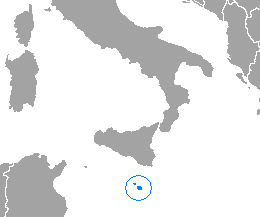
File:Idioma_maltés.PNG · Wikimedia Commons · See Wikimedia Commons
Maltese
Sign in to saveAlso known as Il-lingwa Maltija, lingwa Maltija, Maltese language
Semitic language spoken mostly in Malta
Maltese is a Semitic language spoken primarily in Malta, making it unique among European languages due to its linguistic origins in the Middle East. It matters because it represents an important cultural and historical identity for the Maltese people, reflecting the island's distinct position at the intersection of Mediterranean, Arab, and European influences.
AI-generated from the Wikipedia summary — may contain errors.
Wikidata facts
- Instance of
- modern language
- Named after
- Malta
- Country
- United Kingdom
Show 16 more facts
- native label
- Malti
- Commons category
- Maltese language
- topic's main category
- Category:Maltese language
- Wikimedia language code
- mt
- language regulatory body
- National Council for the Maltese Language
- linguistic typology
- synthetic language
- indigenous to
- Malta
- replaces
- Siculo-Arabic
- has grammatical gender
- feminine
- category for films in this language
- Category:Maltese-language films
- number of speakers, writers, or signers
- 570000
- P10369
- bishop
- P11012
- God
- has tense
- past tense
- short name
- малтийски
Sources (11)
via Wikidata · CC0
~33 min read
Encyclopedic overview
A Maltese speaker, recorded in Malta
Maltese (Maltese: Malti, also L-Ilsien Malti or Lingwa Maltija) is a Central Semitic language derived from late medieval Sicilian Arabic with Romance superstrata. It is the only Semitic language officially written in the Latin script. It is spoken by the Maltese people and is a national language of Malta, and is the only official Semitic and Afroasiatic language of the European Union. The pioneering Maltese linguists Canon Giovanni Pietro Francesco Agius de Soldanis and Mikiel Anton Vassalli both mistakenly hypothesised that Maltese originated from the Punic language. Later scholars like John L. Hayes, considered it to be descended from a North African dialect of Colloquial Arabic which was introduced to Malta when the Aghlabids captured it in the 9th century. However, genetic studies and historical evidence have established that Malta was depopulated after that raid, and that the island was subsequently repopulated by settlers from Sicily and Calabria who spoke Siculo-Arabic, which had developed as a Maghrebi Arabic dialect in the Emirate of Sicily between 831 and 1091. As a result of the Norman invasion of Malta and the subsequent re-Christianisation of the islands, Maltese evolved independently of Classical Arabic in a gradual process of Latinisation. It is therefore exceptional as a variety of historical Arabic that has no diglossic relationship with Classical or Modern Standard Arabic. Maltese is thus classified separately from the 30 varieties constituting the modern Arabic macrolanguage. Maltese is also distinguished from Arabic and other Semitic languages since its morphology has been deeply influenced by Romance languages, namely Italian and Sicilian.
Excerpted from Wikipedia’s “Maltese” article, available under the CC BY-SA 4.0 licence.
Gallery (3)
Available in 138 languages
- Español
- Français
- Deutsch
- 中文
- 日本語
- Русский
- Português
- Italiano
- العربية
- Afrikaans
- Albanian
- Albanian
- Amharic
- Angika
- Aragonese
- Armenian
- Asturian
- Azerbaijani
Show 119 more
- Bahasa Indonesia
- Bangla
- Basque
- be_x_old
- Belarusian
- Bosnian
- Breton
- Bulgarian
- Catalan
- Cebuano
- Central Kurdish
- Corsican
- Croatian
- Czech
- Danish
- Egyptian Arabic
- eml
- Erzya
- Esperanto
- Estonian
- Extremaduran
- Faroese
- Fiji Hindi
- Filipino
- Finnish
- fiu_vro
- Gagauz
- Galician
- Georgian
- Greek
- Guarani
- Hebrew
- Hungarian
- Icelandic
- Ido
- Iloko
- Interlingua
- Irish
- Javanese
- Kabyle
- Kara-Kalpak
- Kashmiri
- Kazakh
- kge
- Komi
- Kurdish
- Ladino
- Latin
- Latvian
- Limburgish
- Lingua Franca Nova
- Lithuanian
- Lojban
- Lombard
- Lower Sorbian
- Luxembourgish
- Macedonian
- Malagasy
- Malay
- Malayalam
- Maltese
- Manx
- Marathi
- Mazanderani
- Mingrelian
- Moroccan Arabic
- nds_nl
- Nederlands
- Northern Frisian
- Norwegian
- Norwegian Nynorsk
- Novial
- Occitan
- Pashto
- Piedmontese
- Polski
- Punjabi
- Quechua
- Romanian
- Santali
- Sardinian
- Scots
- Scottish Gaelic
- Serbian
- Serbian (Latin)
- Sicilian
- Silesian
- simple
- Sinhala
- Slovak
- Slovenian
- Svenska
- Swahili
- Tamil
- Tatar
- Tiếng Việt
- Toki Pona
- Türkçe
- Udmurt
- Ukrainian
- Upper Sorbian
- Urdu
- Uyghur
- Venetian
- Veps
- Walloon
- Waray
- Welsh
- Western Frisian
- Western Panjabi
- wikifunctions
- Wu Chinese
- Yiddish
- Zaza
- zh_min_nan
- zh_yue
- فارسی
- ไทย
- 한국어
via Wikidata sitelinks · CC0