File:The_worship_of_Mammon.jpg · Wikimedia Commons · See Wikimedia Commons
Mammon
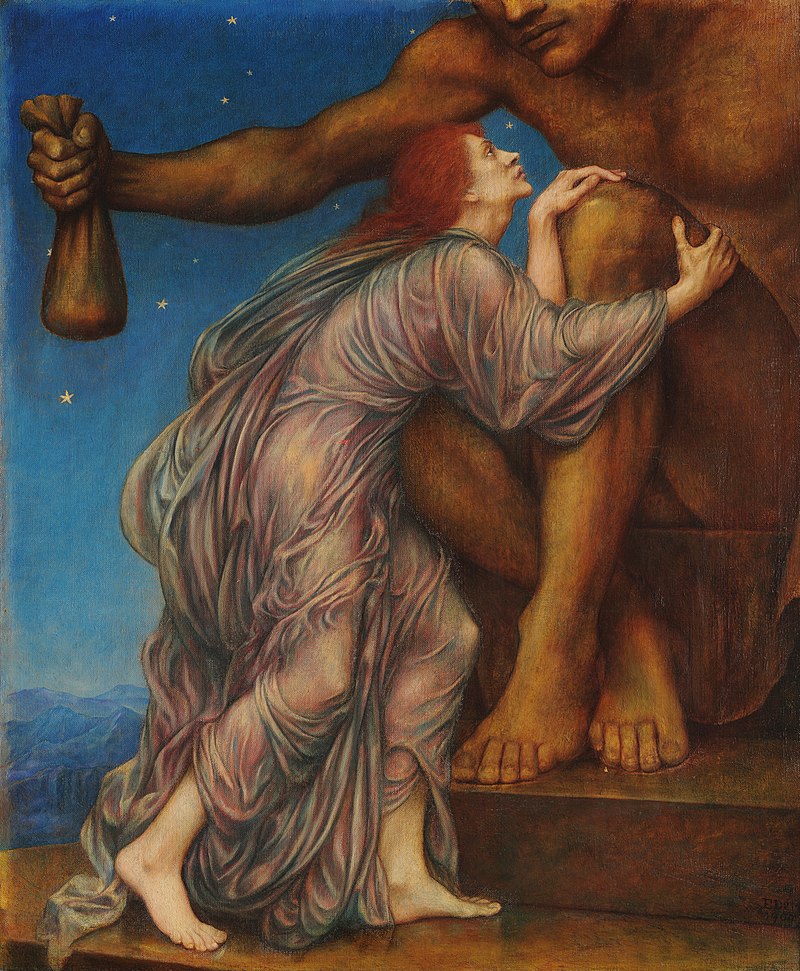
Sign in to save250px|thumb|1909 painting The Worship of Mammon by Evelyn De Morgan Mammon (Aramaic: מָמוֹנָא, māmōnā) in the New Testament is commonly thought to mean money, material wealth, or any entity that promises wealth, and is associated with the greedy pursuit of gain. The Gospel of Matthew and the Gospel of Luke both quote Jesus using the word in a phrase often rendered in English as "You cannot serve both God and mammon."
In the Vinony graph
Vinony's link graph records 109 inbound references to Mammon, and connects out to King James Version, greed and Jacques Collin de Plancy.
It is catalogued under topics including Christian terminology, Demons in Christianity and Fortune gods.
Vinony links it to 44 Wikipedia language editions.
Wikidata facts
- Image
- Ill dict infernal p0455 mammon.jpg
Show 3 more facts
- depicted by
- Parable of the Unjust Steward
- Commons category
- Mammon
- present in work
- Paradise Lost
Sources (1)
via Wikidata · CC0
~7 min read
Encyclopedic overview
8 sectionsContents
- Etymology
- Personifications
- In various countries
- In literature
- In popular culture
- See also
- References
- External links
250px|thumb|1909 painting The Worship of Mammon by Evelyn De Morgan Mammon (Aramaic: מָמוֹנָא, māmōnā) in the New Testament is commonly thought to mean money, material wealth, or any entity that promises wealth, and is associated with the greedy pursuit of gain. The Gospel of Matthew and the Gospel of Luke both quote Jesus using the word in a phrase often rendered in English as "You cannot serve both God and mammon."
In the Middle Ages, it was often personified and sometimes included in the seven princes of Hell, depicting greed. Mammon in Hebrew (ממון) means 'money'. The word was adopted to modern Hebrew to mean wealth.
Excerpted from Wikipedia’s “Mammon” article, available under the CC BY-SA 4.0 licence.