
File:Mao_Zedong_1950_Portrait_(3x4_cropped)(2).jpg · Wikimedia Commons · See Wikimedia Commons
Mao Zedong
Sign in to saveAlso known as Mao Tse-tung, Mao Ze Dong, Maozedong, Tse Toung Mao, Mau Tzerdong, Máo Zédōng, Mau Zeh-ton, Máu Zéh-ton
1st chairman of the Chinese Communist Party and founder of the People's Republic of China (1893–1976)
OverviewAI-generated
Mao Zedong was a Chinese politician, poet, writer, and philosopher. He served as Chairman of the Chinese Communist Party, Chairman of the National Committee of the Chinese People's Political Consultative Conference, and President of the People's Republic of China. He was a member of the Chinese Communist Party and the Kuomintang. His notable works include *Guanyu zhengque chuli renmin neibu maodun de wenti* and *Le grand bond en avant*.
Born Mao Zedong in Shaoshan, Hunan Province, China, on 26 December 1893, he was the son of Mao Yichang and Wen Qimei. He had ten children, including Mao Anying, Mao Anqing, Li Min, and Li Na. He was married to Luo Yixiu, Yang Kaihui, He Zizhen, and Jiang Qing. He was an atheist and is described by the source *Red Star Over China*.
Mao Zedong died of cardiovascular disease on 9 September 1976 at Zhongnanhai, Beijing. He suffered from Parkinson's disease and tuberculosis. He is buried at the Mausoleum of Mao Zedong.
Synthesized by Vinony from 37 facts across 5 sources: Wikidata, Open Library, Firecrawl, TMDb, Europeana Sparql. Generated from structured data (not the Wikipedia text) and checked against those facts — may still contain errors.
Person · Open Library
- Born
- 26 December 1893
- Died
- 9 September 1976
- Works
- 1237
Top works
- Guanyu zhengque chuli renmin neibu maodun de wenti
- Mao intern
- Sinlapa læ wannakhadī
- Kāp klō̜n Mao Čhǣ Tung
- Le grand bond en avant
via Open Library + Wikidata
Film & TV
Hunan Province, China
Mao Zedong or Mao Tse-tung (also known as Chairman Mao) was a Chinese communist revolutionary and founding father of the People's Republic of China. His Marxist–Leninist theories, military strategies, and political policies are collectively known as Maoism or Marxism-Leninism-Maoism. A controversial figure, Mao is regarded as one of the most important individuals in modern world history, and is…
Known for
- Political Cinema — Mao Zedong2025
- The death of the Conducător (a Christmas film) — Himself (archive footage)2025
- Chine, la fabrique d'une nation — Mao Zedong2025
- 伟大的胜利——苏联摄影师镜头里的中国抗战 — 毛泽东2025
- Simon Leys, l'homme qui a déshabillé Mao2024
- História do Comunismo — Self2024
- Laogai: Prison Nation - Inside China's Ruling System — Self (archive footage)2023
- China: The Uighur Tragedy — Self - Politician (archive footage)2022
- The Century of Icons — Self (archive footage)2022
- Taiwan: A Digital Democracy in China's Shadow — Self (archive footage)2021
via TMDB
Described at
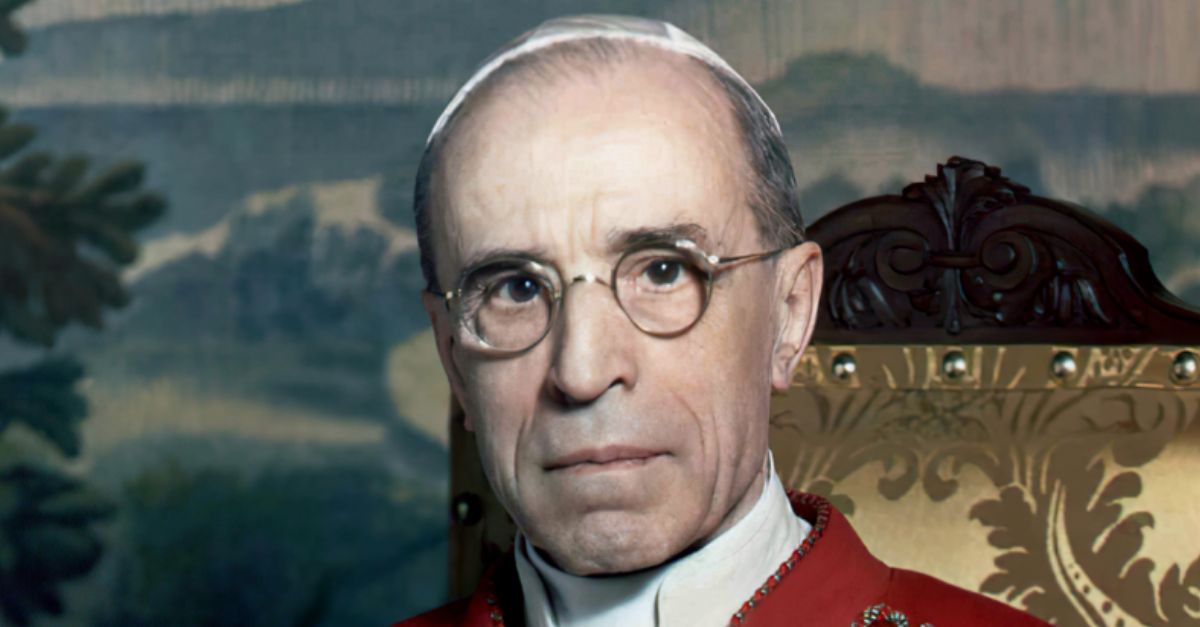
Historical Figures Who Kept Their True Evil Hidden From The World
History often cloaked its villains in garments of greatness, only for time to strip away the illusion and reveal what truly lay beneath. Many figures celebrated as heroes or visionaries left behind a far darker imprint than their admirers ever suspected.
factinate.com →History often cloaked its villains in garments of greatness, only for time to strip away the illusion and reveal what truly lay beneath. Many figures celebrated as heroes or visionaries left behind a far darker imprint than their admirers ever suspected. King Leopold II of Belgium cloaked exploitation beneath a philanthropic banner, presenting his Congo venture as a civilizing mission through the International African Society. Behind this moral disguise, his regime orchestrated one of the deadliest colonial systems in recorded history. Ten to fifteen million Congolese perished through forced labor, starvation, and violent terror. Soldiers mutilated those who missed rubber quotas, and this enforced a reign of fear so absolute that Leopold never needed to visit the Congo himself to orchestrate its horror. At Auschwitz, Josef Mengele wore the white coat of a healer but wielded it as a weapon. Known grimly as the “Angel of Death,” he selected prisoners for experiments that blurred medicine into torture and curiosity into cruelty. His obsession with twins and genetics produced countless fatalities under the guise of science. After the war, Mengele escaped to South America to vanish into anonymity until his passing in 1979—his crimes continuing to haunt global memory long after his disappearance. Jimmy Savile stood before the British public as a beloved entertainer and philanthropist. Launching Top of the Pops and raising millions for charity, he cultivated an image of benevolence that got him a knighthood from Queen Elizabeth II in 1990. But only after his 2011 passing did the truth surface: he was a prolific predatory offender who preyed on the vulnerable, including hospital patients and children. His decades of abuse thrived in plain sight as institutions ignored countless warning signs. As WWII engulfed Europe, Pope Pius XII commanded immense spiritual authority over millions of Catholics. Yet historical evidence revealed he had early, detailed knowledge of what was happening in Germany as far back as 1942—and still chose public silence. His calculated neutrality shielded the Church but stained his moral legacy. By prioritizing institutional caution over moral outcry, he left historians divided and believers shaken about faith’s responsibility during humanity’s darkest chapter. History's most fascinating stories and darkest secrets, delivered to your inbox daily. Mao Zedong’s “Little Red Book” became both a political manifesto and a tool of devotion, fueling his transformation into a living god during China’s Cultural Revolution. This cult of personality justified purges, persecution, and ideological violence on an unprecedented scale. Under his Great Leap Forward, collectivization and reckless agricultural policies led to famine and people passing on a staggering level, and estimates range from fifteen to forty-five million lives lost. His legacy stands as a warning of ideology unrestrained by humanity. For generations, Christopher Columbus was revered as a courageous visionary who bridged continents. Schoolbooks and statues enshrined him as the discoverer of the New World, his voyages celebrated as triumphs of exploration and faith in human progress. But records later revealed his rule in the Caribbean was marked by enslavement and execution. He helped establish the transatlantic slave trade, even reducing Indigenous communities to forced labor. The heroic myth of discovery crumbled beneath the weight of documented atrocity. Edward VIII’s abdication once symbolized romantic devotion—renouncing the British crown for love of Wallis Simpson. His dramatic gesture charmed the world and seemed to demonstrate individual freedom over duty, a modern fairy tale steeped in sacrifice. Only later did revelations of Nazi sympathies taint that image. His 1937 meeting with Hitler, hidden for decades, exposed troubling alliances that reframed his story from selfless love to moral failure, casting doubt on his loyalty to both cou
Excerpt from a page describing this subject · 40,000 chars · not written by Vinony
Wikidata facts
- Instance of
- human
- Family name
- Mao
- Gender
- male
- Citizenship
- China
- Place of birth
- Shaoshan
- Place of death
- Beijing
- Spouse
- Jiang Qing
- Child
- Li Na
- Father
- Mao Yichang
- Mother
- Wen Qimei
- Sibling
- Mao Zetan
- Occupation
- author
- Position held
- president
- Political party
- Kuomintang
- Languages spoken
- Chinese
- Native language
- Chinese
- Religion
- atheism
- Participant in
- May Fourth Movement
- Field of work
- guerrilla warfare
- Hair colour
- black hair
- Movement
- Marxism–Leninism–Maoism
- Conflict
- Autumn Harvest Uprising
- Military branch
- New Army
- Image
- Mao Tse Tung.jpg
Show 28 more facts
- Height
- 180
- Number of children
- 10
- Significant event
- Great Chinese Famine
- place of burial
- Mausoleum of Mao Zedong
- Commons category
- Mao Zedong
- cause of death
- cardiovascular disease
- date of birth
- 1893-12-26
- date of death
- 1976-09-09
- topic's main category
- Category:Mao Zedong
- Commons gallery
- Mao Zedong
- medical condition
- tuberculosis
- birth name
- 毛澤東
- manner of death
- natural causes
- described by source
- Red Star Over China
- name in native language
- 毛澤東
- on focus list of Wikimedia project
- Wikipedia:Vital articles/Level/4
- vehicle normally used
- ZIS-115
- courtesy name
- 潤之
- Academia.edu profile URL
- www.academia.edu/People/Mao_Zedong
- Commons Creator page
- Mao Zedong
- handedness
- right-handedness
- ethnic group
- Han Chinese people
- end of work period
- 1976-00-00
- P12749
- Bóbr
- influenced by
- Friedrich Paulsen
- interested in
- World War I
- described at URL
- www.factinate.com/history/when-these-historical-figures-were-alive-history-adored-them-time-exposed-their-darkness
- has works in the collection
- Memoria Chilena
Sources (9)
via Wikidata · CC0
Works in European collections
1 object attributed to Mao Zedong, held across European museums, libraries & archives · via Europeana
~40 min read
Encyclopedic overview
Personal details Born(1893-12-26)26 December 1893 Shaoshan, Hunan, China
Died9 September 1976(1976-09-09) (aged 82) Beijing, China
Excerpted from Wikipedia’s “Mao Zedong” article, available under the CC BY-SA 4.0 licence.
Gallery (13)
Available in 185 languages
- Español
- Français
- Deutsch
- 中文
- 日本語
- Русский
- Português
- Italiano
- العربية
- हिन्दी
- abstract
- Afrikaans
- Albanian
- Albanian
- Amharic
- Angika
- Aragonese
- Armenian
Show 166 more
- Assamese
- Asturian
- Awadhi
- Aymara
- azb
- Azerbaijani
- Bahasa Indonesia
- Balinese
- Bangla
- Bashkir
- Basque
- bat_smg
- Bavarian
- be_x_old
- Belarusian
- Betawi
- Bhojpuri
- Bikol
- Bislama
- Bosnian
- Breton
- btm
- Bulgarian
- Buriat
- Burmese
- Catalan
- cdo
- Cebuano
- Central Kurdish
- Chechen
- Chuvash
- Colognian
- Cornish
- Crimean Tatar
- Croatian
- Czech
- Danish
- Egyptian Arabic
- Esperanto
- Estonian
- Extremaduran
- Faroese
- Fiji Hindi
- Filipino
- Finnish
- fiu_vro
- Galician
- Gan Chinese
- gcr
- Georgian
- Goan Konkani
- Greek
- Guarani
- Haitian Creole
- Hakka Chinese
- Hausa
- Hebrew
- Hungarian
- Iban
- Icelandic
- Ido
- Iloko
- Interlingua
- Irish
- Jamaican Creole English
- Javanese
- Kalmyk
- Kannada
- Kanuri
- Kashmiri
- Kazakh
- kbp
- Khmer
- Komi
- Kurdish
- Kyrgyz
- Ladino
- Lao
- Latin
- Latvian
- Lezghian
- Lithuanian
- Lojban
- Lombard
- Low German
- Luxembourgish
- Macedonian
- Madurese
- Maithili
- Malagasy
- Malay
- Malayalam
- Maltese
- Marathi
- Mazanderani
- Mingrelian
- Mongolian
- Moroccan Arabic
- Nederlands
- Nepali
- Northern Sami
- Norwegian
- Norwegian Nynorsk
- Nyanja
- Occitan
- olo
- Ossetic
- Pashto
- Piedmontese
- Polski
- Punjabi
- Quechua
- Romanian
- Romany
- Rusyn
- Sanskrit
- Santali
- Scots
- Scottish Gaelic
- Serbian
- Serbian (Latin)
- Shan
- Sicilian
- simple
- Sindhi
- Sinhala
- Slovak
- Slovenian
- Somali
- Standard Moroccan Tamazight
- Svenska
- Swahili
- szy
- Tajik
- Talysh
- Tamil
- Tatar
- Telugu
- Tibetan
- Tiếng Việt
- Toki Pona
- Türkçe
- Ukrainian
- Urdu
- Uyghur
- Uzbek
- Venetian
- Veps
- Volapük
- Walloon
- Waray
- Welsh
- Western Frisian
- Western Panjabi
- Wu Chinese
- Yakut
- Yiddish
- Yoruba
- Zaza
- zh_classical
- zh_min_nan
- zh_yue
- Zhuang
- فارسی
- ไทย
- 한국어
via Wikidata sitelinks · CC0