File:Hydrogen_discharge_tube.jpg · Wikimedia Commons · See Wikimedia Commons
matter
Sign in to saveAlso known as material substance
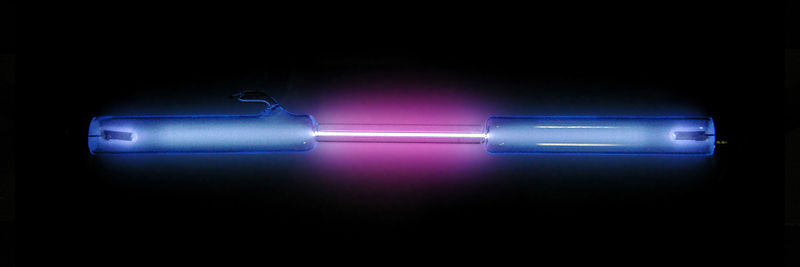
thumb|Hydrogen in its plasma state is the most abundant ordinary matter in the universe.
Matter is the physical stuff that makes up everything in the universe, from the objects around us to distant stars and galaxies, with hydrogen in its plasma form being the most common type. Understanding matter is fundamental to science because it helps us explain how the universe works and how things interact with each other.
AI-generated from the Wikipedia summary — may contain errors.
Wikidata facts
- Subclass of
- physical substance
- Part of
- observable universe
- Image
- Spacetime curvature.png
Show 6 more facts
- Commons category
- Matter
- topic's main category
- Category:Matter
- has characteristic
- state of matter
- on focus list of Wikimedia project
- Wikipedia:Vital articles/Level/4
- partially coincident with
- Dravya
- described by source
- Granat Encyclopedic Dictionary
via Wikidata · CC0
~23 min read
Encyclopedic overview
31 sectionsContents
- Related concepts
- Comparison with mass
- Relation with chemical substance
- Definition
- Based on atoms
- Based on protons, neutrons and electrons
- Based on quarks and leptons
- Based on elementary fermions (mass, volume, and space)
- In general relativity and cosmology
- Structure
- Quarks
- Baryonic
- Hadronic
- Degenerate
- Strange
- Two meanings
- Leptons
- Phases
- Antimatter
- Conservation
- Dark
- Energy
- Exotic
- Historical and philosophical study
- Classical antiquity
- Age of Enlightenment
- 19th and 20th centuries
- See also
- References
- Further reading
- External links
thumb|Hydrogen in its plasma state is the most abundant ordinary matter in the universe.
In classical physics and general chemistry, matter is any substance that has mass and takes up space by having volume. All everyday objects that can be touched are ultimately composed of atoms, which are made up of interacting subatomic particles. In everyday as well as scientific usage, matter generally includes atoms and anything made up of them, and any particles (or combination of particles) that act as if they have both rest mass and volume. However it does not include massless particles such as photons, or other energy phenomena or waves such as light or heat. Matter exists in various states (also known as phases). These include classical everyday phases such as solid, liquid, and gas – for example water exists as ice, liquid water, and gaseous steam – but other states are possible, including plasma, Bose–Einstein condensates, fermionic condensates, and quark–gluon plasma.
Excerpted from Wikipedia’s “matter” article, available under the CC BY-SA 4.0 licence.
Gallery (11)
Available in 141 languages
- Español
- Français
- Deutsch
- 中文
- 日本語
- Русский
- Português
- Italiano
- العربية
- हिन्दी
- Afrikaans
- Albanian
- Amharic
- Angika
- Armenian
- Asturian
- azb
- Bahasa Indonesia
Show 122 more
- Bangla
- Basque
- Belarusian
- Bhojpuri
- Bikol
- blk
- Bosnian
- Bulgarian
- Burmese
- Catalan
- cdo
- Cebuano
- Central Kurdish
- Cherokee
- Chuvash
- Croatian
- Czech
- Danish
- Erzya
- Esperanto
- Estonian
- Extremaduran
- Filipino
- Finnish
- fiu_vro
- Galician
- Ganda
- gcr
- Georgian
- Greek
- Guarani
- Hakka Chinese
- Hebrew
- Hungarian
- Ido
- Interlingua
- Irish
- Jamaican Creole English
- Javanese
- Kabyle
- Kannada
- Kashmiri
- Kazakh
- Khmer
- Kurdish
- Kyrgyz
- Latin
- Latvian
- Ligurian
- Lithuanian
- Lojban
- Low German
- Macedonian
- Malagasy
- Malay
- Malayalam
- map_bms
- Marathi
- Minangkabau
- Mirandese
- Mongolian
- Moroccan Arabic
- Nederlands
- Nepali
- Newari
- Norwegian
- Norwegian Nynorsk
- Novial
- Occitan
- Odia
- Oromo
- Papiamento
- Pashto
- Polski
- Quechua
- Romanian
- Romansh
- Sanskrit
- Scots
- Serbian
- Serbian (Latin)
- Shona
- simple
- Sindhi
- Sinhala
- skr
- Slovak
- Slovenian
- Somali
- Standard Moroccan Tamazight
- Sundanese
- Svenska
- Swahili
- Tajik
- Tamil
- Telugu
- Tibetan
- Tiếng Việt
- Toki Pona
- Tsonga
- Türkçe
- Ukrainian
- Urdu
- Uzbek
- Venetian
- Waray
- Welsh
- West Flemish
- Western Frisian
- Western Panjabi
- Wolof
- Wu Chinese
- Yakut
- Yiddish
- Yoruba
- zh_classical
- zh_min_nan
- zh_yue
- Zulu
- فارسی
- ไทย
- 한국어
via Wikidata sitelinks · CC0