Matthew
Sign in to saveAlso known as The Matthew 525 Project, The Matthew of Bristol
1996 replica caravel, ship located in Bristol, UK
In the Vinony graph
Within Vinony's link graph, Matthew is referenced by 62 other articles, and connects out to Elizabeth II, Venice and geographic coordinate system.
The entry is geolocated on the map in BST, across 2 mapped points.
It sits within the topics 1996 ships, Age of Discovery ships and Bristol Harbourside.
Its subject is documented across 5 Wikipedia language editions.
Described at
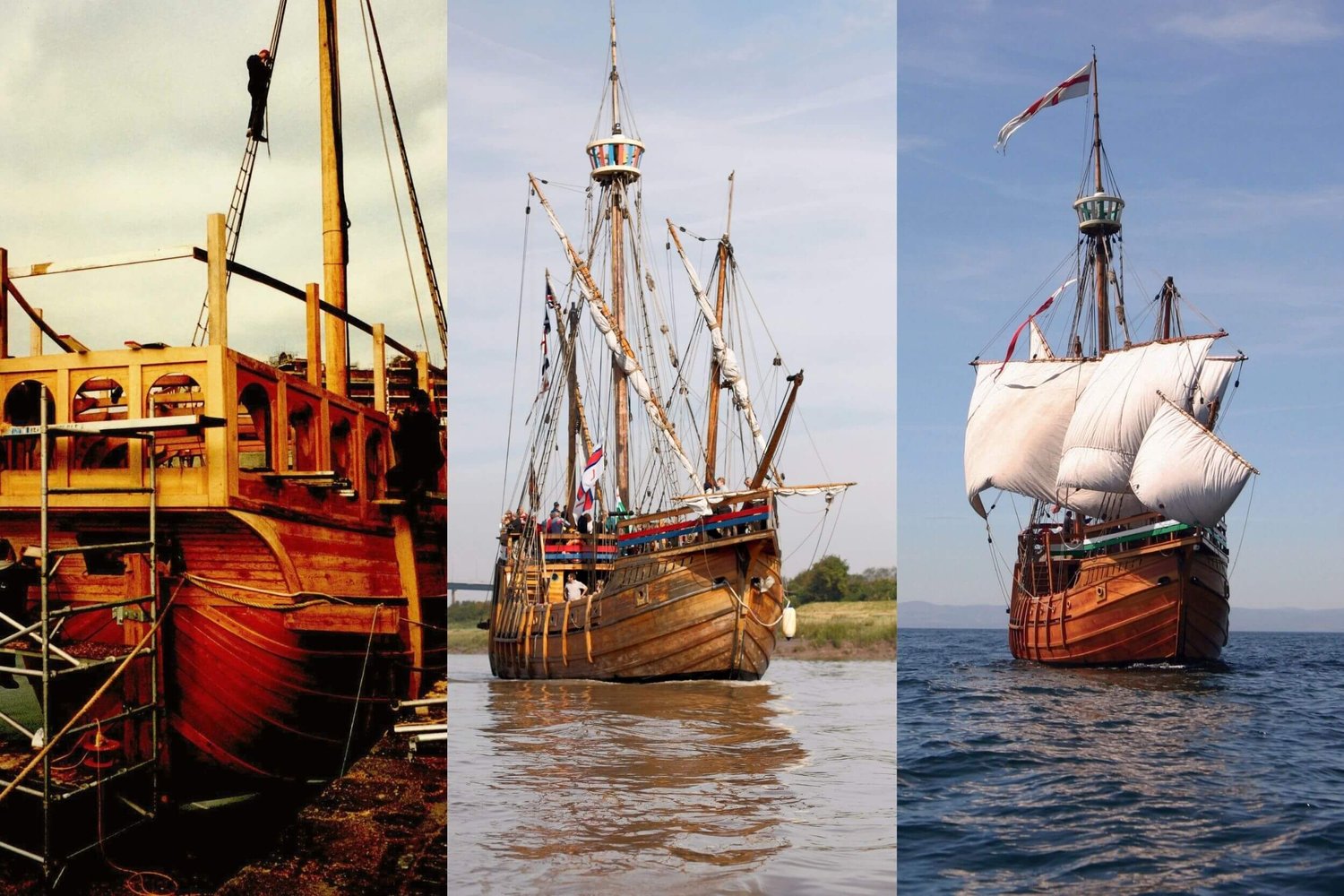
The Matthew Story
Bristol played a major part in transatlantic voyaging from 1476 until the early 1500s, but of all of the many expeditions that sailed from here, John Cabot’s voyage aboard The Matthew was the most successful and is still the most well-known., Bristol played a major part in transatlantic voyaging from 1476 until the early 1500s, but of all of the many expeditions that sailed from here, John Cabot’s voyage aboard The Matthew was the most successful and is still the most well-known.
matthew.co.uk →Bristol played a major part in transatlantic voyaging from 1476 until the early 1500s. Contemporary accounts tell us The Matthew was a commercial goods ship before and after its famous 1497 transatlantic voyage. Of all of the many expeditions that sailed from the port of Bristol, John Cabot’s voyage aboard The Matthew was the most successful and is still the most well-known. ‘ This year, on St. John the Baptist’s Day [24 June 1497], the land of America was found by the Merchants of Bristow in a shippe of Bristowe, called the Mathew; the which said ship departed from the port of Bristowe, the second day of May, and came home again the 6th of August next following. ’ Little is known of The Matthew before Cabot’s 1497 voyage – it is unknown where, or when, the ship was built. From what we can tell from accounts of the time, The Matthew was an ordinary commercial ship that carried goods between Bristol, Ireland and Biscay before its famous voyage across the Atlantic. The Matthew was a type of ship called a caravel, which was popular in medieval times due to its speed and manoeuvrability. Contemporary accounts describe it as a ‘little ship’ of 50 tons burden, which meant the ship was capable of carrying 50 tuns of Bordeaux wine below decks. The Matthew was larger than the 10–20-ton boats typically used for navigation around the Bristol Channel but much smaller than the 300–400-ton merchantmen the port’s traders employed for the long voyages to Lisbon and Seville. The earliest of these expeditions took place sometime before 1476, and at least two more were launched in 1480 and 1481, before the groundbreaking transatlantic voyage made by Cabot in 1497. ‘C abot is called the Great Admiral and vast honour is paid to him and he goes dressed in silk, and these English run after him like mad. ’ Like The Matthew itself, much knowledge about John Cabot has been lost ( see Who Was John Cabot? for a short history of the Venetian explorer ). However, we do know that he arrived in England as an ambitious entrepreneur who needed to pay off some fairly hefty debts. Clearly a smooth talker, he managed to convince Henry VII that he could voyage to find new lands and establish a new and quicker overseas route to what is now known as East Asia, to trade in valuable silks and spices. Cabot was granted ‘letters patent’ to sail by Henry VII, which stated that he, his heirs and deputies could hold any new lands they found in the name of the king, plus receive a monopoly over any trade that they opened up. This meant that others would not be able to muscle in on the trade once it was established without having to incur the early exploration costs. The licence also carried a condition that any subsequent trade resulting from his expeditions would have to pass through the port of Bristol. He used these conditions to convince Bristol merchantmen and Italian bankers based in London to finance his voyage as an investment opportunity. The merchants agreed, but only if they were promised a high return on their investment, as it was such a high-risk venture. Given his risky financial situation, Cabot had no choice but to agree. His first voyage attempt in 1496 was unsuccessful. John Day, a Bristol merchant, wrote to fellow explorer Christopher Columbus to say, ‘ Since your Lordship wants information relating to the first voyage, here is what happened: he went with one ship, his crew confused him, he was short of supplies and ran into bad weather, and he decided to turn back. ’ Following Cabot’s success in finding new lands, Henry VII granted permission for a five-ship expedition from Bristol the following year to explore further. This time, the King helped finance the expedition and also gave Cabot a pension of twenty pounds per year. By May 1498, Cabot had left with his Bristol backers and with Brother Giovanni Antonio de Carbonariis, an Augustinian friar who hoped to bring Christianity to the New World. The route taken by The Matthew and John Cabot
Excerpt from a page describing this subject · 21,901 chars · not written by Vinony
Wikidata facts
- Instance of
- museum ship
- Official name
- Matthew
- Country
- United Kingdom
- Revenue
- 17095
- Country of origin
- United Kingdom
- Official website
- matthew.co.uk
- Image
- Matthew Dec09.jpg
- Significant event
- ship launching
- Has use
- museum ship
Show 6 more facts
- shipping port
- Bristol
- Commons category
- Matthew (ship, 1996)
- service entry
- 1996-00-00
- country of registry
- United Kingdom
- described at URL
- matthew.co.uk/past-present-and-future
- number of volunteers
- 22
Sources (1)
via Wikidata · CC0
On the map
2 mapped locations