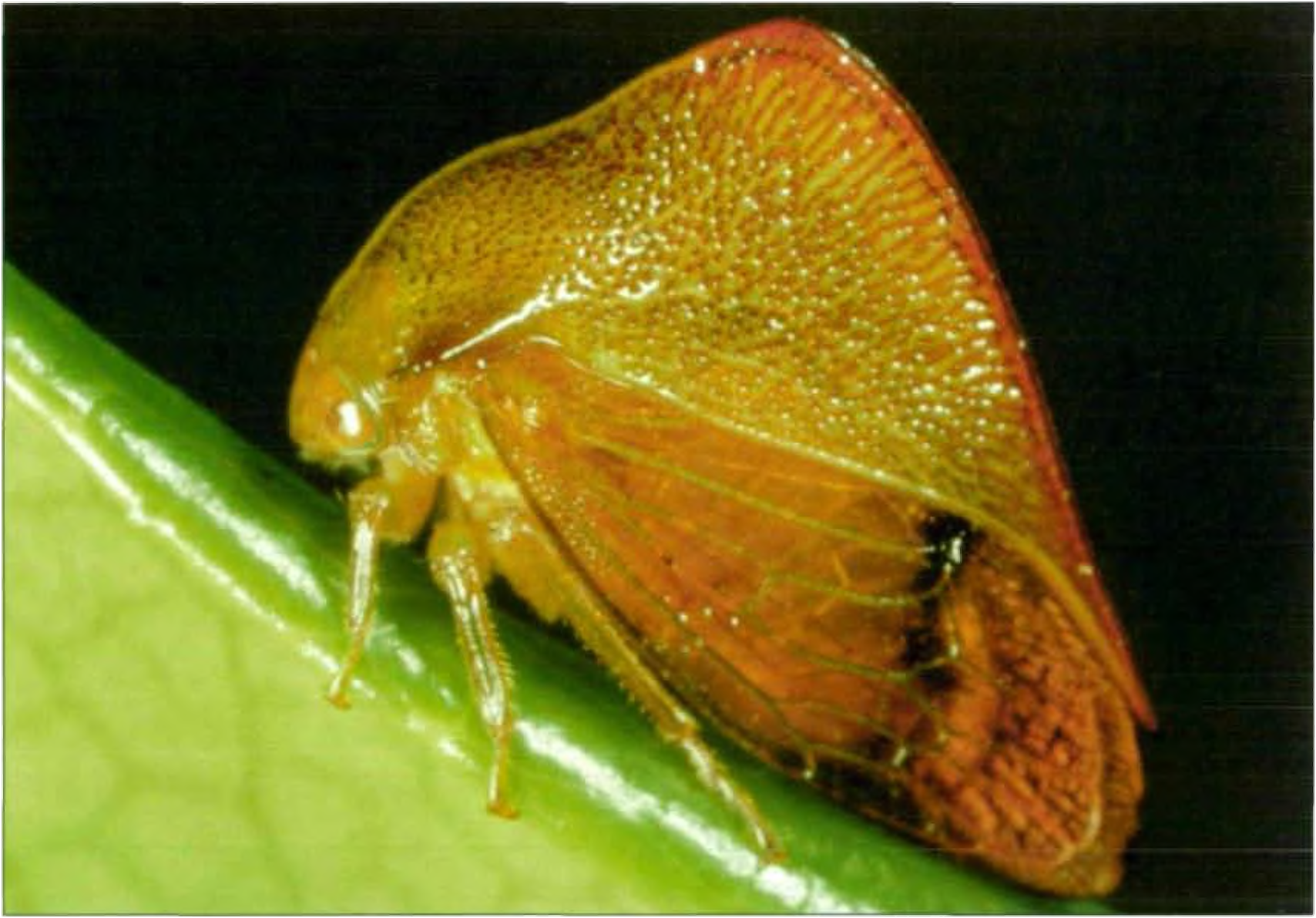
Boulard, M.
Membracidae
Sign in to saveAlso known as the treehoppers, treehoppers
Treehoppers (more precisely typical treehoppers to distinguish them from the Aetalionidae) and thorn bugs are members of the family Membracidae, a group of insects related to the cicadas and the leafhoppers. About 3,200 species of treehoppers in over 400 genera are known. They are found on all continents except Antarctica; only five species are known from Europe. Individual treehoppers usually live for only a few months.
Species
treehoppers
FAMILY
- KingdomAnimalia
- PhylumArthropoda
- ClassInsecta
- OrderHemiptera
- FamilyMembracidae
ツノゼミ科 (Membracidae) は、カメムシ目(半翅目)に属する昆虫の科。世界で約600属3200種が記録されている。日本では16種が記録されている。分類学的にはヨコバイやセミに近縁である。なお単にツノゼミというと、本科の種の総称、あるいは本科に属するツノゼミ Butragulus flavipes のいずれかを指す。 ツノゼミの多くの種では、その胸部背面に「奇妙で多様な」形態をした「ヘルメット」と呼ばれる構造を持つことで知られる。
via GBIF
Museum specimens
- Specimen records
- 6,200
- With media
- 403
- Family
- Membracidae
- Collections
- MHNCA, YPM, LACM
- Recorded in
- Mexico, United States
Wikidata facts
- Instance of
- taxon
- Parent taxon
- Membracoidea
- Image
- (MHNT) Stictocephala bisonia.jpg
Show 5 more facts
- Commons category
- Membracidae
- taxon common name
- bochelcicaden
- taxon rank
- family
- taxon name
- Membracidae
- topic's main category
- Category:Membracidae
Sources (2)
via Wikidata · CC0
~6 min read
Encyclopedic overview
6 sectionsContents
- Morphology
- Ecology
- Systematics
- References
- Further reading
- External links
Treehoppers (more precisely typical treehoppers to distinguish them from the Aetalionidae) and thorn bugs are members of the family Membracidae, a group of insects related to the cicadas and the leafhoppers. About 3,200 species of treehoppers in over 400 genera are known. They are found on all continents except Antarctica; only five species are known from Europe. Individual treehoppers usually live for only a few months.
==Morphology== thumb|A treehopper of the species Heteronotus nodosus investigated by [[Micro-CT, revealing the interior morphology. The interior of the extended pronotum, in this species mimicking a wasp's body, is empty.]] Treehoppers have long interested naturalists due to their unusual appearance. They are best known for their enlarged and ornate pronotum, expanded into often fantastic shapes that enhance their camouflage or mimicry, often resembling plant thorns (thus the commonly used name of "thorn bugs" for a number of treehopper species). Treehoppers have specialized muscles in the hind femora that unfurl to generate sufficient force to jump.
Excerpted from Wikipedia’s “Membracidae” article, available under the CC BY-SA 4.0 licence.