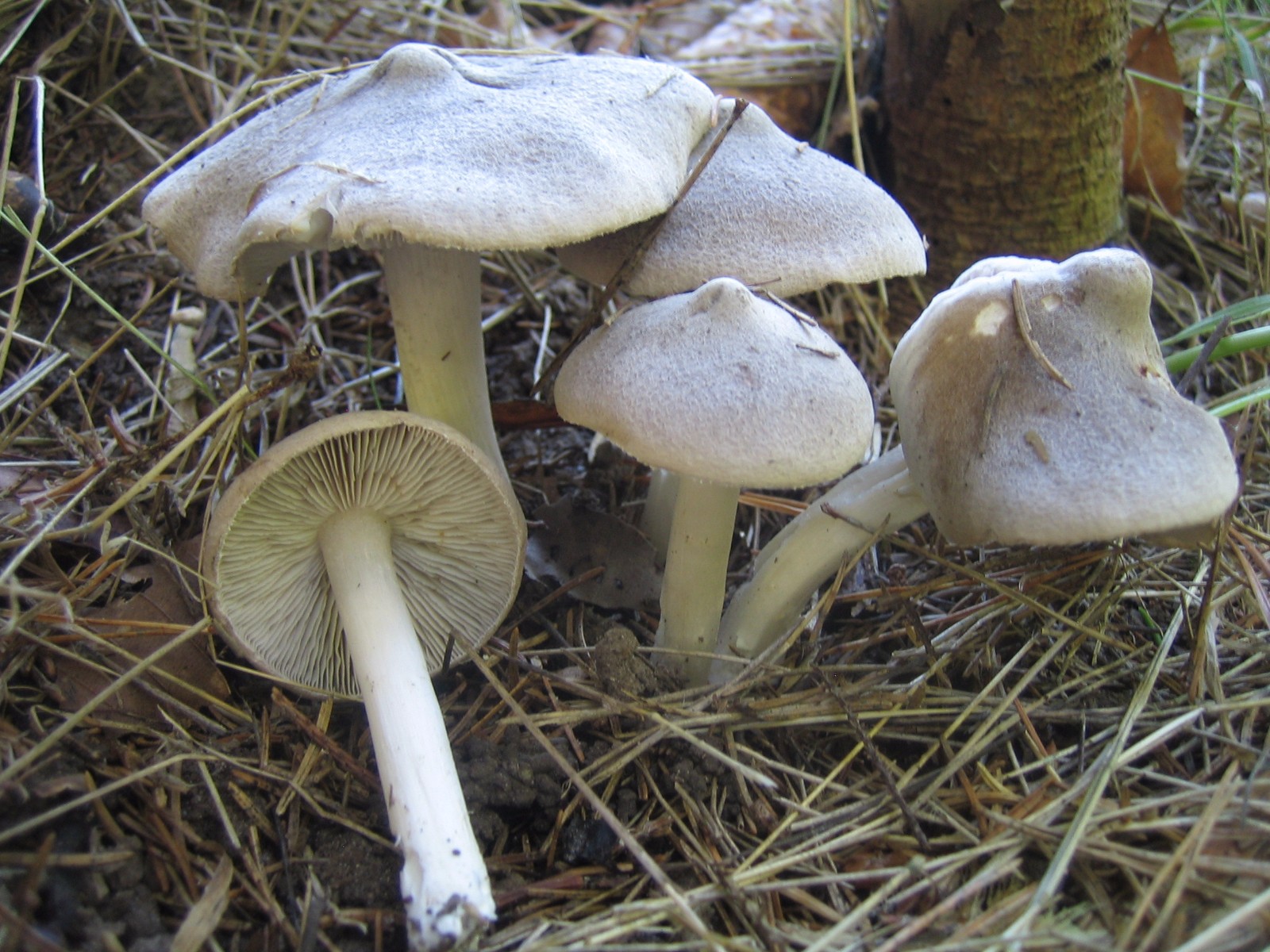
Arne Pedersen · https://creativecommons.org/licenses/by-nc/4.0/
Mucor
Sign in to saveMucor is a microbial genus of approximately 40 species of molds and dimorphic fungi in the family Mucoraceae. The genus includes both pathogenic and avirulent species, and some members of it can be utilized in biotechnical applications. These fungi are commonly found in soil, digestive systems, plant surfaces, some cheeses like Tomme de Savoie, rotten vegetable matter and iron oxide residue in the biosorption process.
Species
KINGDOM
- KingdomFungi
- PhylumZygomycota
- ClassMucoromycotina incertae sedis
- OrderMucorales
- FamilyMucoraceae
品種 見段落。 毛黴屬(學名:Mucor)是一個包含大約有十多個品種的黴菌屬,普遍可在泥土、植物的表面、腐爛的蔬果或消化系統中找到它,它可以制作豆腐乳。 目录 1 描述 2 繁殖 3 其他 4 外部連結 描述 黴菌是一種真菌,它的菌落的顏色一般呈現白色、米黃色到灰色,生長快速,在適合的培植介質中可以生長至數厘米高。當菌落成熟,由於孢子的發展,使菌落的顏色變成灰或褐色。 繁殖 部分品種(Mucor mucedo)無性繁殖。當孢子囊柄(sporangiophore)直立及發育成熟,孢子囊柄頂端脹大形成球狀孢子囊(sporangium),內裝單核單倍體孢子(sporangiospore)。孢子囊頂端的囊軸向孢子囊伸出,囊壁隨之爆開並釋出孢子。 有性繁殖時,部分短小菌絲形成配子囊(gametangia),當兩合適之配子囊接合,便形成球狀、具厚壁的接合孢子囊(zygosporangium)。接合孢子囊內藏一個接合孢子(zygospore)。接合孢子囊內進行核配(karyogamy)和減數分裂,可能可抵禦外在的惡劣環境。毛黴屬包括同宗配合(雌雄同株)和异宗配合(雌雄异株)的種。 其他 因為大部分毛黴屬無法在溫暖環境中生長(接近攝氏37度),它們多不會感染人類和温血動物。耐熱品種(Mucor indicus)可致坏死性且能快速传播的接合菌病(英语:Zygomycosis)。 外部連結 Mucor at Zygomycetes.org Mucor species from Index Fungorum Mucor page from Index Fungorum 这是一篇與真菌類相關的小作品。你可以通过编辑或修订扩充其内容。 查 论 编 取自“https://zh.wikipedia.org/w/index.php?title=毛黴屬&oldid=50005396” 分类:毛黴屬 隐藏分类: 本地相关图片与维基数据不同 含有拉丁語的條目 全部小作品 真菌類小作品
via GBIF
Museum specimens
- Specimen records
- 122
- With media
- 47
- Family
- Mucoraceae
- Collections
- MICH, NCU, NY, F, FLAS, NEB
- Recorded in
- United States, United Kingdom, Germany, Brasil, Cambodia
Research
4,303 papers- Mucor dimorphism.Microbiological reviews · 1991
- Mucor circinelloides: a model organism for oleaginous fungi and its potential applications in bioactive lipid production.Microbial cell factories · 2022
- Mucor thermorhizoides-A New Species from Post-mining Site in Sudety Mountains (Poland).Current microbiology · 2024
- Mucor indicus: biology and industrial application perspectives: a review.Biotechnology advances · 2013
- Mucormycosis (Mucor fungus ball) of the maxillary sinus.Ear, nose, & throat journal · 2014
via PubMed
Wikidata facts
- Instance of
- taxon
- Parent taxon
- Mucoraceae
- Image
- Mucor spec. - Lindsey 1a.jpg
Show 7 more facts
- taxon common name
- 毛霉属
- taxon name
- Mucor
- taxon rank
- genus
- topic's main category
- Category:Mucor
- taxonomic type
- Mucor mucedo
- Commons category
- Mucor
- taxon author citation
- P.Micheli ex L.
via Wikidata · CC0
~3 min read
Encyclopedic overview
6 sectionsContents
- Description
- Reproduction
- Clinical significance
- Selected species
- References
- External links
Mucor is a microbial genus of approximately 40 species of molds and dimorphic fungi in the family Mucoraceae. The genus includes both pathogenic and avirulent species, and some members of it can be utilized in biotechnical applications. These fungi are commonly found in soil, digestive systems, plant surfaces, some cheeses like Tomme de Savoie, rotten vegetable matter and iron oxide residue in the biosorption process.
==Description== Colonies of this fungal genus are typically yellow, beige or grey. They are characterized by rapid growth and sporulation in high aw environments, and they reproduce both sexually and asexually.
Excerpted from Wikipedia’s “Mucor” article, available under the CC BY-SA 4.0 licence.