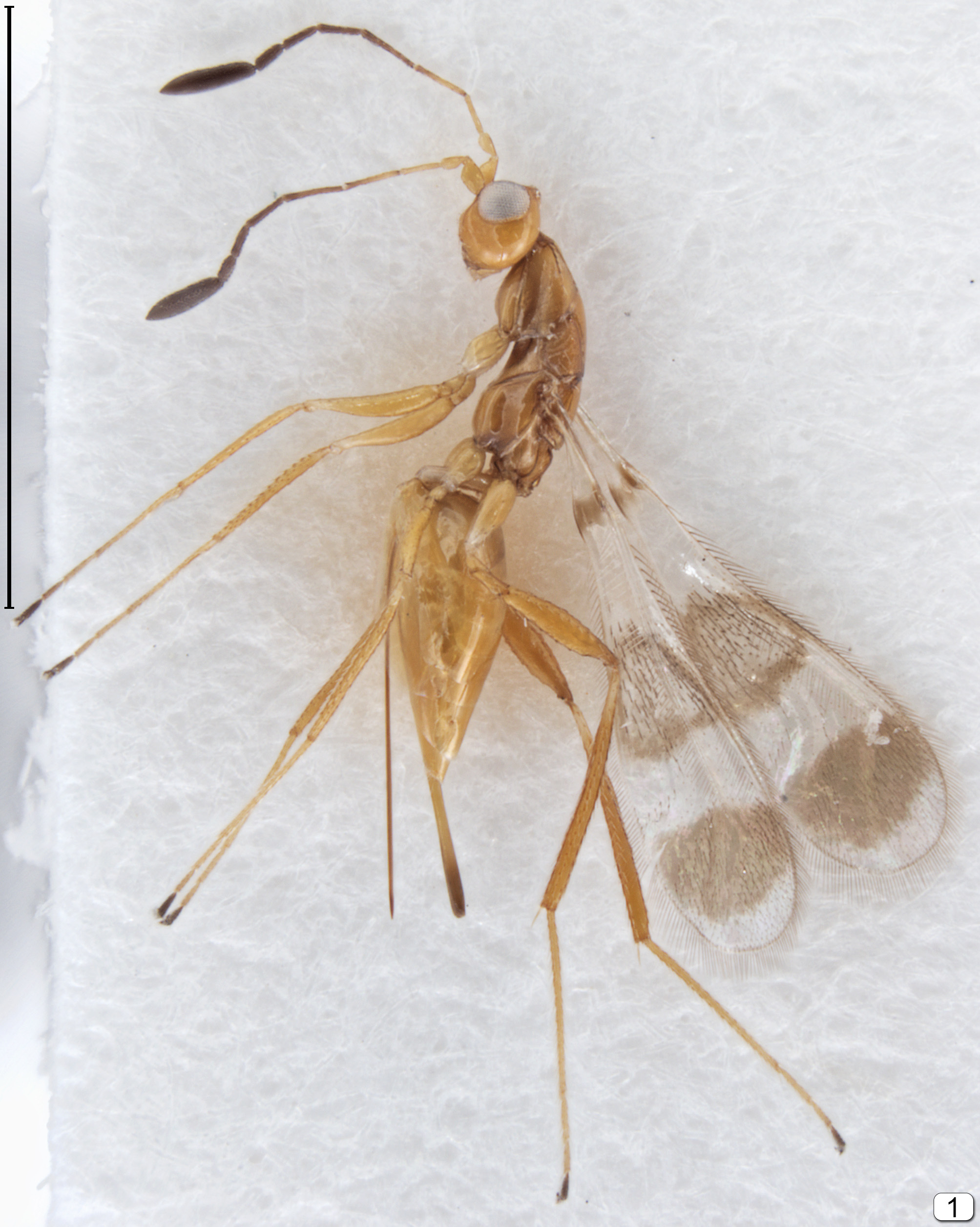
Huber, John T.;Read, Jennifer D.;Triapitsyn, Serguei V.
Mymaridae
Sign in to saveAlso known as the Fairyfly family, Fairyfly
The Mymaridae, commonly known as fairyflies or fairy wasps, are a family of chalcidoid wasps found in temperate, subtropical, and tropical regions throughout the world. The family contains around 100 genera with 1,400 species.
Species
FAMILY
- KingdomAnimalia
- PhylumArthropoda
- ClassInsecta
- OrderHymenoptera
- FamilyMymaridae
All members of this family are egg parasites. The mymarids are easily recognized as a distinct family, but their fundamental thoracic structure shows them to have been derived from the same stem that produced the present-day Eulophidae.
via GBIF
Museum specimens
- Specimen records
- 11,842
- With media
- 442
- Family
- Mymaridae
- Collections
- USNM, MHNCA
- Recorded in
- United States, Mexico
Wikidata facts
- Instance of
- taxon
- Parent taxon
- Chalcidoidea
- Image
- Acmotemnus luteiclava female.jpg
Show 7 more facts
- Commons category
- Mymaridae
- taxon rank
- family
- taxon name
- Mymaridae
- topic's main category
- Category:Mymaridae
- taxon common name
- Fairyflies
- start time
- 97000000-0
- different from
- Mymarommatidae
Sources (2)
via Wikidata · CC0
~26 min read
Encyclopedic overview
17 sectionsContents
- Taxonomy
- History
- Etymology
- Classification
- Description
- Distribution and habitat
- Ecology
- Life history
- Economic importance
- Fossil record
- Genera
- Extant genera
- Fossil genera
- Collection and preservation
- See also
- References
- External links
The Mymaridae, commonly known as fairyflies or fairy wasps, are a family of chalcidoid wasps found in temperate, subtropical, and tropical regions throughout the world. The family contains around 100 genera with 1,400 species.
Fairyflies are very tiny insects, like most chalcidoid wasps, mostly ranging from long. They include the world's smallest known insect, with a body length of only , and the smallest known flying insect, only long. They usually have nonmetallic black, brown, or yellow bodies. The antennae of the females are distinctively tipped by club-like segments, while male antennae are thread-like. Their wings are usually slender and possess long bristles, giving them a hairy or feathery appearance, although some species may have greatly reduced stubby wings or lack wings altogether. These unusual-looking wings work by utilizing air resistance—which at their minuscule size is equivalent to moving through honey—so they sort of function as miniature paddles that swim through the air. They can be distinguished from other chalcidoids by the H-shaped pattern of sutures on the front of their heads.
Excerpted from Wikipedia’s “Mymaridae” article, available under the CC BY-SA 4.0 licence.