Encyclopedia of Life · EOL (see source)
Nephilidae
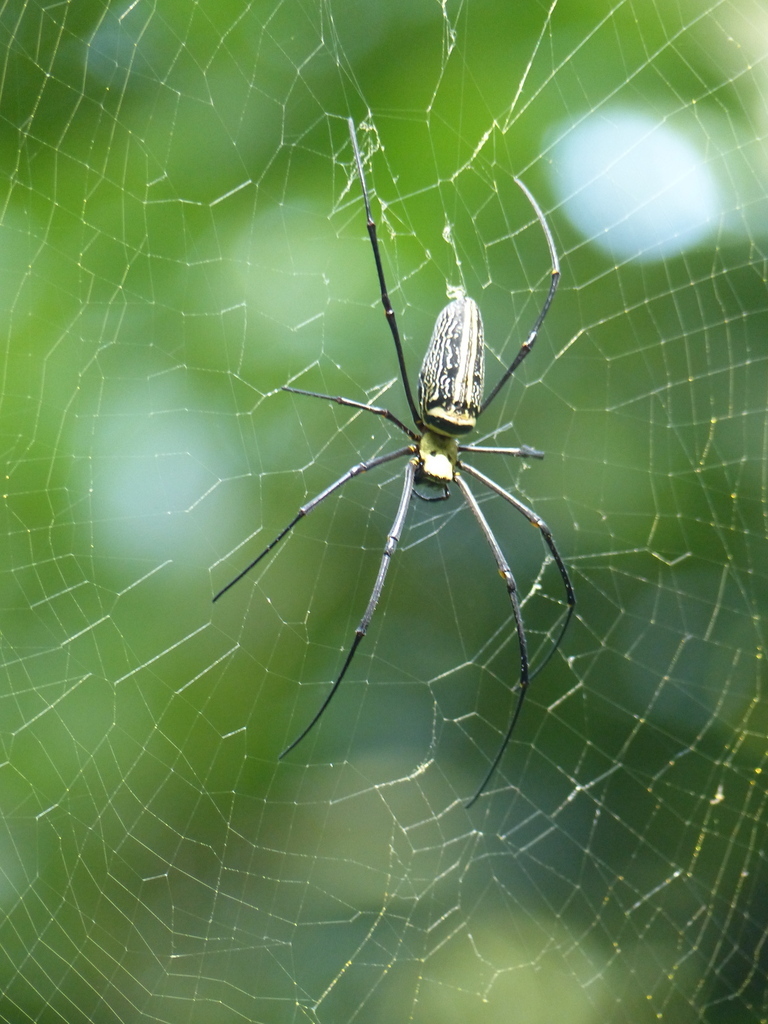
Sign in to saveNephilinae is a spider subfamily in the family Araneidae, commonly referred to as golden orb-weavers. It has also been treated as the family Nephilidae. The various genera in the subfamily were formerly placed in Tetragnathidae. All nephiline genera partially renew their webs.
Species
FAMILY
- KingdomAnimalia
- PhylumArthropoda
- ClassArachnida
- OrderAraneae
- FamilyAraneidae
Царство: Животные Подцарство: Эуметазои Без ранга: Двусторонне-симметричные Без ранга: Первичноротые Без ранга: Линяющие Без ранга: Panarthropoda Тип: Членистоногие Подтип: Хелицеровые Класс: Паукообразные Отряд: Пауки Подотряд: Opisthothelae Инфраотряд: Аранеоморфные пауки Клада: Neocribellatae Серия: Entelegynae Надсемейство: Araneoidea Семейство: Nephilidae Международное научное название Nephilidae Simon, 1894 Типовой род Nephila Leach, 1815 Ареал Систематикана ВикивидахИзображенияна Викискладе ITIS 847741NCBI 450948EOL 205FW 183348 Nephilidae — семейство пауков из инфраотряда аранеоморфных (Araneomorphae). Встречаются в тропических лесах всех континентов. Содержание 1 Таксономия 2 Палеонтология 3 Примечания 4 Литература 5 Ссылки Таксономия Хотя впервые таксон был выделен ещё в 1894 году, до конца XX века представителей рассматривали в качестве подсемейства Nephilinae сперва в семействе Araneidae, затем в Tetragnathidae[1]. В 1995 году с помощью кладистического анализа было выяснено, что Nephilinae — сестринская группа по отношению ко всем остальным Tetragnathidae, на основании чего таксону был придан ранг семейства[1]. В настоящее к Nephilidae относят 58 видов, объединяемых в 4
via GBIF
Museum specimens
- Specimen records
- 20
- Family
- Nephilidae
- Collections
- UNM, FMNH, SAM, CASC, QVMAG, USNM
- Recorded in
- Madagascar, Nicaragua, Congo, The Democratic Republic Of The, Panamá, Australia, Namibia, Philippines, Taiwan
Wikidata facts
- Instance of
- taxon
- Parent taxon
- Araneoidea
- Image
- Nephila clavipes.jpg
Show 5 more facts
- taxon name
- Nephilidae
- taxon rank
- family
- Commons category
- Nephilinae
- topic's main category
- Category:Nephilidae
- taxon common name
- 무당거미과
Sources (1)
via Wikidata · CC0
~3 min read
Encyclopedic overview
9 sectionsContents
- Reproductive behavior
- Taxonomy
- Phylogeny
- Genera
- Distribution
- See also
- References
- Further reading
- External links
Nephilinae is a spider subfamily in the family Araneidae, commonly referred to as golden orb-weavers. It has also been treated as the family Nephilidae. The various genera in the subfamily were formerly placed in Tetragnathidae. All nephiline genera partially renew their webs.
==Reproductive behavior== The genera Herennia, Nephilengys and Nephilingis display extreme sexually driven selection. The pedipalps of these genera have become highly derived by evolving enlarged, complex palpal bulbs which break off inside the females' copulatory openings after copulation. The broken palps serve as mating plugs, which makes future matings with a mated female more difficult. These genera of spiders also participate in mate guarding; a mated male will stand guard by his female and chase off other males, thereby increasing the mated male's paternity share. Mated males are castrated in the process of mate plugging, though this may be an advantage in mate guarding, as mated males have been observed to fight more aggressively and win more frequently than virgin males. So while the female spiders are still at least potentially polygamous, the males have become monogamous.
Excerpted from Wikipedia’s “Nephilidae” article, available under the CC BY-SA 4.0 licence.
Available in 21 languages
- Español
- Français
- Deutsch
- Русский
- Português
- Italiano
- Bahasa Indonesia
- Belarusian
- Catalan
- Cebuano
- Hebrew
- Nederlands
- Norwegian
- Polski
- Romanian
- Svenska
- Tiếng Việt
- Ukrainian
via Wikidata sitelinks · CC0