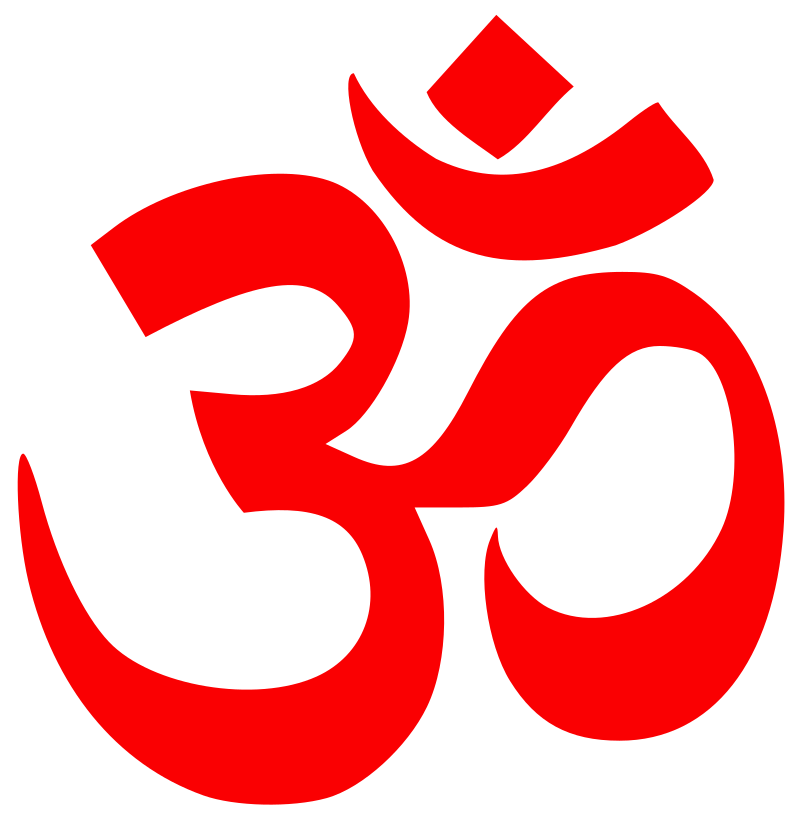
File:Om_symbol.svg · Wikimedia Commons · See Wikimedia Commons
Also known as om̐, aum, omkara, aumkara, pranava
thumb|Om Ligature (writing)|ligature in [[Devanagari script]] thumb|Om () in Tamil script with a [[trishula at Sri Veeramakaliamman Temple, Singapore; Om appears frequently as an icon in temples (kovils) and spiritual retreats]] thumb|A rangoli featuring Om surrounded by stylised peacocks; Om often features prominently in the religious art and iconography of [[Indian religions]] thumb|A Raksha Bandhan|rakhi in the shape of Om
Om is a sacred sound and symbol in Hinduism and other Indian religions, typically written in Devanagari script and frequently displayed in temples, spiritual spaces, and religious artwork. It holds spiritual significance in these traditions and appears in various forms, from written symbols to decorative elements like temple iconography and religious art.
AI-generated from the Wikipedia summary — may contain errors.
Wikidata facts
- Instance of
- syllable
- Part of
- oṃ maṇi padme hūṃ
- Image
- Emojione BW 1F549.svg
- Said to be same as
- a-un
Show 5 more facts
- described by source
- The Nuttall Encyclopædia
- on focus list of Wikimedia project
- Wikipedia:Vital articles/Level/4
- facet of
- Sikhism
- Commons category
- Om (symbol)
- native label
- 옴
Sources (1)
via Wikidata · CC0
~35 min read
Encyclopedic overview
50 sectionsContents
- Common names and synonyms
- Origin and spiritual significance
- Pronunciation
- Written representations
- South Asia
- East and Southeast Asia
- Representation in various scripts
- Northern Brahmic
- Southern Brahmic
- Non-Brahmic
- Other
- Hinduism
- Vedas
- Brahmanas
- Aitareya Brahmana
- Upanishads
- Chandogya Upanishad
- Katha Upanishad
- Maitri Upanishad
- Mundaka Upanishad
- Mandukya Upanishad
- Shvetashvatara Upanishad
- Ganapati Upanishad
- Jaiminiya Upanishad Brahmana
- Ramayana
- ''Bhagavad Gita''
- Puranas
- Vaishnava traditions
- Shaiva traditions
- Shakta traditions
- Other texts
- Yoga Sutra
- Chaitanya Charitamrita
- Tantrasāra
- Jainism
- Buddhism
- Tibetan Buddhism and Vajrayana
- Japanese Buddhism
- ''A-un''
- ''Niō'' guardian kings and ''komainu'' lion-dogs
- Sikhism
- New religious movements
- Thelema
- Aum Shinrikyo
- Modern reception
- See also
- Notes
- References
- Bibliography
- Further reading
thumb|Om Ligature (writing)|ligature in [[Devanagari script]] thumb|Om () in Tamil script with a [[trishula at Sri Veeramakaliamman Temple, Singapore; Om appears frequently as an icon in temples (kovils) and spiritual retreats]] thumb|A rangoli featuring Om surrounded by stylised peacocks; Om often features prominently in the religious art and iconography of [[Indian religions]] thumb|A Raksha Bandhan|rakhi in the shape of Om
Om (or Aum; ; , ISO 15919: Ōṁ) is a polysemous symbol representing a sacred sound, seed syllable, mantra, and invocation in Hinduism as well as in other Indian religions. Its written form is the most important symbol in the Hindu religion. It is the essence of the supreme Absolute, consciousness, Ātman, Brahman, or the cosmic world. In Indian religions, Om serves as a sonic representation of the divine, a standard of Vedic authority and a central aspect of soteriological doctrines and practices. It is the basic tool for meditation in the yogic path to liberation. The syllable is often found at the beginning and the end of chapters in the Vedas, the Upanishads, and other Hindu texts. It is described as the goal of all the Vedas.
Excerpted from Wikipedia’s “om” article, available under the CC BY-SA 4.0 licence.
Gallery (52)
Available in 82 languages
- Español
- Français
- Deutsch
- 中文
- 日本語
- Русский
- Português
- Italiano
- العربية
- हिन्दी
- Afrikaans
- Albanian
- Albanian
- Armenian
- Assamese
- Asturian
- Azerbaijani
- Bahasa Indonesia
Show 63 more
- Balinese
- Bangla
- Basque
- Belarusian
- Bhojpuri
- Bikol
- Bulgarian
- Catalan
- Czech
- Danish
- Esperanto
- Estonian
- Fiji Hindi
- Finnish
- Galician
- Georgian
- Greek
- Gujarati
- Hebrew
- Hungarian
- Icelandic
- Kannada
- Kashmiri
- Latin
- Latvian
- Lithuanian
- Maithili
- Malay
- Malayalam
- Marathi
- Mingrelian
- Nederlands
- Nepali
- Newari
- Norwegian
- Norwegian Nynorsk
- Odia
- Polski
- Punjabi
- Romanian
- Sanskrit
- Santali
- Serbian
- Serbian (Latin)
- simple
- Sindhi
- Slovak
- Slovenian
- Svenska
- Tamil
- Tatar
- Telugu
- Tibetan
- Tiếng Việt
- Toki Pona
- Türkçe
- Ukrainian
- Urdu
- Wu Chinese
- zh_yue
- فارسی
- ไทย
- 한국어
via Wikidata sitelinks · CC0