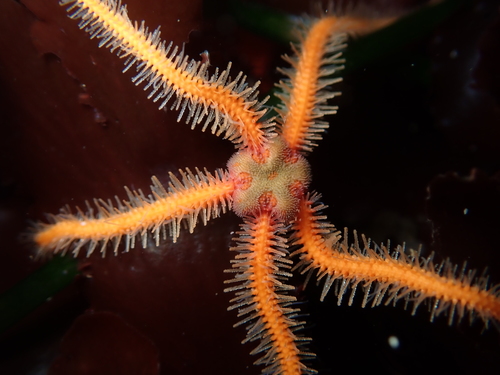
(c) passiflora4, some rights reserved (CC BY-NC), uploaded by passiflora4 · cc-by-nc
Ophiothrix
Sign in to saveOphiothrix is a large genus of brittle stars (Ophiuroidea) found in oceans worldwide from tropics to Arctic and Antarctic regions. At present a total of 93 Ophiothrix species have been recognized. It is considered as one of the most interesting genera because of the presence of its brilliant colors and associations with coral and sponges as well. This genus has been labelled particularly difficult with respect to taxonomy, due to a high degree of variability in characters that are described is a morphological aspect.
Species
トゲクモヒトデ属
Genus
- PhylumEchinodermata
- ClassOphiuroidea
- OrderAmphilepidida
- FamilyOphiotrichidae
via
Museum specimens
- Specimen records
- 2,194
- With media
- 285
- Family
- Ophiotrichidae
- Collections
- CAS, NMV, USNM, MCZ
- Recorded in
- Philippines, Australia, United States, Tonga, El Salvador, Fiji, Thailand, Saint Helena
Wikidata facts
- Instance of
- taxon
- Parent taxon
- Ophiotrichidae
- Image
- Ophiothrix fragiulis 001.jpg
Show 4 more facts
- Commons category
- Ophiothrix
- taxon name
- Ophiothrix
- taxon rank
- genus
- taxon author citation
- Müller & Troschel, 1840
Sources (1)
via Wikidata · CC0
~5 min read
Encyclopedic overview
3 sectionsContents
- Evolution
- Systematics and phylogeny
- References
Ophiothrix is a large genus of brittle stars (Ophiuroidea) found in oceans worldwide from tropics to Arctic and Antarctic regions. At present a total of 93 Ophiothrix species have been recognized. It is considered as one of the most interesting genera because of the presence of its brilliant colors and associations with coral and sponges as well. This genus has been labelled particularly difficult with respect to taxonomy, due to a high degree of variability in characters that are described is a morphological aspect.
== Evolution == The fossil record of brittle stars can be traced back around 500 million years to Early Ordovician period. Despite the fact there have been a considerable number of fossils reported from Paleozoic, Mesozoic and Cenozoic periods, a startlingly little amount is known about the evolutionary history of the group. Paleozoic ophiuroids bear an uncanny resemblance to the modern relatives with respect to ambulacral plate pairs which have been fused firmly into their vertebrae and ambulacral groove which their ventral arm plates cover. They also have the presence of ventrally lateral arm plates.
Excerpted from Wikipedia’s “Ophiothrix” article, available under the CC BY-SA 4.0 licence.