
File:Oscar_Wilde_by_Napoleon_Sarony._Three-quarter-length_photograph,_seated_(cropped).jpg · Wikimedia Commons · See Wikimedia Commons
Oscar Wilde
Sign in to saveAlso known as Oscar O'Flahertie Wills Wilde, Oscar Fingal O'Flahertie Wills Wilde, Oscar Fingal O'Fflahertie Wills Wilde, Oscar O'Fflahertie Wills Wilde
Irish poet, playwright, and aesthete (1854-1900)
OverviewAI-generated
Oscar Fingal O’Flahertie Wills Wilde was a poet, playwright, short story writer, and children's writer associated with the Aestheticism and Decadent movement. He wrote works in the genres of comedy, Gothic literature, drama fiction, and tragedy. His notable works include The Importance of Being Earnest, The Picture of Dorian Gray, The Canterville Ghost, and The Soul of Man under Socialism.
Born in Dublin, Ireland, in 1854, he was educated at Magdalen College and Trinity College, Dublin. He spoke English, French, Latin, and Ancient Greek. He was married to Constance Lloyd, and they had two children, Vyvyan Holland and Cyril Holland. His parents were William Wilde and Jane Wilde.
Wilde died in Paris, 6th arrondissement of Paris, in 1900. He is buried at Oscar Wilde's tomb in Père Lachaise Cemetery, Cimetière parisien de Bagneux. He held citizenship in the United Kingdom of Great Britain and Ireland, the Republic of Ireland, the United Kingdom, and France. His archives are held at the Beinecke Rare Book & Manuscript Library and the Harry Ransom Center.
Synthesized by Vinony from 27 facts across 3 sources: Wikidata, TMDb, Europeana Sparql. Generated from structured data (not the Wikipedia text) and checked against those facts — may still contain errors.
Film & TV
Dublin, Ireland
From Wikipedia, the free encyclopedia Oscar Fingal O'Flahertie Wills Wilde (16 October 1854 – 30 November 1900) was an Irish writer and poet. After writing in different forms throughout the 1880s, he became one of London's most popular playwrights in the early 1890s. Today he is remembered for his epigrams, plays and the circumstances of his imprisonment, followed by his early death. Wilde's…
Known for
- Edward Carson and the Fall of Oscar Wilde — Self (archive footage)2021
- The Life and Loves of Oscar Wilde — Self (archive footage)1995
via TMDB
Wikidata facts
- Instance of
- human
- Family name
- Wilde
- Gender
- male
- Citizenship
- France
- Place of birth
- Dublin
- Place of death
- 6th arrondissement of Paris
- Spouse
- Constance Lloyd
- Child
- Cyril Holland
- Father
- William Wilde
- Mother
- Jane Wilde
- Occupation
- screenwriter
- Educated at
- Trinity College, Dublin
- Languages spoken
- German
- Native language
- English language
- Religion
- Roman Catholic
- Award
- Newdigate Prize
- Notable work
- The Ballad of Reading Gaol
- Field of work
- aesthetics
- Genre
- long poem
- Movement
- Decadent movement
- Official website
- www.cmgww.com/historic/wilde
- Image
- Oscar Wilde by Napoleon Sarony. Three-quarter-length photograph, seated.jpg
- Work location
- England
- Significant event
- funeral
Show 28 more facts
- Commons category
- Oscar Wilde
- place of burial
- Cimetière parisien de Bagneux
- date of birth
- 1854-06-16
- date of death
- 1900-11-30
- topic's main category
- Category:Oscar Wilde
- Commons gallery
- Oscar Wilde
- Commons Creator page
- Oscar Wilde
- birth name
- Oscar Fingal O’Flahertie Wills Wilde
- archives at
- Harry Ransom Center
- ethnic group
- Irish people
- cause of death
- meningitis
- manner of death
- natural causes
- sexual orientation
- homosexuality
- place of detention
- HM Prison Reading
- start of work period
- 1878-00-00
- has works in the collection
- Biblioteca Virtual Miguel de Cervantes
- writing language
- English language
- last words
- Ou c'est ce papier peint qui disparaît, ou c'est moi.
- name in native language
- Oscar Fingal O’Flahertie Wills Wilde
- pseudonym
- Sebastian Melmoth
- on focus list of Wikimedia project
- Wikipedia:Vital articles/Level/4
- unmarried partner
- Lord Alfred Douglas
- short name
- Oscar Wilde
- P8168
- Xylophanes titana
- end of work period
- 1900-01-01
- time period
- Victorian era
- P12749
- Johann Ludwig Klüber
- influenced by
- Joris-Karl Huysmans
Sources (15)
via Wikidata · CC0
Works in European collections
23 objects attributed to Oscar Wilde, held across European museums, libraries & archives · via Europeana

“Salome”: inal scene (first part): Ah! You didn’t want to let me kiss your mouth: (Ah! Thou wouldst not let me kiss thy mouth)/(Wilde; Lachmann; R. Strauss)

Ah! Why didn’t you call me?

Tanulmányok

Dorian Gray arcképe

Firenzei tragédia ; A szent parázna

All works of Oszkár Wilde

A readingi fegyház balladája

Untitled
Untitled
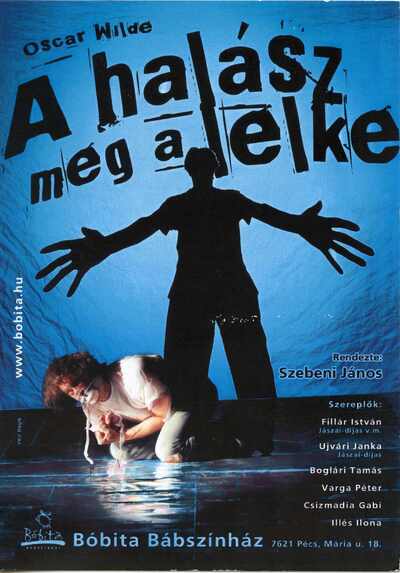
Untitled
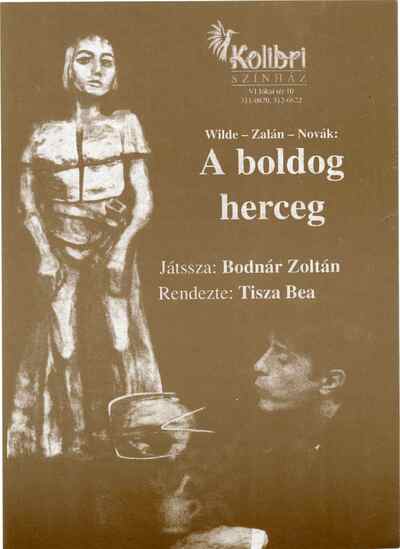
Untitled

Untitled

Untitled
Untitled
Untitled
Untitled
Untitled
Untitled
Untitled
Untitled
Untitled
Untitled

Untitled
~40 min read
Encyclopedic overview
Oscar Fingal O'Fflahertie Wills Wilde (16 October 1854 – 30 November 1900) was an Irish author, poet and playwright. After writing in different literary styles throughout the 1880s, he became one of the most popular and influential dramatists in London in the early 1890s. He was a key figure in the emerging Aestheticism movement of the late 19th century and is widely regarded the greatest playwright of the Victorian era. Wilde is best known for his Gothic novel The Picture of Dorian Gray (1890), his epigrams, plays and bedtime stories for children, as well as his criminal conviction in 1895 for gross indecency and for practicing homosexual acts.
Wilde's parents were Anglo-Irish intellectuals in Dublin. In his youth, Wilde became conversant in French and German. At university, he read Greats; he demonstrated himself to be an exceptional classicist, first at Trinity College Dublin, then at Magdalen College, Oxford. He became associated with the emerging philosophy of aestheticism during this time, led by two of his tutors, Walter Pater and John Ruskin. After university, Wilde moved to London into fashionable cultural and social circles.
Excerpted from Wikipedia’s “Oscar Wilde” article, available under the CC BY-SA 4.0 licence.
Gallery (13)
Available in 132 languages
- Español
- Français
- Deutsch
- 中文
- 日本語
- Русский
- Português
- Italiano
- العربية
- हिन्दी
- Afrikaans
- Albanian
- Aragonese
- Armenian
- Asturian
- Aymara
- azb
- Azerbaijani
Show 113 more
- Bahasa Indonesia
- Bangla
- Bashkir
- Basque
- be_x_old
- Belarusian
- Bikol
- Bosnian
- Breton
- Bulgarian
- Burmese
- Catalan
- cbk_zam
- Cebuano
- Central Kurdish
- Chuvash
- Cornish
- Crimean Tatar
- Croatian
- Czech
- Danish
- Egyptian Arabic
- eml
- Erzya
- Esperanto
- Estonian
- Extremaduran
- Fiji Hindi
- Filipino
- Finnish
- fiu_vro
- Galician
- Georgian
- Goan Konkani
- Greek
- Hakka Chinese
- Hebrew
- Hungarian
- hyw
- Icelandic
- Ido
- Interlingua
- Irish
- Javanese
- Kannada
- Kazakh
- Kotava
- Kurdish
- Kyrgyz
- Latin
- Latvian
- Ligurian
- Limburgish
- Lithuanian
- Luxembourgish
- Macedonian
- Malagasy
- Malay
- Malayalam
- Maltese
- Marathi
- Mingrelian
- Mongolian
- nds_nl
- Nederlands
- Newari
- Norwegian
- Norwegian Nynorsk
- Occitan
- Odia
- Pampanga
- Piedmontese
- Polski
- ppl
- Punjabi
- Quechua
- Romanian
- Romansh
- Scots
- Scottish Gaelic
- Serbian
- Serbian (Latin)
- Sicilian
- simple
- Sinhala
- Slovak
- Slovenian
- Svenska
- Swahili
- Tamil
- Tatar
- Telugu
- Tibetan
- Tiếng Việt
- Türkçe
- Turkmen
- Ukrainian
- Urdu
- Uzbek
- Venetian
- Volapük
- Walloon
- Waray
- Welsh
- Western Frisian
- Western Panjabi
- Wu Chinese
- Zaza
- zh_min_nan
- zh_yue
- فارسی
- ไทย
- 한국어
via Wikidata sitelinks · CC0