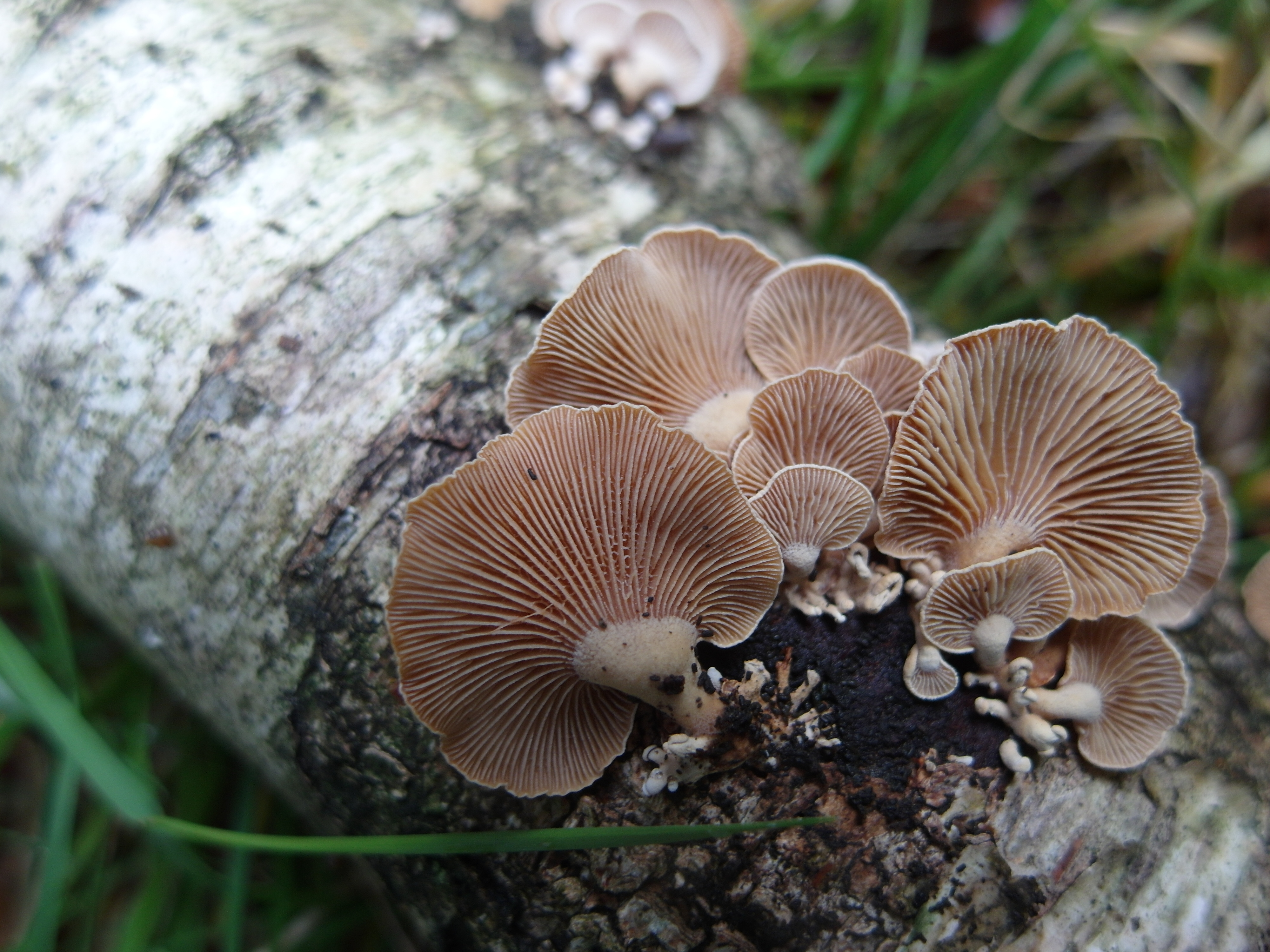
Image from GBIF · CC BY-NC-ND
Panellus stipticus
Sign in to saveAlso known as Agaricus stypticus, Merulius stipticus, Crepidopus stypticus, Rhipidium stipticum, Panus stipticus, Pleurotus stipticus, Lentinus stipticus, Pocillaria stiptica
species of fungus
Species
Luminescent Panellus
SPECIES
- KingdomFungi
- PhylumBasidiomycota
- ClassAgaricomycetes
- OrderAgaricales
- FamilyMycenaceae
二名法 Panellus stipticus(Bull.:Fr.) Karst. 鱗皮扇菇(学名:Panellus stipticus),分布於世界各地,屬口蘑科一種,色通常為黃褐色。另外,該種野菇也是木棲腐生的小菇類,直接食用會引起中毒,不過磨成粉之後可外敷,為治療外傷出血之藥效。一个常见的和广泛分布的物种,它被发现在亚洲,大洋洲,欧洲和北美,它生长在落叶乔木的原木,树桩,和树干和,尤其是榉木,橡木,和桦木,在那里它们以群体或密集重叠群集生长。 鳞皮扇菇是属于生物发光的几十种真菌中的一个。来自北美洲东部的菌株通常是生物发光,但是,来自北美的太平洋沿岸地区和其他大洲的菌株都没有生物发光。 生物发光 生物发光展示:相机被曝光 517秒捕捉到这么多的光。 生物发光是指某些生物环境中通过酶的作用,以产生光的能力。生物发光真菌很普遍,已知的真菌超过70种。[1] 參考文獻 周文能、張東柱,《野菇圖鑑》,2005年,台北,台灣館出版社 ^ Oliveira AG, Stevani CV. The enzymatic nature of fungal bioluminescence. Photochemical & Photobiological Sciences. 2009, 8 (10): 1416–21. PMID 19789811. doi:10.1039/b908982a.
via GBIF
Museum specimens
- Specimen records
- 1,370
- With media
- 548
- Family
- Mycenaceae
- Collections
- IB-CUCBA-UDG, OSC, CINC, DUKE, O, LSUM
- Recorded in
- Mexico, United States, Canada, Norway, China, Australia
Wikidata facts
Show 12 more facts
- taxon rank
- species
- taxon name
- Panellus stipticus
- Commons gallery
- Panellus stipticus
- Commons category
- Panellus stipticus
- hymenium type
- lamella
- mushroom ecological type
- saprobiont
- spore print color
- white
- edibility
- medicinal mushrooms
- taxon common name
- 鳞皮扇菇
- taxon author citation
- (Bull.) P.Karst.
- short name
- P. stipticus
- taxon range
- Hainan
via Wikidata · CC0
~25 min read
Encyclopedic overview
Panellus stipticus, commonly known as the bitter oyster, the astringent panus, the luminescent panellus, or the stiptic fungus, is a species of fungus in the family Mycenaceae. It is the type species of the genus Panellus. The fungus was given its current scientific name in 1879, but has been known by many names since French mycologist Jean Bulliard first described it as Agaricus stypticus in 1783. Molecular phylogenetic analysis revealed P. stipticus to have a close genetic relationship with members of the genus Mycena.
Starting out as tiny white knobs, over a period of one to three months, the mushrooms develop into fan- or kidney-shaped caps that measure up to 3 cm (1.2 in) broad. The caps are orange-yellow to brownish, and attached to the decaying wood by short stubby stalks that are connected off-center or on the side of the caps. Strains from eastern North America are typically bioluminescent, but those from the Pacific coast regions of North America and from other continents are not. The luminescence is localized to the edges of the gills and the junction of the gills with the stem and cap. Bioluminescence is also observable with mycelia grown in laboratory culture, and the growth conditions for optimal light production have been studied in detail. Several chemicals have been isolated and characterized that are believed to be responsible for light production. Genetic analysis has shown that luminescence is controlled by a single dominant allele.
Excerpted from Wikipedia’s “Panellus stipticus” article, available under the CC BY-SA 4.0 licence.