pansori
Sign in to saveAlso known as P'ansori, Korean epic chants, 줄거리가 있는 이야기를 노래로 표현한 한국의 전통 음악
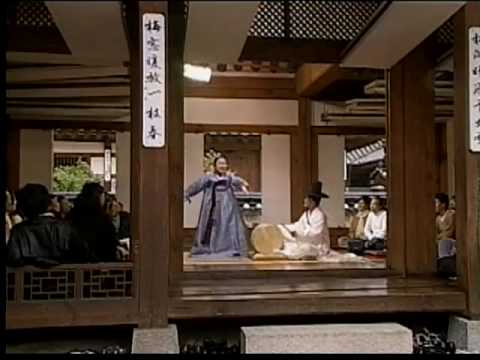
''''''' () is a Korean genre of musical storytelling performed by a singer and a drummer. The term ' is a compounds of the Korean words and , the latter of which means "sound." However, pan has multiple meanings, and scholars disagree on which was the intended meaning when the term was coined. One meaning is "a situation where many people are gathered." Another meaning is "a song composed of varying tones."
Key facts
- Korean name/auto.image
- Korea-Busan 3404-06 Pansori.JPG
- Korean name/auto.caption
- Pansori performance at the Busan Cultural Center in Busan, South Korea
- Korean name/auto.hangul
- 판소리
via Wikipedia infobox
Described at
Los cantos épicos pansori - UNESCO Patrimonio cultural inmaterial
ich.unesco.org →Link to a page describing this subject · 9,944 chars · not written by Vinony
Wikidata facts
- Instance of
- music genre
- Country
- South Korea
- Country of origin
- South Korea
- Image
- Korea-Busan 3404-06 Pansori.JPG
Show 6 more facts
- Commons category
- Pansori
- topic's main category
- Category:Pansori
- inception
- 1800-00-00
- intangible cultural heritage status
- National Intangible Cultural Heritage in South Korea
- native label
- 판소리
Sources (3)
via Wikidata · CC0
~27 min read
Encyclopedic overview
24 sectionsContents
- Name
- Description
- ''Pansori'' repertoire
- Transmission
- Relationship between Shaman songs and ''Pansori''
- History
- Origins: 17th century
- Expansion and golden age: 18th–19th centuries
- Decline: early 20th century
- Preservation and resurgence: late 20th century to present
- Elements and styles
- Styles
- Pansori's Mok and Sung
- Terms
- Pansori masterpiece singer
- Themes
- Pansori Changbon
- Similar cultures
- Gallery
- Notable pansori singers
- See also
- Notes
- References
- External links
''''''' () is a Korean genre of musical storytelling performed by a singer and a drummer. The term ' is a compounds of the Korean words and , the latter of which means "sound." However, pan has multiple meanings, and scholars disagree on which was the intended meaning when the term was coined. One meaning is "a situation where many people are gathered." Another meaning is "a song composed of varying tones."
In music, Gugwangdae describes a long story that takes as little as three hours and as much as eight hours or more. It is one of the traditional forms of Korean music that mixes body movements and songs to the accompaniment of a buk drum played by a gosu. The dramatic content of the drama is changed according to various rhythms based on the melody of Korea's local music. Pansori was originally called the "sori", and it was called Taryeong, Japga (), Clown Song, and Geukga (). It was also commonly used in terms such as Changgeukjo ().
Excerpted from Wikipedia’s “pansori” article, available under the CC BY-SA 4.0 licence.