
Image by MARTINOPHUC on Pixabay · Pixabay License
Paul Broca
Sign in to saveAlso known as Pierre Paul Broca
French physician, anatomist and anthropologist (1824-1880)
OverviewAI-generated
Paul Broca (1824–1880) was a French physician, anatomist, anthropologist, and neurologist. Born in Sainte-Foy-la-Grande, he worked in Paris and died there of a cerebral hemorrhage. His professional fields included anthropology, anatomy, surgery, and neurology. He served as an irremovable senator and was employed by the École pratique des hautes études.
Broca was a member of the German Academy of Sciences Leopoldina, the Académie Nationale de Médecine, the Hungarian Academy of Sciences, and the Society of Anthropology of Paris. He spoke French and had students including Paul Topinard and Léonce Manouvrier. His son was André Broca.
Notable works include *Sur le siége de la faculté du langage articulé avec deux observations d'aphémie (perte de la parole)*, *Traité de médecine de A. C. Celse*, *Eloge funèbre de Pierre Gratiolet*, *Études sur les animaux ressuscitants*, and *Sur le volume et la forme du cerveau suivant les individus et suivant les races*.
Synthesized by Vinony from 34 facts across 5 sources: Wikidata, Crossref, Open Library, Firecrawl, Vinony graph. Generated from structured data (not the Wikipedia text) and checked against those facts — may still contain errors.
Person · Open Library
- Born
- 1824
- Died
- 1880
- Works
- 49
Top works
- Sur le siége de la faculté du langage articulé avec deux observations d'aphémie (perte de la parole)
- Traité de médecine de A. C. Celse
- Eloge funèbre de Pierre Gratiolet
- Études sur les animaux ressuscitants
- Sur le volume et la forme du cerveau suivant les individus et suivant les races
via Open Library + Wikidata
Key facts
- Born
- ( 1824-06-28 ) 28 June 1824, Sainte-Foy-la-Grande , Gironde , France
- Died
- 9 July 1880 (1880-07-09) (aged 56), Paris , France
- Known for
- Broca's area , Broca's aphasia , Diagonal band of Broca
- Fields
- Anthropology , Anatomy , Medicine
via Wikipedia infobox
Described at
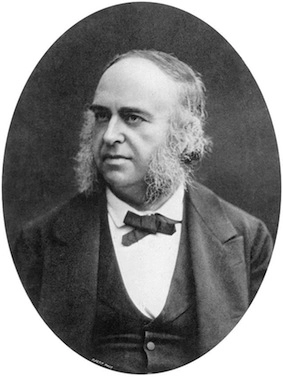
Paul Broca - Les Amis de Sainte Foy et sa Région
Paul Broca - Portrait, Publication -
saintefoylagrandehistoire.com →Link to a page describing this subject · 6,591 chars · not written by Vinony
Wikidata facts
- Instance of
- human
- Given name
- Paul
- Gender
- male
- Citizenship
- France
- Place of birth
- Sainte-Foy-la-Grande
- Occupation
- surgeon
- Educated at
- Paris Medical Faculty
- Employer
- École pratique des hautes études
- Languages spoken
- French
- Native language
- French
- Doctoral student
- Charles Mantoux
- Field of work
- neurology
- Image
- Paul Broca by Pierre Petit.png
- Work location
- Paris
Show 14 more facts
- Commons category
- Paul Broca
- date of birth
- 1824-06-28
- date of death
- 1880-07-09
- member of
- Society of Anthropology of Paris
- described by source
- Encyclopædia Britannica 11th edition
- name in native language
- Paul Broca
- student
- Léonce Manouvrier
- cause of death
- cerebral hemorrhage
- place of burial
- Montparnasse Cemetery
- contributed to creative work
- Popular Science
- relative
- Élisée Reclus
- manner of death
- natural causes
- birth name
- Paul Pierre Broca
- described at URL
- www.saintefoylagrandehistoire.com/portrait/paul-broca
via Wikidata · CC0
~40 min read
Encyclopedic overview
Paul Pierre Broca (/ˈbroʊkə/, also UK: /ˈbrɒkə/, US: /ˈbroʊkɑː/, French: [pɔl bʁɔka]; 28 June 1824 – 9 July 1880) was a French physician, anatomist and anthropologist. He is best known for his research on Broca's area, a region of the frontal lobe that is named after him. Broca's area is involved with language. His work revealed that the brains of patients with aphasia contained lesions in a particular part of the cortex, in the left frontal region. This was the first anatomical proof of localization of brain function.
Broca's work contributed to the development of physical anthropology, advancing the science of anthropometry, and craniometry, in particular, the now-discredited practice of determining intelligence. He was engaged in comparative anatomy of primates and humans and proposed that Negroes were an intermediate form between apes and Europeans. He saw each racial group as its own species and believed racial mixing eventually led to sterility.
Excerpted from Wikipedia’s “Paul Broca” article, available under the CC BY-SA 4.0 licence.