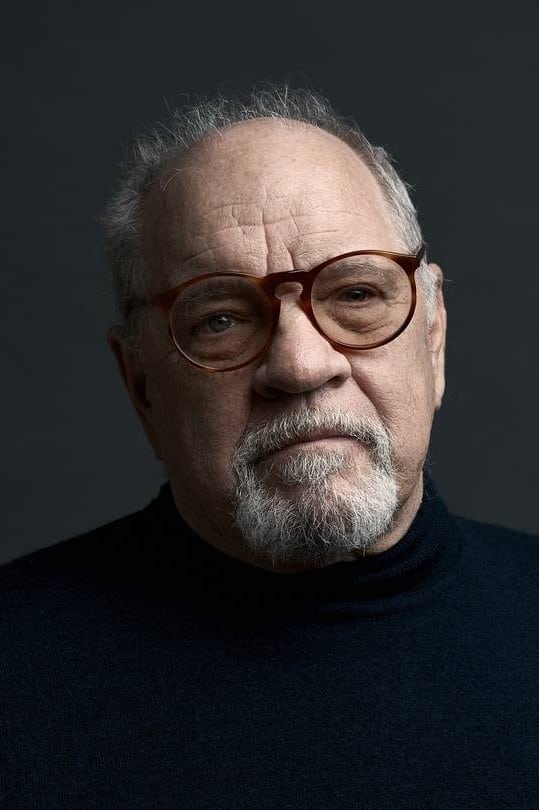
Profile via TMDB · Courtesy of TMDB
Paul Schrader
Sign in to saveAlso known as Paul Joseph Schrader
American screenwriter and film director (born 1946)
Film & TV
Grand Rapids, Michigan, USA
Paul Joseph Schrader (/ˈʃreɪdər/; born July 22, 1946) is an American screenwriter, film director, and film critic. He first became known for writing the screenplay of Martin Scorsese's Taxi Driver (1976). He later continued his collaboration with Scorsese, writing or co-writing Raging Bull (1980), The Last Temptation of Christ (1988), and Bringing Out the Dead (1999). Schrader has also worked…
Known for
- Best Served Cold: How a Revenge Film was Buried for Decades — Himself2026
- Ritratti di cinema — Self2025
- Masterclass di Paul Schrader al Laceno d'Oro 48 — Self - filmmaker, guest2025
- Mr. Scorsese — Self2025
- The Book of Harth — Self2022
- The Last Movie Stars — Self2022
- The Beauty of Horror: Paul Schrader on The Comfort of Strangers — Self2020
- Clapboard Jungle: Surviving the Independent Film Business — Self2020
- Paul Schrader: Man in a Room — Self2020
- What She Said: The Art of Pauline Kael — Self2019
via TMDB
Key facts
- Born
- Paul Joseph Schrader , ( 1946-07-22 ) July 22, 1946 (age 79) , Grand Rapids, Michigan , US
- Education
- Calvin College ( BA ) University of California, Los Angeles ( MA )
- Occupations
- Film director screenwriter
- Years active
- 1974–present
- Spouses
- Jeannine Oppewall , ( married</span>"}]]}'>m. 1969 ; divorced</span>"}]]}'>div. 1976 ) Mary Beth Hurt , ( married</span>"}]]}'>m. 1983 ; died 2026 )
- Relatives
- Leonard Schrader (brother)
- Awards
- Laurel Award for Screenwriting Achievement , AFI Franklin J. Schaffner Award , Venice Film Festival Golden Lion
- Website
- paulschrader .org
via Wikipedia infobox
Wikidata facts
- Instance of
- human
- Given name
- Paul
- Family name
- Schrader
- Gender
- male
- Citizenship
- United States
- Place of birth
- Grand Rapids
- Spouse
- Mary Beth Hurt
- Sibling
- Leonard Schrader
- Occupation
- director
- Languages spoken
- English language
- Religion
- nondenominational Christianity
- Official website
- paulschrader.org
- Image
- Paul Schrader at the 2024 Toronto International Film Festival (cropped) 2.jpg
Show 12 more facts
- topic has template
- Template:Paul Schrader
- date of birth
- 1946-07-22
- Commons category
- Paul Schrader
- related category
- Category:Films with screenplays by Paul Schrader
- member of
- Directors Guild of America
- different from
- Paul W. Schroeder
- start of work period
- 1975-00-00
- archives at
- Harry Ransom Center
- personal library at
- Harry Ransom Center
- name in native language
- Paul Schrader
- medical condition
- long covid
- nominated for
- Academy Award for Best Writing, Original Screenplay
Sources (11)
via Wikidata · CC0
~23 min read
Encyclopedic overview
Paul Joseph Schrader (/ˈʃreɪdər/ SHRAY-dər; born July 22, 1946) is an American screenwriter, film director, and film critic. He first became known for writing the screenplay of Martin Scorsese's Taxi Driver (1976). He later continued his collaboration with Scorsese, writing or co-writing Raging Bull (1980), The Last Temptation of Christ (1988), and Bringing Out the Dead (1999). Schrader has also worked extensively as a director: his 23 films include Blue Collar (1978), Hardcore (1979), American Gigolo (1980), Mishima: A Life in Four Chapters (1985), Light Sleeper (1992), Affliction (1997), and First Reformed (2017), with the last of these earning him his first Academy Award nomination. Schrader's work frequently depicts "man in a room" stories which feature isolated, troubled men confronting an existential crisis.
Raised in a strict Calvinist family, Schrader attended Calvin College before pursuing film studies at UCLA on the encouragement of film critic Pauline Kael. He then worked as a film scholar and critic, publishing the book Transcendental Style in Film: Ozu, Bresson, Dreyer (1972) before transitioning to screenwriting in 1974. The success of Taxi Driver in 1976 brought greater attention to his work, and Schrader began directing his own films, beginning with Blue Collar (co-written with his brother, Leonard Schrader). Schrader has described three of his recent films as a loose trilogy: First Reformed (2017), The Card Counter (2021), and Master Gardener (2022).
Excerpted from Wikipedia’s “Paul Schrader” article, available under the CC BY-SA 4.0 licence.