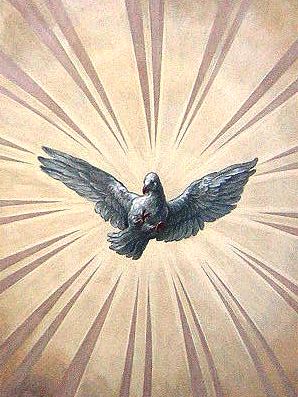
File:Vienna_Karlskirche_frescos4b.jpg · Wikimedia Commons · See Wikimedia Commons
Pentecost
Sign in to savePentecost (also called Whit Sunday, Whitsunday or Whitsun) is a Christian holiday that takes place on the 49th day (50th day when inclusive counting is used) after Easter. It commemorates the descent of the Holy Spirit upon the Apostles of Jesus, Mary, and other followers of the Christ, while they were in Jerusalem celebrating the Feast of Weeks, as described in the Acts of the Apostles (Acts 2:1–31). Pentecost marks the "Birthday of the Church".
Pentecost is a Christian holiday celebrated 49 days after Easter that commemorates the descent of the Holy Spirit upon Jesus's Apostles and followers in Jerusalem, as described in the Acts of the Apostles. It is considered the "Birthday of the Church" because it marks the moment when the Holy Spirit empowered Jesus's followers to begin their mission.
AI-generated from the Wikipedia summary — may contain errors.
Key facts
- Holiday.holiday_name
- Pentecost
- Holiday.image
- Vienna Karlskirche frescos4b.jpg
- Holiday.caption
- Fresco of the Pentecostal dove (representing the Holy Spirit) at the Karlskirche in Vienna, Austria
- Holiday.observedby
- Catholic Church, Old Catholics, Lutherans, Eastern Orthodox, Oriental Orthodox, Amish, Anglicans and other Christians
- Holiday.observances
- Prayer, vigils, fasting (pre-festival), novenas, retreats, Holy Communion, litany
- Holiday.celebrations
- Church services, festive meals, processions, baptism, confirmation, ordination, folk customs, dancing, spring and woodland rites.
- Holiday.type
- Christian
- Holiday.significance
- Celebrates the descent of the Holy Spirit upon the Apostles and other followers of Jesus; birth of the Church
- Holiday.date
- 49 days after Easter
- Holiday.relatedto
- Jesus Day, Shavuot, Rosalia, Green Week, Pinkster, Whit Monday, Whit Tuesday, Whit Friday, Trinity Sunday
via Wikipedia infobox
Wikidata facts
- Instance of
- list of public holidays in the Netherlands
- Part of
- Eastertide
- Religion
- Christianity
- Followed by
- Trinity Sunday
- Follows
- Exaudi
- Image
- Ingeborg Psalter 02f 1200 (cropped).jpg
Show 5 more facts
- described by source
- Wikitólica
- Commons category
- Pentecost
- topic's main category
- Category:Pentecost
- day of week
- Sunday
- different from
- Semik
Sources (6)
via Wikidata · CC0
~39 min read
Encyclopedic overview
25 sectionsContents
- Etymology
- Background
- New Testament
- Liturgical celebration
- Eastern churches
- Kneeling Prayer
- Apostles' Fast
- Western churches
- Red symbolism
- Flowers, fruits, and branches
- Lowering of doves
- Hymns and music
- Fasting and devotions
- Sacraments
- Rosalia
- Mariology
- Music
- Classical compositions
- Regional customs and traditions
- Date and public holiday
- Literary allusions
- See also
- Notes
- References
- External links
Pentecost (also called Whit Sunday, Whitsunday or Whitsun) is a Christian holiday that takes place on the 49th day (50th day when inclusive counting is used) after Easter. It commemorates the descent of the Holy Spirit upon the Apostles of Jesus, Mary, and other followers of the Christ, while they were in Jerusalem celebrating the Feast of Weeks, as described in the Acts of the Apostles (Acts 2:1–31). Pentecost marks the "Birthday of the Church".
Pentecost is one of the Great feasts in the Eastern Orthodox Church, a Solemnity in the Roman Rite of the Catholic Church, a Festival in the Lutheran Churches, and a Principal Feast in the Anglican Communion. Many Christian denominations provide a special liturgy for this holy celebration. Since its date depends on the date of Easter, Pentecost is a "moveable feast". The Monday after Pentecost is a legal holiday in many European, African and Caribbean countries.
Excerpted from Wikipedia’s “Pentecost” article, available under the CC BY-SA 4.0 licence.
Gallery (36)
Available in 111 languages
- Español
- Français
- Deutsch
- 中文
- 日本語
- Русский
- Português
- Italiano
- العربية
- हिन्दी
- Afrikaans
- Albanian
- Albanian
- Aragonese
- Aramaic
- Armenian
- Asturian
- Azerbaijani
Show 92 more
- Bahasa Indonesia
- Bangla
- Basque
- be_x_old
- Belarusian
- Bikol
- Breton
- Bulgarian
- Catalan
- Cebuano
- Colognian
- Croatian
- Czech
- Danish
- Egyptian Arabic
- Esperanto
- Estonian
- Faroese
- Filipino
- Finnish
- Galician
- Georgian
- Greek
- Hebrew
- Hungarian
- hyw
- Iban
- Icelandic
- Ido
- Igbo
- Interlingua
- Interlingue
- Irish
- Javanese
- Kashubian
- Khmer
- Latin
- Latvian
- Limburgish
- Lingala
- Lithuanian
- Lombard
- Low German
- Luxembourgish
- Macedonian
- Malagasy
- Malayalam
- Marathi
- Mari
- Moksha
- Mongolian
- nah
- nds_nl
- Neapolitan
- Nederlands
- Northern Frisian
- Norwegian
- Norwegian Nynorsk
- olo
- Palatine German
- Pennsylvania German
- Picard
- Polski
- Quechua
- roa_rup
- Romanian
- Romansh
- Serbian
- Serbian (Latin)
- simple
- Slovak
- Slovenian
- Svenska
- Swahili
- Tamil
- Tiếng Việt
- Türkçe
- Ukrainian
- Upper Sorbian
- Urdu
- Veps
- Walloon
- Waray
- Welsh
- Western Frisian
- Western Panjabi
- Wu Chinese
- Zeelandic
- zh_yue
- فارسی
- ไทย
- 한국어
via Wikidata sitelinks · CC0