Encyclopedia of Life · EOL (see source)
Peperomia
Sign in to saveAlso known as radiator plants
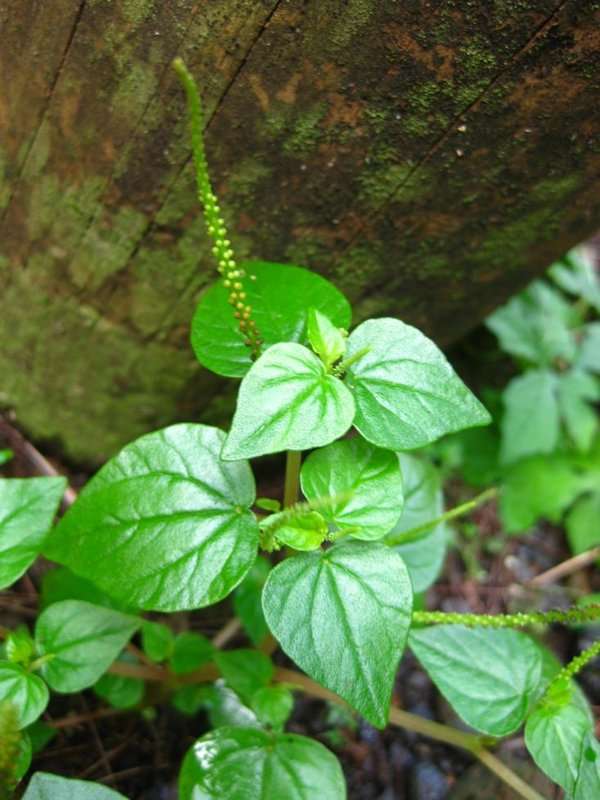
Peperomia is one of the two large genera of the family Piperaceae. It is estimated that there are over 1,000 species, occurring in all tropical and subtropical regions of the world. They are concentrated in South and Central America, but may also be found in southern North America, the Caribbean islands, Africa, Oceania, and southern and eastern parts of Asia. The exact number of species is difficult to determine, as some plants have been recorded several times with different names, and new species continue to be discovered. Peperomias have adapted to many different environments and their appe
Species
GENUS
- KingdomPlantae
- PhylumTracheophyta
- ClassMagnoliopsida
- OrderPiperales
- FamilyPiperaceae
草胡椒属(学名:Peperomia)是胡椒科下的一个属,为一年生或多年生、肉质草本植物。该属共有约1000种,分布于热带和亚热带地区。
via GBIF · Kew POWO
Museum specimens
- Specimen records
- 13,313
- With media
- 8,097
- Family
- Piperaceae
- Collections
- UNIVERSITY OF ALBERTA MUSEUMS, ECOSUR, INECOL, CICY, FCB-BUAP, IIB-UV
- Recorded in
- Mexico, Honduras
Research
221 papers- Peperomia pellucida (L.) Kunth and eye diseases: A review on phytochemistry, pharmacology and toxicology.Journal of integrative medicine · 2022
- Peperomia Pellucida (L.) Kunth: A Decade of Ethnopharmacological, Phytochemical, and Pharmacological Insights (2014-2025).Journal of experimental pharmacology · 2025
- Cannabinoid-like meroterpenoids from Peperomia incana.Phytochemistry · 2023
- Bioactive Phenolic Compounds from Peperomia obtusifolia.Molecules (Basel, Switzerland) · 2022
- Anti-trypanosomal Lignans Isolated from Salvadoran Peperomia pseudopereskiifolia.Journal of natural products · 2024
via PubMed
Wikidata facts
- Instance of
- taxon
- Image
- Coin Leaf Peperomia (Peperomia polybotrya 'Jayde') 1.jpg
Show 7 more facts
- taxon rank
- genus
- taxon name
- Peperomia
- Commons category
- Peperomia
- topic's main category
- Category:Peperomia
- Commons gallery
- Peperomia
- taxon common name
- 草胡椒属
Sources (2)
via Wikidata · CC0
~13 min read
Encyclopedic overview
14 sectionsContents
- Description
- Species
- Distribution
- Peperomias and humans
- Horticulture
- Food and medicine
- Propagation
- Gallery
- Examples of tropical, decorative foliage types
- Examples of arid climate succulent types
- Examples of geophytic peperomias
- See also
- References
- External links
Peperomia is one of the two large genera of the family Piperaceae. It is estimated that there are over 1,000 species, occurring in all tropical and subtropical regions of the world. They are concentrated in South and Central America, but may also be found in southern North America, the Caribbean islands, Africa, Oceania, and southern and eastern parts of Asia. The exact number of species is difficult to determine, as some plants have been recorded several times with different names, and new species continue to be discovered. Peperomias have adapted to many different environments and their appearances vary greatly. Some are epiphytes (growing on other plants) or lithophytes (growing on rock or in rock crevices), and many are xerophytes (drought-tolerant, with thick succulent structures to save water) or possess underground tubers (geophytes). Most species are compact perennial shrubs or vines.
Some Peperomias have thick, waxy, succulent leaves and stems; still, others are rather delicate, with paper-thin leaves. Many species will easily sunburn, preferring filtered or indirect, bright sunlight. Most of the Peperomias have minimal to virtually non-existent root systems (species-depending), with the entire mass often being nothing more than a collection of tiny, hair-like appendages used to anchor the plant. These roots, while delicate, also enable the plants to survive in less-than-ideal conditions; however, their fragility also places them at a greater risk for root rot if water does not drain sufficiently quickly.
Excerpted from Wikipedia’s “Peperomia” article, available under the CC BY-SA 4.0 licence.