File:Streichholz.jpg · Wikimedia Commons · See Wikimedia Commons
phenomenon
Sign in to saveAlso known as fact
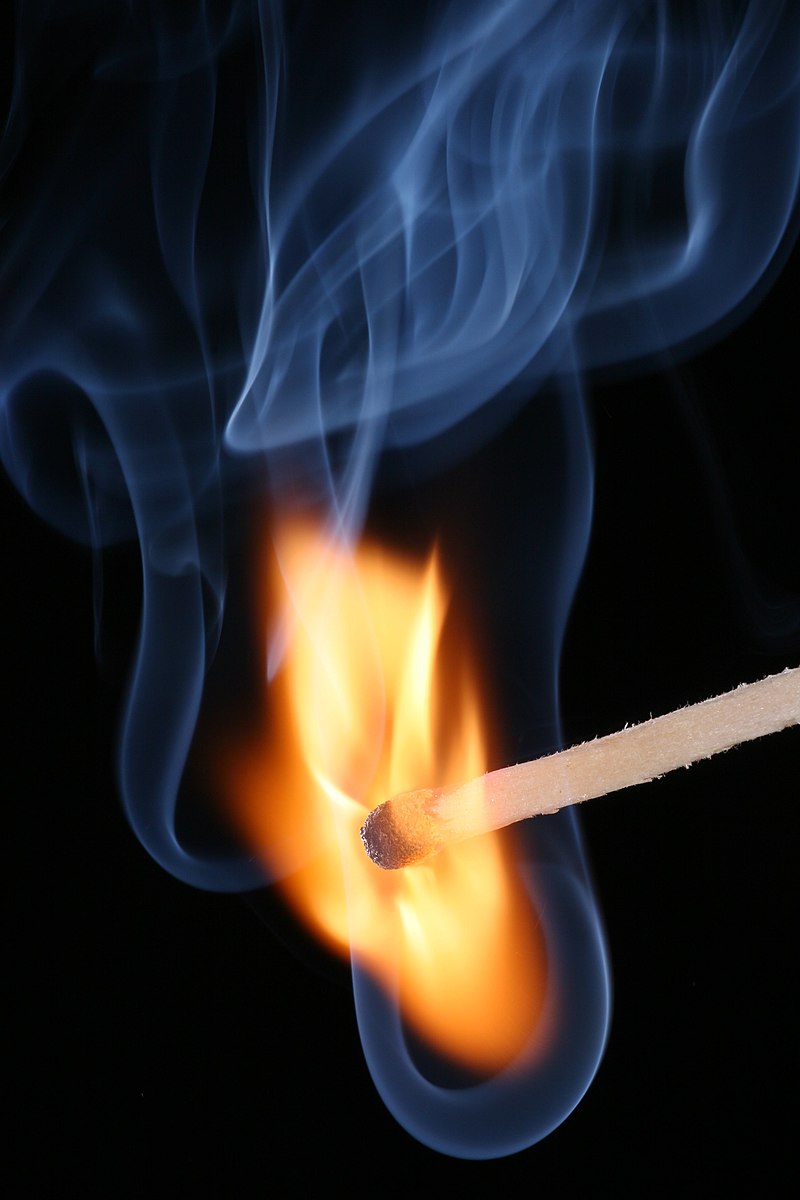
thumb|The combustion of a match is an observable occurrence, or event, and therefore a phenomenon.
A phenomenon is any observable event or occurrence that you can witness or perceive in the world around you, like a match burning. Understanding phenomena matters because it helps us describe and make sense of what happens in nature and everyday life.
AI-generated from the Wikipedia summary — may contain errors.
Wikidata facts
- Image
- Streichholz.jpg
Show 9 more facts
- opposite of
- noumenon
- described by source
- Armenian Soviet Encyclopedia
- Commons category
- Phenomena
- topic's main category
- Category:Phenomena
- has characteristic
- observation
- different from
- Phenomena
- manifestation of
- process
- studied by
- phenomenology
- P8168
- Jimmy Murakami
Sources (3)
via Wikidata · CC0
~4 min read
Encyclopedic overview
8 sectionsContents
- Common usage
- Philosophy
- Physiology
- {{anchor|Scientific phenomenon}}Science
- List
- Sociology
- References
- External links
thumb|The combustion of a match is an observable occurrence, or event, and therefore a phenomenon.
A phenomenon ( phenomena), sometimes spelled phaenomenon, is an observable event. The term came into its modern philosophical usage through Immanuel Kant, who contrasted it with the noumenon, which cannot be directly observed. Kant was heavily influenced by Gottfried Wilhelm Leibniz in this part of his philosophy, in which phenomenon and noumenon serve as interrelated technical terms. Far predating this, the ancient Greek Pyrrhonist philosopher Sextus Empiricus also used phenomenon and noumenon as interrelated technical terms.
Excerpted from Wikipedia’s “phenomenon” article, available under the CC BY-SA 4.0 licence.
Gallery (9)
Available in 84 languages
- Español
- Français
- Deutsch
- 中文
- 日本語
- Русский
- Português
- Italiano
- العربية
- हिन्दी
- Albanian
- Aragonese
- Armenian
- Arpitan
- azb
- Azerbaijani
- Bahasa Indonesia
- Bangla
Show 65 more
- Basque
- Bavarian
- Belarusian
- Bosnian
- Bulgarian
- Catalan
- Central Kurdish
- Corsican
- Croatian
- Czech
- Danish
- Esperanto
- Estonian
- Fijian
- Finnish
- Galician
- Georgian
- Greek
- Hebrew
- Hungarian
- Ido
- Interlingua
- Irish
- Kabyle
- Kara-Kalpak
- Kazakh
- Kurdish
- Kyrgyz
- Latin
- Latvian
- Lithuanian
- Macedonian
- Malay
- Manx
- Mongolian
- Moroccan Arabic
- N’Ko
- Nederlands
- Norwegian
- Norwegian Nynorsk
- Occitan
- Polski
- Punjabi
- Romanian
- Serbian
- Serbian (Latin)
- Sicilian
- simple
- Slovak
- Slovenian
- Svenska
- Tamil
- Tiếng Việt
- Türkçe
- Ukrainian
- Uzbek
- Venetian
- Welsh
- Wu Chinese
- zh_min_nan
- zh_yue
- Zulu
- فارسی
- ไทย
- 한국어
via Wikidata sitelinks · CC0