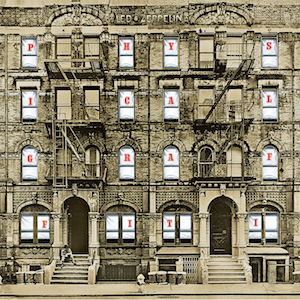
File:Led_Zeppelin_-_Physical_Graffiti.jpg · Wikimedia Commons · See Wikimedia Commons
Physical Graffiti
Sign in to save1975 studio album by Led Zeppelin
OverviewAI-generated
Physical Graffiti is a studio album by the band Led Zeppelin. Released on February 24, 1975, in the United Kingdom, the work is classified as a double album containing 15 tracks. It was produced by Jimmy Page and recorded at Olympic Studios. The album features the English language and encompasses the genres of hard rock and rock music.
The record was issued under the Swan Song Records label and is available through music streaming distribution formats. Selected tracks on the album include "Custard Pie," "The Rover," "Houses of the Holy," and "Trampled Under Foot." The album is part of the collection at the Museum of Modern Art.
Synthesized by Vinony from 21 facts across 2 sources: Wikidata, Itunes. Generated from structured data (not the Wikipedia text) and checked against those facts — may still contain errors.
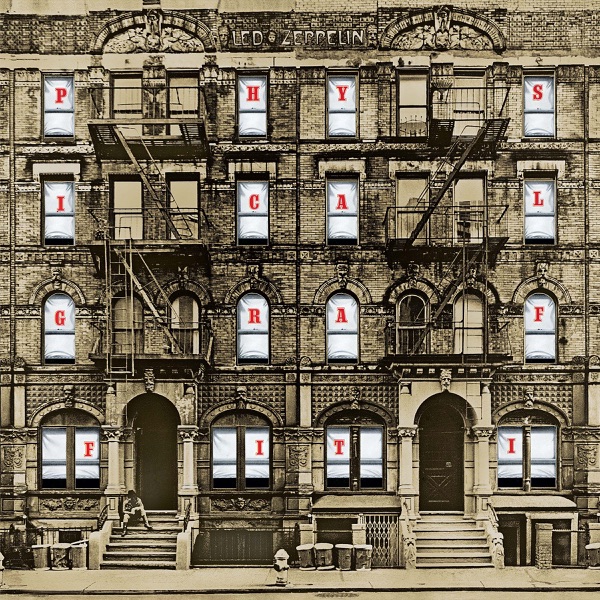
Key facts
- Released
- 24 February 1975 ( 1975-02-24 )
- Recorded
- July and December 1970 January–March 1971 May 1972 January–February 1974
- Genre
- Rock
- Length
- 82 : 59
- Label
- Swan Song
- Producer
- Jimmy Page
via Wikipedia infobox
Wikidata facts
- Instance of
- album
- Genre
- rock music
- Collection
- Museum of Modern Art
- Producer
- Jimmy Page
- Duration
- 4935
- Performer
- Led Zeppelin
- Record label
- Swan Song Records
- Distribution format
- music streaming
Show 11 more facts
- Commons category
- Physical Graffiti
- language of work or name
- English language
- publication date
- 1975-02-24
- title
- Physical Graffiti
- tracklist
- Down by the Seaside
- recorded at studio or venue
- Olympic Studios
- form of creative work
- studio album
- place of publication
- United Kingdom
- number of parts of this work
- 15
- review score
- 5
- has characteristic
- double album
Sources (9)
via Wikidata · CC0
~20 min read
Encyclopedic overview
Singles from Physical Graffiti
"Trampled Under Foot" / "Black Country Woman" Released: 2 April 1975
Excerpted from Wikipedia’s “Physical Graffiti” article, available under the CC BY-SA 4.0 licence.