File:Korfu_(GR),_Korfu,_Altstadt_--_2018_--_1156.jpg · Wikimedia Commons · See Wikimedia Commons
pier
Sign in to saveAlso known as beach pier
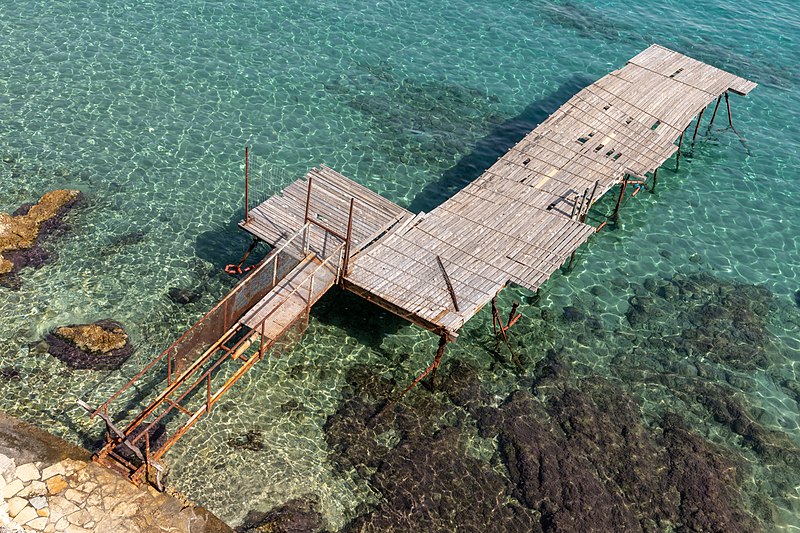
thumb|330x330px|A wooden pier in Corfu, Greece A pier is a raised structure that rises above a body of water and usually juts out from its shore, typically supported by piles or pillars, and provides above-water access to offshore areas. Frequent pier uses include fishing, boat docking and access for both passengers and cargo, and oceanside recreation. Bridges, buildings, and walkways may all be supported by architectural piers. Their open structure allows tides and currents to flow relatively unhindered, whereas the more solid foundations of a quay or the closely spaced piles of a wharf can a
Wikidata facts
- Subclass of
- public transport stop
- Image
- Scheveningen2005 3.jpg
- Has use
- berth
Show 10 more facts
- Commons category
- Piers (coastal structure)
- has immediate cause
- tide
- has contributing factor
- water transport
- OpenStreetMap tag
- man_made=pier
- topic's main category
- Category:Piers
- Commons gallery
- Pier
- different from
- jetty
- described by source
- Encyclopædia Britannica 11th edition
- on focus list of Wikimedia project
- Wikipedia:Vital articles/Level/4
- partially coincident with
- jetty
Sources (5)
via Wikidata · CC0
~10 min read
Encyclopedic overview
12 sectionsContents
- Types
- Working piers
- Fishing piers
- Piers of the world
- Belgium
- Netherlands
- United Kingdom
- England and Wales
- See also
- References
- Further reading
- External links
thumb|330x330px|A wooden pier in Corfu, Greece A pier is a raised structure that rises above a body of water and usually juts out from its shore, typically supported by piles or pillars, and provides above-water access to offshore areas. Frequent pier uses include fishing, boat docking and access for both passengers and cargo, and oceanside recreation. Bridges, buildings, and walkways may all be supported by architectural piers. Their open structure allows tides and currents to flow relatively unhindered, whereas the more solid foundations of a quay or the closely spaced piles of a wharf can act as a breakwater, and are consequently more liable to silting. Piers can range in size and complexity from a simple lightweight wooden structure to major structures extended over . In American English, a pier may be synonymous with a dock.
Piers have been built for several purposes, and because these different purposes have distinct regional variances, the term pier tends to have different nuances of meaning in different parts of the world. Thus in North America and Australia, where many ports were, until recently, built on the multiple pier model, the term tends to imply a current or former cargo-handling facility. In contrast, in Europe, where ports more often use basins and river-side quays than piers, the term is principally associated with the image of a Victorian cast iron pleasure pier which emerged in Great Britain during the early 19th century. However, the earliest piers pre-date the Victorian age.
Excerpted from Wikipedia’s “pier” article, available under the CC BY-SA 4.0 licence.