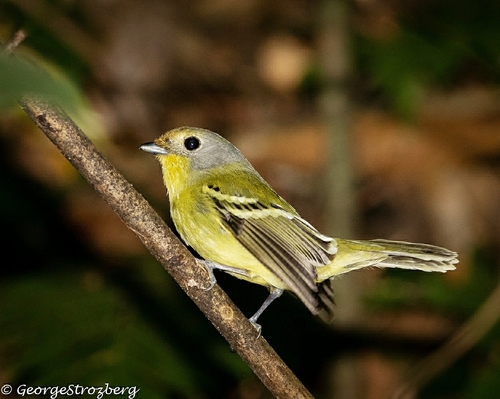
(c) gstroz, all rights reserved
Piprites
Sign in to savePiprites is a genus of bird currently placed in the family Tyrannidae. Prior to 1971, the genus was placed in the family Pipridae; its designation was initially changed based on morphological evidence, and genetic evidence confirmed its placement in 2009. In 2013, it was proposed that Piprites was to be placed in the unique family Pipritinae. The proposition was declined by the Comité de Clasificación de Sudamérica, a part of the American Ornithological Society, and the proposed family was changed to be a unique subfamily of the genus. The genus is composed of three species native to the neotr
Species
Wing-barred Piprites
GENUS
- KingdomAnimalia
- PhylumChordata
- ClassAves
- OrderPasseriformes
- FamilyCotingidae
via GBIF
Museum specimens
- Specimen records
- 5
- With media
- 10
- Family
- Cotingidae
- Collections
- ANSP
- Recorded in
- Brazil
Wikidata facts
- Instance of
- taxon
- Parent taxon
- Cotingidae
- Image
- Piprites pileata - Black-capped Piprites (Male) 01.JPG
Show 6 more facts
- Commons category
- Piprites
- taxon rank
- genus
- taxon name
- Piprites
- topic's main category
- Category:Piprites
- Commons gallery
- Piprites
- taxon common name
- Rillitanssijat
Sources (1)
via Wikidata · CC0
~2 min read
Encyclopedic overview
4 sectionsContents
- Etymology
- Species
- References
- External links
Piprites is a genus of bird currently placed in the family Tyrannidae. Prior to 1971, the genus was placed in the family Pipridae; its designation was initially changed based on morphological evidence, and genetic evidence confirmed its placement in 2009. In 2013, it was proposed that Piprites was to be placed in the unique family Pipritinae. The proposition was declined by the Comité de Clasificación de Sudamérica, a part of the American Ornithological Society, and the proposed family was changed to be a unique subfamily of the genus. The genus is composed of three species native to the neotropical realm, with distributions ranging from the Caribbean coast of Guatemala, Central America, and southeastern Argentina.
==Etymology== The generic name Piprites is derived from the Greek πιπρα (pipra), meaning "small bird" and originally associated with the great spotted woodpecker and the various Neotropical manakins. The suffix ῑ́της (-ī́tēs) is also Greek and denotes "resembling" or "similar to", denoting the genus' similarity to the manakins.
Excerpted from Wikipedia’s “Piprites” article, available under the CC BY-SA 4.0 licence.