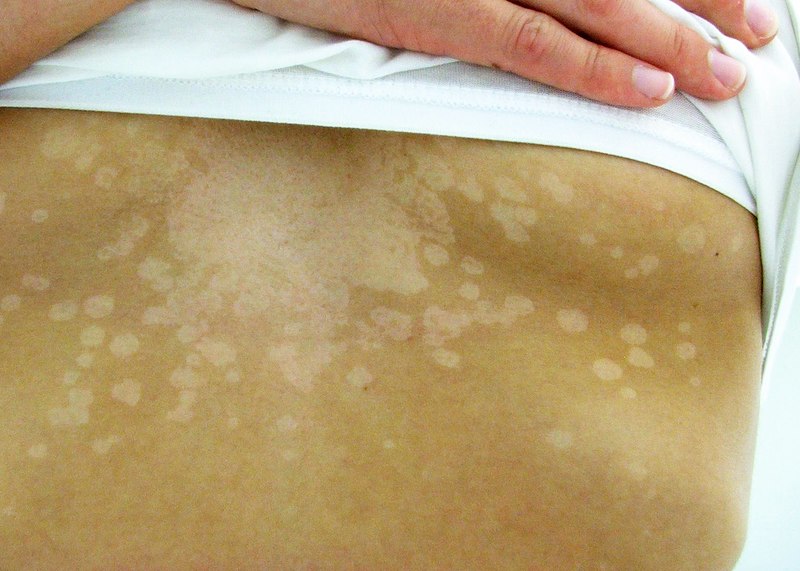
File:Tinea_versicolor1.jpg · Wikimedia Commons · See Wikimedia Commons
pityriasis versicolor
Sign in to saveAlso known as Infection by Pityrosporum furfur, Pityriasis versicolor (disorder), tinea versicolor, infections, Malassezia furfur, Malassezia furfur infection, tinea flava
condition characterized by a rash on the trunk and proximal extremities
Key facts
- Other names
- Dermatomycosis furfuracea, pityriasis versicolor, tinea flava, lota
- Specialty
- Dermatology
- Causes
- Malassezia globosa, Malassezia furfur
via Wikipedia infobox
Research
1,653 papersvia PubMed
Wikidata facts
- Image
- P versicolorklein.jpg
Show 10 more facts
- ICPC 2 ID
- S74
- on focus list of Wikimedia project
- WikiProject Medicine
- NCI Thesaurus ID
- C112833
- health specialty
- parasitology
- Commons category
- Tinea versicolor
- drug or therapy used for treatment
- oxiconazole
- ICD-9-CM
- 111.0
- exact match
- identifiers.org/doid/DOID:9060
- described by source
- Encyclopædia Britannica 11th edition
- different from
- dandruff
Sources (7)
via Wikidata · CC0
~6 min read
Encyclopedic overview
Tinea versicolor (also pityriasis versicolor) is a condition characterized by a skin eruption on the trunk and proximal extremities. The majority of tinea versicolor is caused by the fungus Malassezia globosa, although Malassezia furfur is responsible for a small number of cases. These yeasts are normally found on the human skin and become troublesome only under certain conditions, such as a warm and humid environment, although the exact conditions that cause initiation of the disease process are poorly understood.
The condition pityriasis versicolor was first identified in 1846. Versicolor comes from the Latin versāre 'to turn' + color.
Excerpted from Wikipedia’s “pityriasis versicolor” article, available under the CC BY-SA 4.0 licence.