File:The_Great_Basilica_Klearchos_2.jpg · Wikimedia Commons · See Wikimedia Commons
Pliska
Sign in to savePliska ( , ) was the first capital of the First Bulgarian Empire during the Middle Ages and is now a small town in Shumen Province, on the Ludogorie plateau of the Danubian Plain, 20 km northeast of the provincial capital, Shumen.
Key facts
- Settlement.name
- Pliska
- Settlement.native_name
- Плиска
- Settlement.native_name_lang
- bul
- Settlement.settlement_type
- Town
- Settlement.image_skyline
- The Great Basilica Klearchos 2.jpg
- Settlement.image_caption
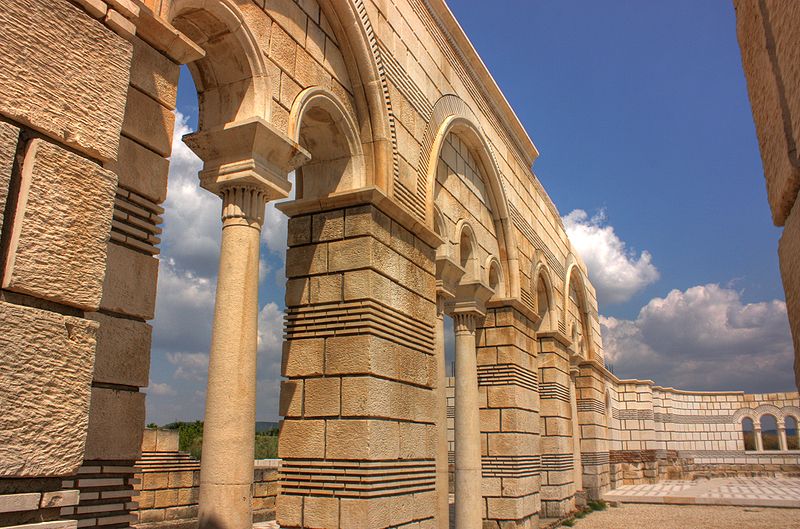
- The Great Basilica in Pliska
- Settlement.pushpin_map
- Bulgaria
- Settlement.pushpin_relief
- 1
- Settlement.pushpin_map_caption
- Location of Pliska within Bulgaria
- Settlement.subdivision_type
- Country
- Settlement.subdivision_name
- Bulgaria
- Settlement.subdivision_type1
- Province
- Settlement.subdivision_name1
- Shumen
- Settlement.subdivision_type2
- Municipality
- Settlement.subdivision_name2
- Kaspichan
- Settlement.leader_party
- GERB
- Settlement.leader_title
- Mayor
- Settlement.leader_name
- Milena Nedeva
via Wikipedia infobox
Wikidata facts
- Official name
- Pliska
- Country
- First Bulgarian Empire
- Located in
- Kaspichan
- Population
- 762
- Area
- 34.356
- Elevation
- 145
- Time zone
- UTC+03:00
- Capital of
- Bulgarian Empire
- Image
- Old Basilica in Pliska 2.JPG
Show 6 more facts
- Commons category
- Pliska
- topic's main category
- Category:Pliska
- native label
- Плиска
- postal code
- 9920
- P8168
- Bocquegney
- maintained by WikiProject
- WikiProject Bulgaria
Sources (10)
via Wikidata · CC0
~14 min read
Encyclopedic overview
10 sectionsContents
- History
- Prior to 681
- 681-893
- Archaeology of Pliska
- Scholarly disputes
- Modern Pliska
- Gallery
- Notes
- References
- External links
Pliska ( , ) was the first capital of the First Bulgarian Empire during the Middle Ages and is now a small town in Shumen Province, on the Ludogorie plateau of the Danubian Plain, 20 km northeast of the provincial capital, Shumen.
Pliska was the first capital of Bulgaria. According to legend, it was founded by Asparuh of Bulgaria in the late 7th century; this legend is archaeologically unsubstantiated. The site was originally an encampment, with the first tent-shaped buildings at Pliska of uncertain date. No evidence exists of a settlement before the 9th century, and claims that the site dates from Late Antiquity have been contested.
Excerpted from Wikipedia’s “Pliska” article, available under the CC BY-SA 4.0 licence.
Gallery (22)
On the map
6 mapped locations