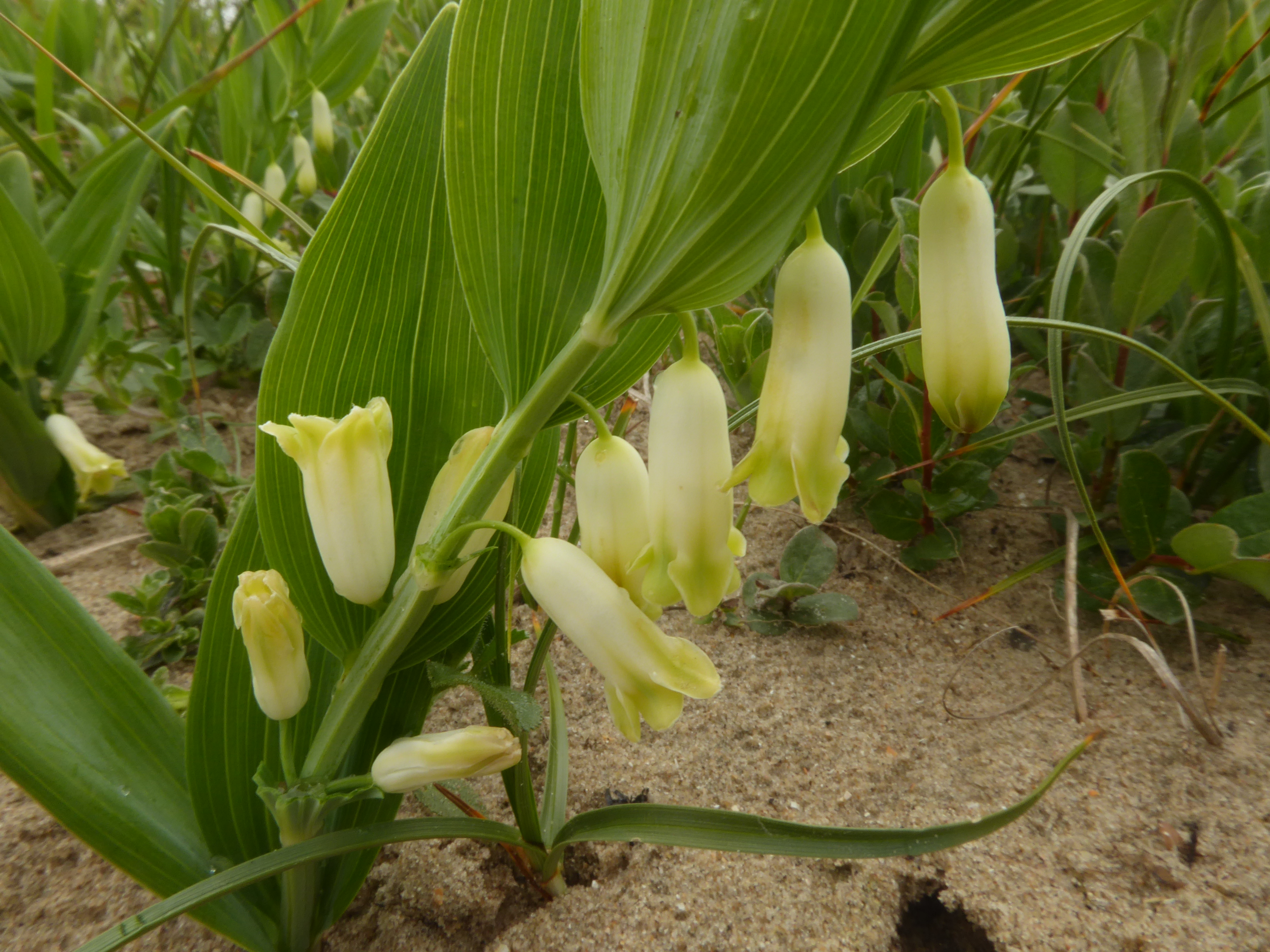
Image from GBIF · CC BY-NC-ND
OverviewAI-generated
Polygonatum odoratum is a species of herbaceous plant within the family Asparagaceae. Its taxonomic classification includes the order Asparagales, the class Liliopsida, and the phylum Tracheophyta. The species is also referred to by the common name angular Solomon's-seal. Its parent taxon is Polygonatum, and it is classified under the kingdom Plantae.
The plant produces berries and has uses as a vegetable and medicinal plant. Its taxon range includes China, Fujian, Tianjin, and Guangdong. Records from iDigBio indicate occurrences in Poland, Romania, Japan, Russia, and Ukraine, with collections held by institutions such as the University of Alberta Museums. The taxon status is accepted, and the author citation is (Mill.) Druce.
Synthesized by Vinony from 39 facts across 7 sources: Wikidata, GBIF, Gbif Occ, Plants of the World, WoRMS, iDigBio, Vinony graph. Generated from structured data (not the Wikipedia text) and checked against those facts — may still contain errors.
Species
angular Solomon's-seal
SPECIES
- KingdomPlantae
- PhylumTracheophyta
- ClassLiliopsida
- OrderAsparagales
- FamilyAsparagaceae
Polygonatum odoratum Le Sceau-de-Salomon odorant (Polygonatum odoratum ou Polygonatum officinale) est une plante herbacée vivace, rhizomateuse, de la famille des Asparagacées et du genre Polygonatum. Sommaire 1 Noms vernaculaires 2 Description 3 Usages 4 Notes et références 5 Liens externes Noms vernaculaires Grenouillet, faux muguet ou herbe aux panaris. Description Cette espèce se caractérise par sa tige anguleuse, ses fleurs en tube, solitaires ou par paires, sans dépression à mi-longueur du tube, ses baies bleu noirâtre à maturité. Usages François Couplan la classe parmi les plantes toxiques. Ses fruits peuvent provoquer des troubles digestifs et des troubles cardiaques graves. Et son rhizome est très irritant s'il est ingéré. La jeune plante a parfois été consommée, mais sa consommation n'est pas recommandée, car l'espèce est souvent assez dans son aire naturelle de répartition, et la plante adulte contient des raphides d'Oxalate de calcium [« extrêmement irritants mécaniquement », et « riche en saponosides toxiques, en particulier les fruits »[1] Elle a eu ou a encore localement des usages médicinaux : son rhizome peut être employé, en usage externe, comme antiecchymotique. C
via GBIF · Kew POWO
Museum specimens
- Specimen records
- 2,539
- With media
- 1,838
- Family
- Asparagaceae
- Collections
- UNIVERSITY OF ALBERTA MUSEUMS, OSW, CM, NHA, RSA, DEK
- Recorded in
- Poland, Romania, Japan, Russia, Ukraine, China, France, Austria
Wikidata facts
- Instance of
- taxon
- Subclass of
- herbaceous plant
- Parent taxon
- Polygonatum
- Image
- Polygonatum odoratum jfg.jpg
- Has use
- medicinal plant
Show 10 more facts
- taxon rank
- species
- taxon name
- Polygonatum odoratum
- Commons category
- Polygonatum odoratum
- taxon common name
- sellu de salomón
- Commons gallery
- Polygonatum odoratum
- has fruit type
- berry
- taxon range
- Zhoushan Archipelago
- short name
- P. odoratum
- taxon author citation
- (Mill.) Druce
via Wikidata · CC0
~3 min read
Encyclopedic overview
Polygonatum odoratum (syn. P. officinale), the angular Solomon's seal or scented Solomon's seal, is a species of flowering plant in the family Asparagaceae, native to Europe, the Caucasus, Siberia, the Russian Far East, China, Mongolia, Korea, Nepal and Japan. In the United Kingdom it is one of three native species of the genus, the others being P. multiflorum and P. verticillatum.
The genus name Polygonatum comes from the Greek words "poly", meaning "many", and "gonu", meaning "knee joint". This is in reference to the plant's jointed rhizomes. The Latin specific epithet odoratum means "scented".
Excerpted from Wikipedia’s “Polygonatum odoratum” article, available under the CC BY-SA 4.0 licence.