Encyclopedia of Life · EOL (see source)
Polyrhachis
Sign in to savePolyrhachis is a genus of formicine ants found in the Old World with over 600 species. The genus is yet to be comprehensively resolved and contains many varied species including nest-weavers (e.g. Polyrhachis dives), swimming workers (e.g. Polyrhachis sokolova), soil (e.g. Polyrhachis proxima) and tree-dwellers (e.g. Polyrhachis bicolor). The first fossil record of this genus was of Polyrhachis annosa from the Miocene.
Species
GENUS
- KingdomAnimalia
- PhylumArthropoda
- ClassInsecta
- OrderHymenoptera
- FamilyFormicidae
4 ouvrieres, 2 [[queen]] et 2 [[male]] du releve F 43, Nion, foret sombre, terreau d' Elaeis. Proche de la precedente, mais probablement nouvelle. A reetudier, les collections et documents consultes laissant une incertitude sur les especes de ce groupe.
via GBIF
Museum specimens
- Specimen records
- 3,517
- With media
- 38
- Family
- Formicidae
- Collections
- USNM, CAS
- Recorded in
- Australia, Myanmar, Palau, Tanzania
Wikidata facts
- Instance of
- taxon
- Parent taxon
- Camponotini
- Image
- PolyrhachisGracilior2.jpg
Show 4 more facts
- taxon name
- Polyrhachis
- taxon rank
- genus
- Commons category
- Polyrhachis
- topic's main category
- Category:Polyrhachis
Sources (1)
via Wikidata · CC0
~3 min read
Encyclopedic overview
6 sectionsContents
- General morphology
- Ecology
- Subgenera
- Selected species
- References
- External links
Polyrhachis is a genus of formicine ants found in the Old World with over 600 species. The genus is yet to be comprehensively resolved and contains many varied species including nest-weavers (e.g. Polyrhachis dives), swimming workers (e.g. Polyrhachis sokolova), soil (e.g. Polyrhachis proxima) and tree-dwellers (e.g. Polyrhachis bicolor). The first fossil record of this genus was of Polyrhachis annosa from the Miocene.
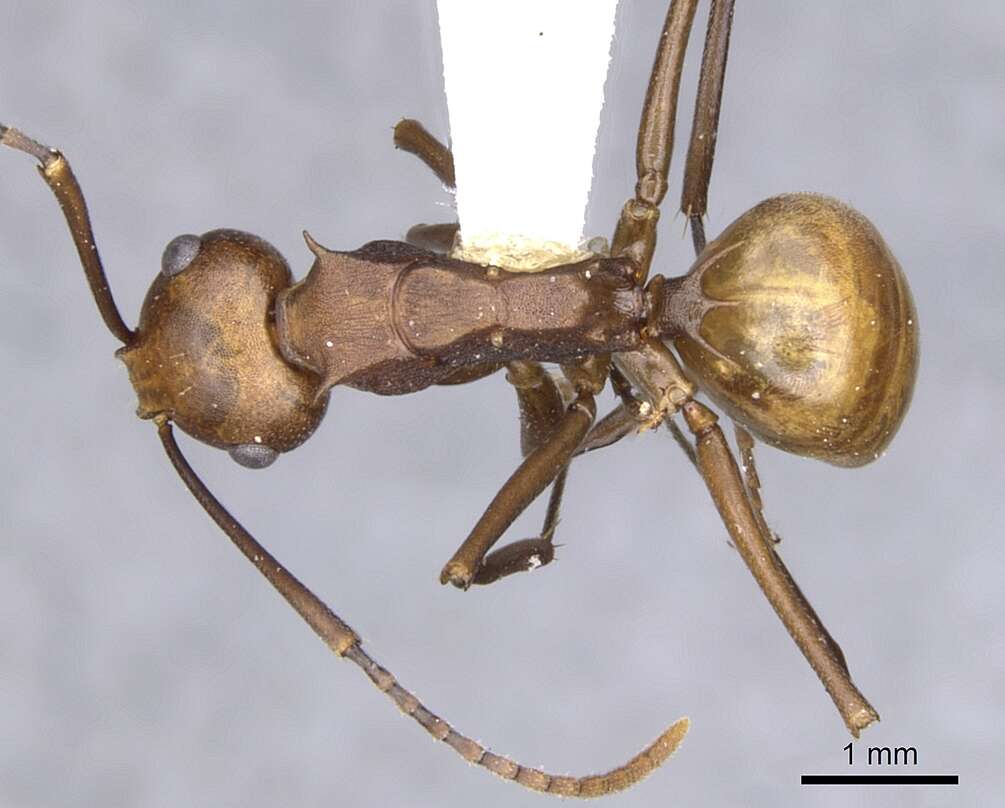
==General morphology== Size: Workers range in size approx 5–10mm in length. Eyes developed, no ocelli. Antennae have 12 segments. Antennal insertions situated far from posterior margin of clypeus. Mesosoma of most species have spines on one or more of its pronotal, mesonotal or propodeal components. Petiole armed with spines or teeth. First gastral tergite well developed, longer in dorsal view than exposed parts of the following terga together. Opening at gastral apex for release of venom lacking a radial fringe of hairs.
Excerpted from Wikipedia’s “Polyrhachis” article, available under the CC BY-SA 4.0 licence.