File:Botticelli-primavera.jpg · Wikimedia Commons · See Wikimedia Commons
Primavera
Sign in to saveAlso known as La Primavera, Spring, Allegory of Spring, Primavera (Botticelli), Primavera Botticelli
painting by Sandro Botticelli
Key facts
- Artist
- Sandro Botticelli
- Year
- late 1470s or early 1480s
- Medium
- Tempera on panel
- Dimensions
- 202 cm × 314 cm (80 in × 124 in)
- Location
- Uffizi , Florence
via Wikipedia infobox
Wikidata facts
- Instance of
- painting
- Country
- Italy
- Main subject
- spring
- Depicts
- spring
- Movement
- Early Renaissance
- Material used
- plaster
- Creator
- Sandro Botticelli
- Collection
- Uffizi Gallery
- Image
- Sandro Botticelli - La Primavera - Google Art Project.jpg
- Height
- 207
- Width
- 319
Show 9 more facts
- Commons category
- Primavera by Sandro Botticelli
- inception
- 1480-00-00
- inventory number
- 8360
- copyright status
- public domain
- described at URL
- catalogo.uffizi.it/it/29/ricerca/detailiccd/1185170
- title
- La Primavera
- time period
- Early Renaissance
- name
- Vénus que les Grâces couronnent de fleurs, allégorie du Printemps
Sources (7)
via Wikidata · CC0
~20 min read
Encyclopedic overview
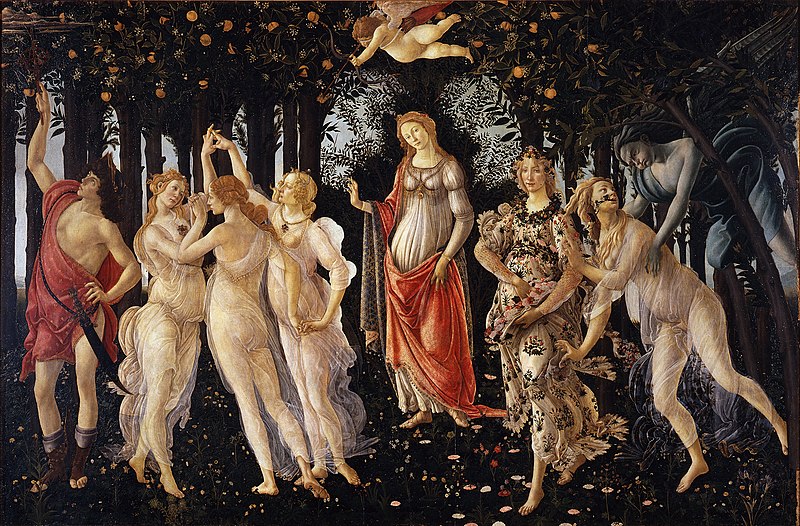
Primavera ( Italian pronunciation: [primaˈvɛːra], meaning "Spring") is a large panel painting in tempera paint by the Italian Renaissance painter Sandro Botticelli made in the late 1470s or early 1480s (datings vary). It has been described as "one of the most written about, and most controversial paintings in the world", and also "one of the most popular paintings in Western art".
The painting depicts a group of figures from classical mythology in a garden, but no story has been found that brings this particular group together. Most critics agree that the painting is an allegory based on the lush growth of Spring, but accounts of any precise meaning vary, though many involve the Renaissance Neoplatonism which then fascinated intellectual circles in Florence. The subject was first described as Primavera by the art historian Giorgio Vasari who saw it at Villa Castello, just outside Florence, by 1550.
Excerpted from Wikipedia’s “Primavera” article, available under the CC BY-SA 4.0 licence.