Encyclopedia of Life · EOL (see source)
Ptilocercus
Sign in to savePtilocercus is a genus of treeshrew and the sole member of the family Ptilocercidae.
Species
GENUS
- KingdomAnimalia
- PhylumChordata
- ClassMammalia
- OrderScandentia
- FamilyPtilocercidae
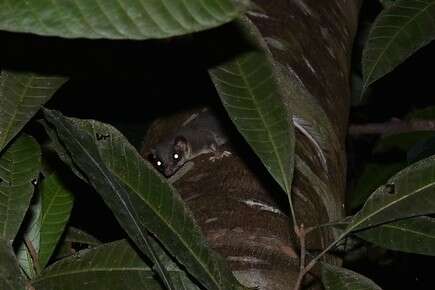
The pen-tailed tree-shrew (Ptilocercus lowii) was classified with other tree-shrews in the Family Tupaiidae, but has been placed in its own family, Ptilocercidae family.[1]).The body is 130-140 mm and the tail is 160-190 mm. The back is gray to light brown; the belly is white/yellowish belly. There are plume-like hairs on the latter 2/5ths of the tail. The "pen tail" is proximally black, fading to white distally. Individuals often have a black eye mask. The weight is 40-62 g (1.41-2.19 oz).It lives in peninsular Thailand, Malaysia, Sumatra, northern Borneo and nearby small islands. It occurs in primary and secondary forests, rubber farms and in houses near forest edges. It is often associated with the palm tree Eugeissona tristis. It is usually caught 1.5-2 m off the ground on vines and branches at altitudes from sea level to 2000 m (5). It is the only nocturnal tree-shrew. It is quite lethargic during the day and will often confront a human disturbance by turning on its back exposing the belly, hissing loudly and gaping widely, often urinating and defecating. It is energetic at night; if disturbed, it quickly runs away from its disturber (6). Communal nesting is suspected as group
via GBIF
Museum specimens
- Specimen records
- 5
- Family
- Ptilocercidae
- Collections
- MVZ, NHMUK
- Recorded in
- Malaysia
~1 min read
Encyclopedic overview
2 sectionsContents
- Taxonomy
- References
Ptilocercus is a genus of treeshrew and the sole member of the family Ptilocercidae.
== Taxonomy == Today the genus (and family) is represented by a single species, the pen-tailed treeshrew (Ptilocercus lowii). However, this genus is very ancient and considered the most primitive of all the treeshrews. In 2016 a new species was described from China dated to the Early Oligocene about 34 million years ago. This species, Ptilocercus kylin, is so strikingly similar to the living species that it can be considered a sister taxa. This suggests that the Ptilocercidae have evolved little change over millions of years.
Excerpted from Wikipedia’s “Ptilocercus” article, available under the CC BY-SA 4.0 licence.
Available in 10 languages
via Wikidata sitelinks · CC0