Encyclopedia of Life · EOL (see source)
Pulicidae
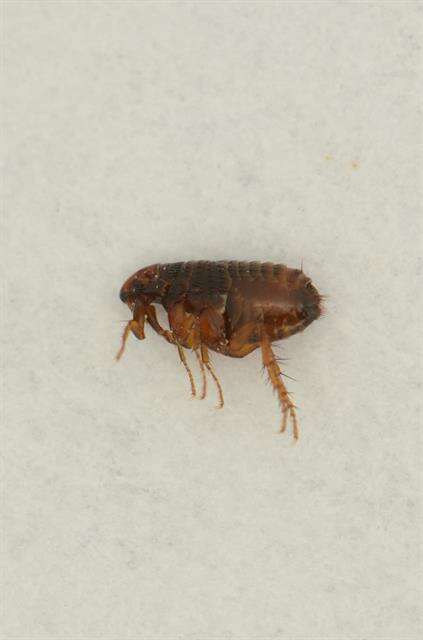
Sign in to saveThe Pulicidae are a flea family in the order Siphonaptera. Currently, this family has 181 species in 27 genera. Of these, 16 are known from North America.
Species
FAMILY
- KingdomAnimalia
- PhylumArthropoda
- ClassInsecta
- OrderSiphonaptera
- FamilyPulicidae
亞科[1] Archaeopsyllinae / Archaeopsyllini Moeopsyllini Pulicinae / Pulicini Spilopsyllinae / Spilopsyllini Xenopsyllinae / Xenopsyllini 蚤科(Pulicidae)是蚤目下面的一個科,其下有27屬181種,分佈遍及全球。其中有16種發現於北美洲。 最廣為人知的貓蚤、狗蚤和人蚤都是該科下的生物。[2] 參考文獻 ^ Pulicidae on www.faunaeur.org ^ Triplehorn, Charles A. Borror and Delong's introduction to the Study of Insects. Brooks/Cole. 2005.
via GBIF
Museum specimens
- Specimen records
- 384
- With media
- 45
- Family
- Pulicidae
- Collections
- FCB-UANL, UAM, UCSB, DUGWAY, MNA, MSU
- Recorded in
- Mexico, United States
Wikidata facts
Show 4 more facts
- Commons category
- Pulicidae
- topic's main category
- Category:Pulicidae
- taxon name
- Pulicidae
- taxon rank
- family
Sources (1)
via Wikidata · CC0
~1 min read
Encyclopedic overview
3 sectionsContents
- Ecology
- References
- External links
The Pulicidae are a flea family in the order Siphonaptera. Currently, this family has 181 species in 27 genera. Of these, 16 are known from North America.
Like all 2,500 Siphonaptera, the Pulicidae are ectoparasites. These fleas are wingless, laterally flattened, and great jumpers. They must be able to jump quickly and at great relative heights in order to latch onto their host for feeding and for rapid escape from their host. They make incredible jumps using the protein, resilin. It charges the energy in their body, allowing more forceful and frequent jumps than would be possible relying on only their muscles. This also means that they can jump frequently without exhausting their muscles. They mainly feed on mammal blood, and many Siphonoptera families, including Pulicidae, transmit disease.
Excerpted from Wikipedia’s “Pulicidae” article, available under the CC BY-SA 4.0 licence.