Pyramid of Djoser
Also known as Pyramid of Zoser, step pyramid
Archeological site in Egypt
AI overview
The Pyramid of Djoser is an ancient stone structure built in Egypt around 2670 BCE as a monumental tomb for the pharaoh Djoser. It is significant as one of the world's oldest large-scale stone buildings and represents a major advancement in Egyptian architecture and engineering.
AI-generated from the Wikipedia summary — may contain errors.
Key facts
- Architect
- Imhotep
- Constructed
- c. 2667–2648 BC ( 3rd dynasty )
- Type
- Step pyramid
- Material
- Limestone
- Height
- 62.5 m (205 ft; 119 cu)
- Base
- 121 m (397 ft; 231 cu) by, 109 m (358 ft; 208 cu)
- Volume
- 330,400 m (11,667,966 ft )
- Part of
- Memphis and its Necropolis – the Pyramid Fields from Giza to Dahshur
- Criteria
- Cultural: i, iii, vi
- Reference
- 86-002
- Inscription
- 1979 (3rd Session )
via Wikipedia infobox
Wikidata facts
~24 min read
Article
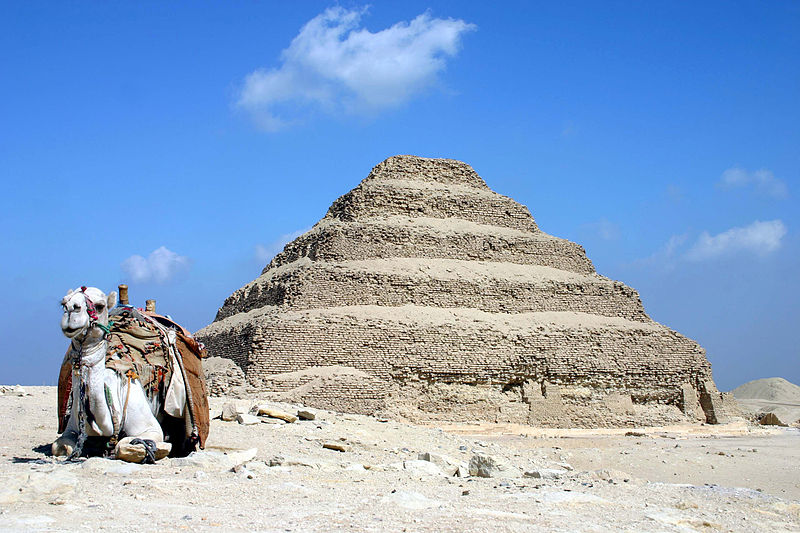
The Pyramid of Djoser, sometimes called the Step Pyramid of Djoser or Step Pyramid of Horus Netjerikhet, is an archaeological site in the Saqqara necropolis, Egypt, northwest of the ruins of Memphis. It was the first Egyptian pyramid to be built. The six-tier, four-sided structure is the earliest colossal stone building in Egypt. It was built in the 27th century BC during the Third Dynasty for the burial of Pharaoh Djoser. The pyramid is the central feature of a vast mortuary complex in an enormous courtyard surrounded by ceremonial structures and decoration.
The pyramid went through several revisions and redevelopments of the original plan. The pyramid originally stood 62.5 m (205 ft) tall, with a base of 109 m × 121 m (358 ft × 397 ft) and was clad in polished white limestone. As of 1997, the step pyramid (or proto-pyramid) was considered to be the earliest large-scale cut stone construction made by man, although the nearby enclosure wall "Gisr el-Mudir" is suggested by some Egyptologists to predate the complex, and the South American pyramids at Caral are contemporary.