Scott, Elizabeth;Visser, John D.;Yetman, Caroline A.;Oliver, Lauren;Broadley, Donald G.
Pyxicephalus
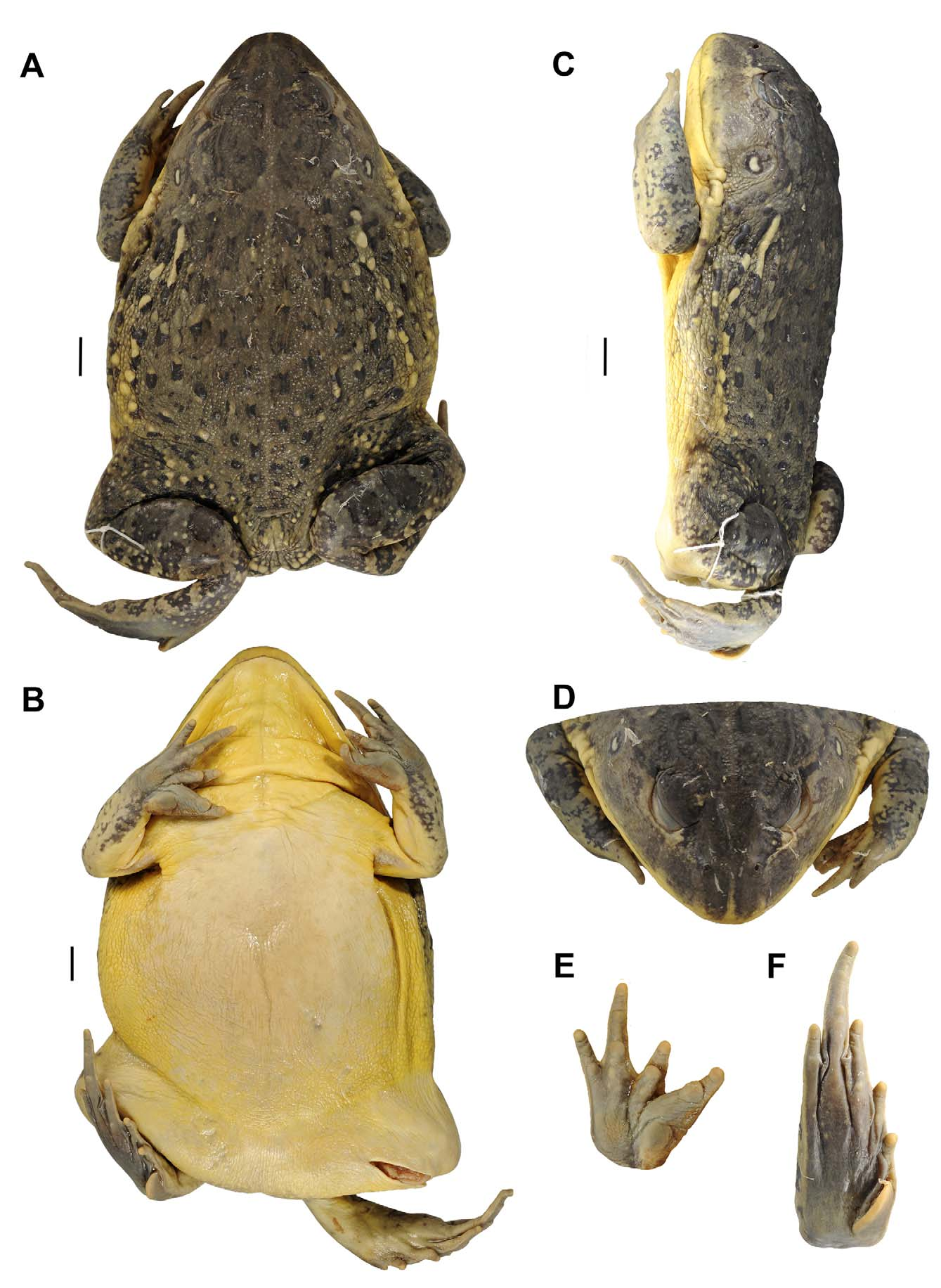
Sign in to savePyxicephalus (πυξίς, pyxis = "(round) box," κεφαλή, kephalē = "head") is a genus of true frogs from Sub-Saharan Africa, commonly referred to as African bull frogs or bull frogs. They are very large (P. adspersus) to large (remaining species) frogs, with females significantly smaller than males. They may take decades to reach their full size potential and they are some of the longest-living frogs, possibly able to reach ages as high as 45 years.
Species
Giant African Bullfrog
GENUS
- KingdomAnimalia
- PhylumChordata
- ClassAmphibia
- OrderAnura
- FamilyPyxicephalidae
Pyxicephalus es un género de anfibios anuros de la familia Pyxicephalidae. Se distribuyen por las zonas no selváticas del África subsahariana.
via GBIF
Museum specimens
- Specimen records
- 96
- Family
- Pyxicephalidae
- Collections
- ROM, AM, CAS, MNHN, TNHC
- Recorded in
- Botswana, South Africa, Kenya, SéNéGal, Eritrea, Chad, Tchad, Burkina Faso
Wikidata facts
- Instance of
- taxon
- Parent taxon
- Pyxicephalinae
- Image
- Pyxicephalus adspersus.jpg
Show 4 more facts
- topic's main category
- Category:Pyxicephalus
- Commons category
- Pyxicephalus
- taxon name
- Pyxicephalus
- taxon rank
- genus
Sources (1)
via Wikidata · CC0
~2 min read
Encyclopedic overview
2 sectionsContents
- Species
- References
Pyxicephalus (πυξίς, pyxis = "(round) box," κεφαλή, kephalē = "head") is a genus of true frogs from Sub-Saharan Africa, commonly referred to as African bull frogs or bull frogs. They are very large (P. adspersus) to large (remaining species) frogs, with females significantly smaller than males. They may take decades to reach their full size potential and they are some of the longest-living frogs, possibly able to reach ages as high as 45 years.
These bulky and voracious predators will eat any animal (including small vertebrates and conspecifics) they can fit in their large mouth that has two fang-like projections on the lower jaw, but they are themselves commonly eaten by humans, predatory birds, mammals and monitor lizards. They remain hidden—they are fossorial—for much of the year, but emerge to breed in temporary pools after rains. The tadpoles often are guarded by the male.
Excerpted from Wikipedia’s “Pyxicephalus” article, available under the CC BY-SA 4.0 licence.