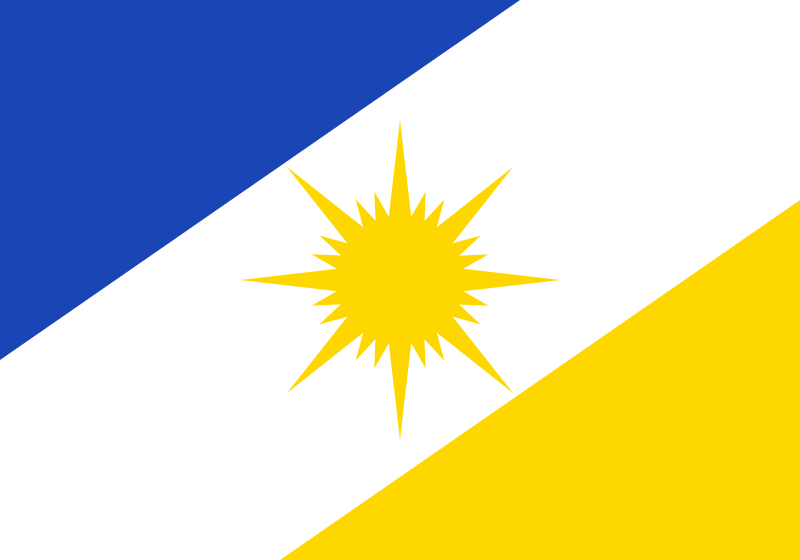
File:Bandeira_do_Tocantins.svg · Wikimedia Commons · See Wikimedia Commons
Tocantins
Sign in to saveAlso known as Tocantins State
Tocantins () is one of the 26 states of Brazil. It is the newest state, formed in 1988 and encompassing what had formerly been the northern two-fifths of the state of Goiás. Tocantins covers and had an estimated population of 1,496,880 in 2014. Construction of its capital, Palmas, began in 1989; most of the other cities in the state date to the Portuguese colonial period. With the exception of Araguaína, there are few other cities with a significant population in the state. The government has invested in a new capital, a major hydropower dam, railroads and related infrastructure to develop thi
Tocantins is Brazil's newest state, created in 1988 from the northern part of Goiás, with a population of approximately 1.5 million people. It matters as an example of Brazil's modern administrative reorganization and represents an area of significant infrastructure development, including its newly built capital city of Palmas and major hydropower projects.
AI-generated from the Wikipedia summary — may contain errors.
Key facts
- Settlement.name
- Tocantins
- Settlement.native_name_lang
- pt
- Settlement.settlement_type
- State
- Settlement.image_flag
- Bandeira do Tocantins.svg
- Settlement.flag_size
- 125px
- Settlement.image_shield
- Coat of arms of Tocantins.svg
- Settlement.motto
- "Co yvy ore retama" (Translated from Tupi: "This land is ours")
- Settlement.anthem
- Hino do Tocantins
- Settlement.image_map
- Tocantins in Brazil.svg
- Settlement.map_caption
- Location in Brazil
- Settlement.subdivision_type
- Country
- Settlement.subdivision_name
- Brazil
- Settlement.seat_type
- Capital and largest city
- Settlement.seat
- Palmas
- Settlement.leader_title
- Governor
- Settlement.leader_name
- Wanderlei Barbosa (Republicanos)
- Settlement.leader_title1
- Vice Governor
- Settlement.leader_name1
- Laurez da Rocha Moreira (PDT)
via Wikipedia infobox
Wikidata facts
- Instance of
- federative unit of Brazil
- Part of
- North Region
- Named after
- Tocantins River
- Demonym
- tocantinense
- Country
- Brazil
- Located in
- North Region
- Contains
- Tocantínia
- Capital
- Palmas
- Population
- 1496880
- Area
- 278420.7
- Elevation
- 525
- Shares border with
- Mato Grosso
- Official website
- portal.to.gov.br
- Image
- Terras Altas do Brasil.jpg
Show 11 more facts
- different from
- Tocantins
- Commons category
- Tocantins
- short name
- TO
- topic's main category
- Category:Tocantins
- Commons gallery
- Tocantins
- inception
- 1988-00-00
- category of associated people
- Category:People from Tocantins
- category for people born here
- Category:Births in Tocantins
- literacy rate
- 94
- Human Development Index
- 0.749
- electorate
- 1057874
Sources (10)
via Wikidata · CC0
~13 min read
Encyclopedic overview
15 sectionsContents
- Etymology
- Geography
- Climate
- Vegetation
- History
- Demographics
- Largest cities
- Economy
- Infrastructure
- Flag
- Cities
- Represented in popular culture
- Footnotes
- References
- External links
Tocantins () is one of the 26 states of Brazil. It is the newest state, formed in 1988 and encompassing what had formerly been the northern two-fifths of the state of Goiás. Tocantins covers and had an estimated population of 1,496,880 in 2014. Construction of its capital, Palmas, began in 1989; most of the other cities in the state date to the Portuguese colonial period. With the exception of Araguaína, there are few other cities with a significant population in the state. The government has invested in a new capital, a major hydropower dam, railroads and related infrastructure to develop this primarily agricultural area. The state has 0.75% of the Brazilian population and is responsible for 0.5% of the Brazilian GDP.
Tocantins has attracted hundreds of thousands of new residents, primarily to Palmas. It is building on its hydropower resources. The Araguaia and Tocantins rivers drain the largest watershed that lies entirely inside Brazilian territory. The Rio Tocantins has been dammed for hydropower, creating a large reservoir that has become a center of recreation. Because it is in the central zone of the country, Tocantins has characteristics of the Amazon Basin, and also semi-open pastures, known as cerrado. The Bananal Island (Ilha do Bananal), in the southwest of the State, is the second largest fluvial island in the world. Tocantins is also home to the Araguaia National Park, the Carajás Indian reservations, and Jalapão State Park, which is about from Palmas. There, the rivers create oases in the dry landscape, attracting many ecotourists to the region.
Excerpted from Wikipedia’s “Tocantins” article, available under the CC BY-SA 4.0 licence.
Gallery (30)
On the map
3 mapped locations
Available in 100 languages
- Español
- Français
- Deutsch
- 中文
- 日本語
- Русский
- Português
- Italiano
- العربية
- हिन्दी
- Afrikaans
- Aragonese
- Armenian
- Asturian
- Aymara
- Azerbaijani
- Bahasa Indonesia
- Basque
Show 81 more
- be_x_old
- Belarusian
- Bishnupriya
- Bosnian
- Breton
- Bulgarian
- Catalan
- Cebuano
- Chuvash
- Cornish
- Crimean Tatar
- Croatian
- Czech
- Danish
- Dzongkha
- eml
- Esperanto
- Estonian
- Finnish
- Galician
- Georgian
- Greek
- Guarani
- Hebrew
- Hungarian
- Icelandic
- Ido
- Interlingua
- Irish
- Kazakh
- Ladino
- Latin
- Latvian
- Limburgish
- Lithuanian
- Macedonian
- Malagasy
- Malay
- Marathi
- Mazanderani
- Minangkabau
- Mingrelian
- Nederlands
- Northern Frisian
- Norwegian
- Norwegian Nynorsk
- Occitan
- Ossetic
- Piedmontese
- Polski
- Quechua
- Romanian
- Scots
- Serbian
- Serbian (Latin)
- simple
- Sinhala
- Slovak
- Svenska
- Swahili
- Tajik
- Tatar
- Tetum
- Tiếng Việt
- Toki Pona
- Türkçe
- Ukrainian
- Urdu
- Uzbek
- Venetian
- Volapük
- Waray
- Welsh
- Western Panjabi
- Wu Chinese
- Yoruba
- zh_min_nan
- zh_yue
- فارسی
- ไทย
- 한국어
via Wikidata sitelinks · CC0