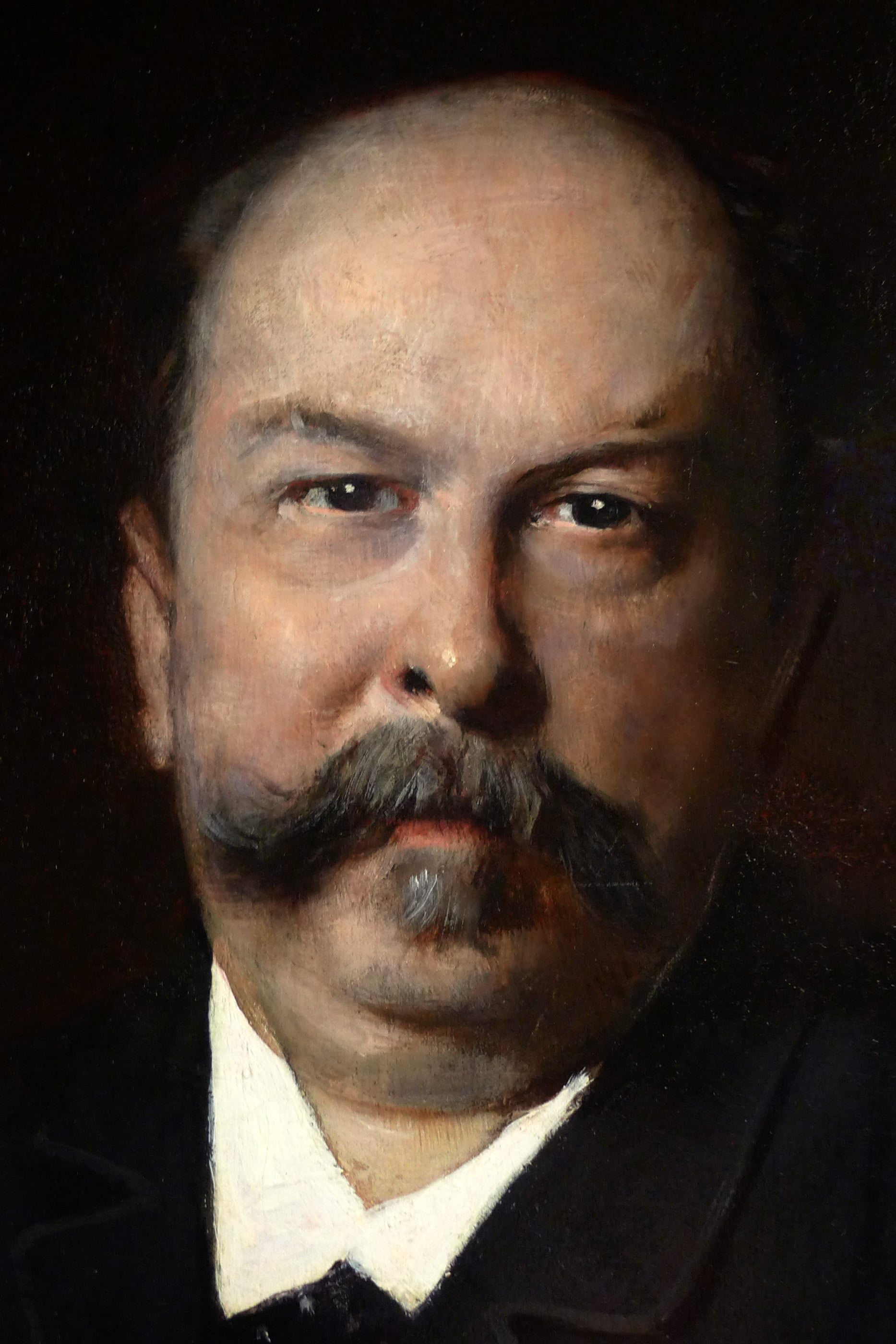
Profile via TMDB · Courtesy of TMDB
Henri Meilhac
Sign in to saveFrench dramatist and opera librettist (1830–1897)
OverviewAI-generated
Henri Meilhac was a writer born in Paris, France. His birth date is recorded as February 23, 1831, in one source and February 21, 1831, in another. He died on July 6, 1897. Meilhac used the pseudonyms Ivan Baskoff and Thallin.
He is recognized in the Academie Francaise collection. His body of work includes 36 items.
Synthesized by Vinony from 9 facts across 4 sources: Wikidata, Europeana Sparql, TMDb, Vinony collections. Generated from structured data (not the Wikipedia text) and checked against those facts — may still contain errors.
Wikidata facts
- Instance of
- human
- Given name
- Henri
- Gender
- male
- Citizenship
- France
- Place of birth
- Paris
- Place of death
- Paris
- Occupation
- writer
- Languages spoken
- French
- Notable work
- La Périchole
- Image
- P1220920 Carnavalet Delaunay Henri Meilhac rwk.jpg
Show 13 more facts
- place of burial
- Montmartre Cemetery
- Commons category
- Henri Meilhac
- date of birth
- 1831-02-23
- date of death
- 1897-07-06
- member of
- Académie Française
- described by source
- Encyclopædia Britannica 11th edition
- name in native language
- Henri Meilhac
- writing language
- French
- Commons Creator page
- Henri Meilhac
- pseudonym
- Thallin
- birth name
- Henry Meilhac
- P12674
- Main road 29
- P12749
- Convolvulus
via Wikidata · CC0
Works in European collections
36 objects attributed to Henri Meilhac, held across European museums, libraries & archives · via Europeana
Carmen [Música notada]: opéra en 4 actes, tiré de la nouvelle de Prosper Mérimée
Carmen.. Chanson bohême [Música notada] :]opéra-comique en 4 actes
Barba azul [Manuscrito] :]ópera bufa en cuatro actos. Emp.: La luz los campos dora (h. 5v) ... Fin.: un gran viudo y un gran pez! (h. 122)
Le petit duc [Música notada] : opéra-comique en trois actes
Carmen [Música notada] :]opéra en 4 actes, tiré de la nouvelle de Prosper Mérimée

Carmen: L 'amour est enfant de Bohéme/Bizet. Livret de Meilhac & Halévy

Card song: 3rd act; “Carmen”/(G. Bizet). Text by H. Meilhac and L. Halévy

Duet between Jose and Micaela from “Carmen”: I. Part: “José!....”“Micaela!”/(Bizet)

Cantilene from “Carmen”/(Bizet)

Duet from “Carmen”/Bizet

Aria of the Micaela from “Carmen”: II. Part/by Bizet

Dance scene from “Carmen”: Act II/(von Bizet)

I see the mother there: from the opera “Carmen”/(Bizet)

Torero song from “Carmen”/von Bizet

Manon: VIII - acte 1; final duo: Manon-des-Grieux (2e partie)/(Mus. de J. Manet. Livret de H. Meilhac et Ph. Gille)

La fleur que tu m 'avais jetée: (The flower song); (“Carmen”)/(Meilhac, Halévy; Bizet)
![Torerolied from “Carmen”: [“I can return your toast,” Torerolied of the Escamillo from the opera “Carmen,” 2nd act]/Bizet](https://api.europeana.eu/thumbnail/v2/url.json?uri=http%3A%2F%2Fmedia.slub-dresden.de%2Ffon%2Fsnp%2Fb%2F007377%2Ffon_snp_b_007377_01.jpg&type=IMAGE)
Torerolied from “Carmen”: [“I can return your toast,” Torerolied of the Escamillo from the opera “Carmen,” 2nd act]/Bizet

Aria of the Micaela from “Carmen”: I. Part/by Bizet

Manon: acte 1: “Je suis encore toute étourdie”/(Livre de H. Meilhac et Ph. Gille). (Musique de J. Masset)
![Final from “Carmen”: II. Nude [Hola, Carmen, hola!]/von Bizet](https://api.europeana.eu/thumbnail/v2/url.json?uri=http%3A%2F%2Fmedia.slub-dresden.de%2Ffon%2Fsnp%2Fa%2F008905%2Ffon_snp_a_008905_01.jpg&type=IMAGE)
Final from “Carmen”: II. Nude [Hola, Carmen, hola!]/von Bizet
![Duet from “Carmen” - “Ich seh die Mutter there”: (with orchestra)/[George Bizet]](https://api.europeana.eu/thumbnail/v2/url.json?uri=http%3A%2F%2Fmedia.slub-dresden.de%2Ffon%2Fsnp%2Fa%2F008963%2Ffon_snp_a_008963_02.jpg&type=IMAGE)
Duet from “Carmen” - “Ich seh die Mutter there”: (with orchestra)/[George Bizet]

Duet, III part: from “Carmen”; I. Nude/von Bizet

Carmen/(Bizet)

Manon: Le rêve de Des Grieux/(on et). Paroles de Meilihac & Ph. Gille

Cavatine (Flower Garden): from the opera “Carmen”/(Bizet)

Duet “Micaela and Don José” I. Part: How, you come from the Mother?; from “Carmen”/(Bizet)

Carmen: Air de la fleur “La fleur que tu m 'avais jetée”/(Musique de G. Bizet). Livret de Meilhac et Halévy
![Torero song a. Carmen/[Bizet, Georges]](https://api.europeana.eu/thumbnail/v2/url.json?uri=http%3A%2F%2Fmedia.slub-dresden.de%2Ffon%2Fsnp%2Fb%2F007463%2Ffon_snp_b_007463_01.jpg&type=IMAGE)
Torero song a. Carmen/[Bizet, Georges]

Torero song a. d. Opera “Carmen”: (I can answer your toast)/(Bizet; Meilhac and Halevy)

O Carmen, just one word: from “Carmen”/von Bizet
![Flower aria from the opera “Carmen”: [Il fior che avevi a me tu dato, Flower aria of Don José, 2nd act]/(G. Bizet)](https://api.europeana.eu/thumbnail/v2/url.json?uri=http%3A%2F%2Fmedia.slub-dresden.de%2Ffon%2Fsnp%2Fa%2F012867%2Ffon_snp_a_012867_01.jpg&type=IMAGE)
Flower aria from the opera “Carmen”: [Il fior che avevi a me tu dato, Flower aria of Don José, 2nd act]/(G. Bizet)

Quintet of “Carmen”: II. Nude/(von Bizet)
![Duet from “Manon”/[J. Duet]](https://api.europeana.eu/thumbnail/v2/url.json?uri=http%3A%2F%2Fmedia.slub-dresden.de%2Ffon%2Fsnp%2Fb%2F007163%2Ffon_snp_b_007163_02.jpg&type=IMAGE)
Duet from “Manon”/[J. Duet]
![Final from “Carmen”: IV. Nude [How, you don’t love me anymore?]/von Bizet](https://api.europeana.eu/thumbnail/v2/url.json?uri=http%3A%2F%2Fmedia.slub-dresden.de%2Ffon%2Fsnp%2Fa%2F008971%2Ffon_snp_a_008971_01.jpg&type=IMAGE)
Final from “Carmen”: IV. Nude [How, you don’t love me anymore?]/von Bizet
![“African woman”: Land so wonderful [, aria of Vasco da Gama from the opera] “L africaine” [, 4th act]/Meyerbeer](https://api.europeana.eu/thumbnail/v2/url.json?uri=http%3A%2F%2Fmedia.slub-dresden.de%2Ffon%2Fsnp%2Fa%2F008235%2Ffon_snp_a_008235_01.jpg&type=IMAGE)
“African woman”: Land so wonderful [, aria of Vasco da Gama from the opera] “L africaine” [, 4th act]/Meyerbeer

Recitative and performance of Don José from “Carmen,” Act II/by Bizet