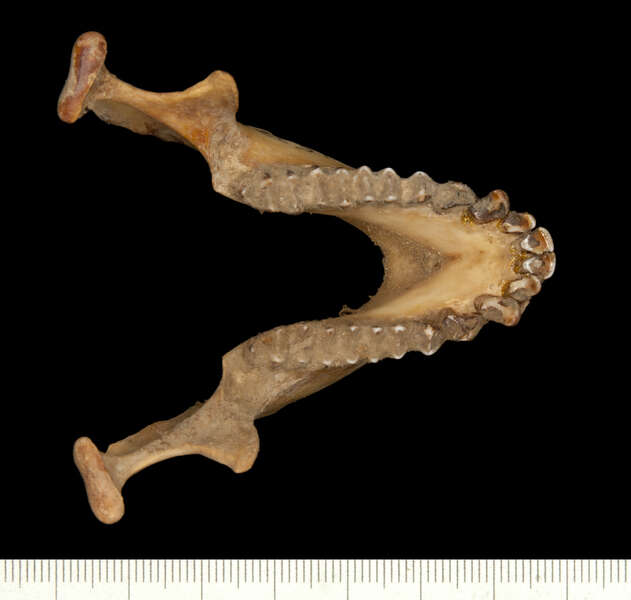
Encyclopedia of Life · EOL (see source)
Species
Die Roten Stummelaffen (Piliocolobus) sind eine Primatengattung aus der Gruppe der Stummelaffen innerhalb der Familie der Meerkatzenverwandten (Cercopithecidae). Inhaltsverzeichnis 1 Beschreibung 2 Verbreitung und Lebensraum 3 Lebensweise 4 Fortpflanzung 5 Bedrohung 6 Systematik 7 Literatur 8 Einzelnachweise 9 Weblinks Beschreibung Rote Stummelaffen haben meist ein schwarzes oder braunes Rückenfell, die Arme, Beine und der Kopf sind rot oder gräulich. Die Unterseite ihres Körpers ist rötlichgelb bis grau oder weiß. Manche Arten haben weiße Haare um den Kopf herum. Die Weibchen sind kleiner als die Männchen, sehen aber im Übrigen gleich aus. Wie alle Stummelaffen sind sie durch den fehlenden Daumen charakterisiert, was eine Anpassung an die baumbewohnende Lebensweise darstellt. Die Tiere erreichen eine Kopfrumpflänge von 45 bis 67 Zentimeter, der Schwanz wird 52 bis 80 Zentimeter lang, und ihr Gewicht beträgt 5 bis 11 Kilogramm. Verbreitung und Lebensraum Rote Stummelaffen sind im mittleren Afrika verbreitet, ihr Verbreitungsgebiet reicht vom Senegal über die Demokratische Republik Kongo bis Tansania. Ihr Habitat sind Regen- und Sumpfwald, manchmal auch baumbestandene Savannen, meis
via
Wikidata facts
Show 5 more facts
- taxon name
- Piliocolobus
- Commons category
- Piliocolobus
- taxon rank
- genus
- topic's main category
- Category:Piliocolobus
- taxon common name
- rdeči kolob
Sources (2)
via Wikidata · CC0
~7 min read
Encyclopedic overview
Red colobuses are Old World monkeys of the genus Piliocolobus. It was formerly considered a subgenus within the genus Procolobus, which is now restricted to the olive colobus. They are closely related to the black-and-white colobus monkeys (genus Colobus), and some species are often found in groups with the blue monkey. The western red colobus is frequently hunted by the common chimpanzee.
The members of this genus are found in western, central and eastern Africa, and the species have largely allo- or parapatric distributions. They are primarily arboreal and most are restricted to humid forests, but the Zanzibar red colobus prefers coastal thickets and scrub. Red colobuses are highly sensitive to hunting and habitat destruction, and have been referred to as probably the most threatened taxonomic group of primates in Africa. If following the taxonomic treatment advocated in Mammal Species of the World, all species except the Udzungwa, Semliki, Oustalet's and Thollon's red colobus monkeys (which are vulnerable) are assessed by the IUCN as endangered or critically endangered. Due to this sensitivity, it has been argued that they are indicator species for the health of Africa's tropical forests, leading researchers to urge that they be conserved as umbrella species.
Excerpted from Wikipedia’s “Red colobus” article, available under the CC BY-SA 4.0 licence.