repairability
Sign in to savethumb|right|The creation of products that can be repaired, and reduce prices for sustainable products is widely supported by European, American and Chinese respondents in the 2020–2021 European Investment Bank Climate Survey. Repairability is a measure of the degree to and ease with which a product can be repaired and maintained, usually by end consumers. Repairable products are put in contrast to obsolescence or products designed with planned obsolescence.
Described at
Repairability - iFixit
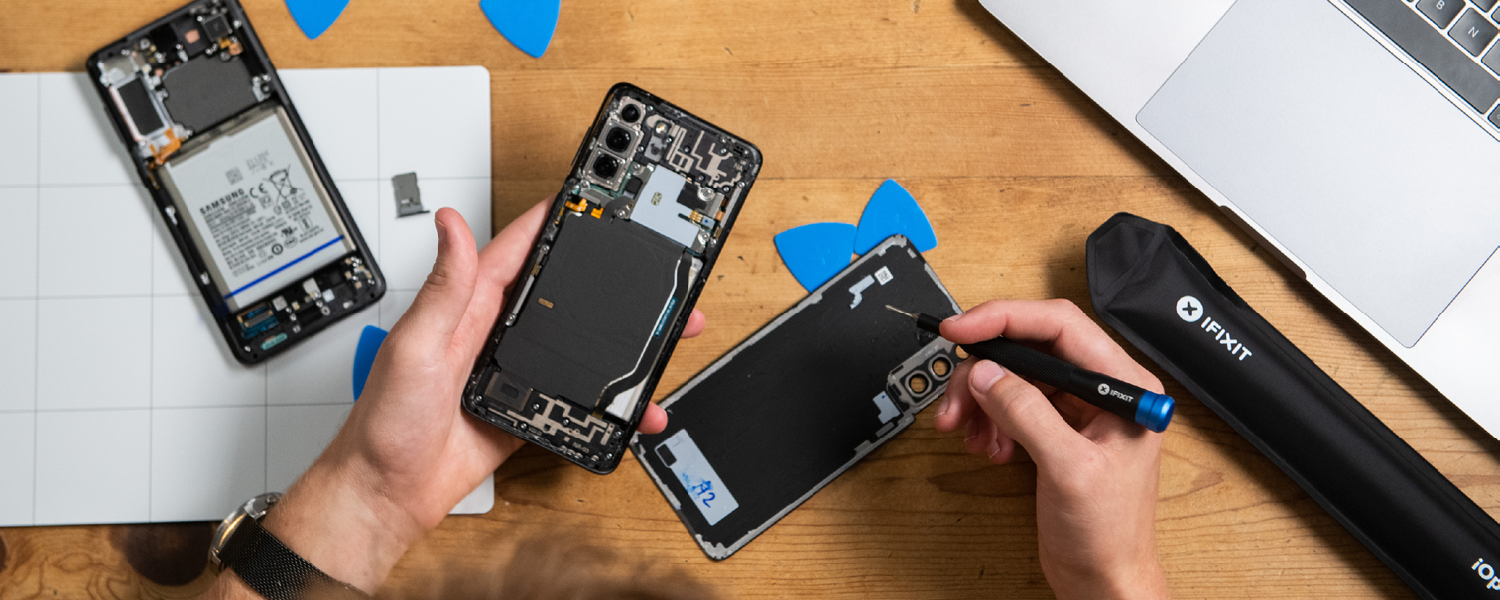
Repairability means making it possible—and ideally easy—to repair a product. A repairable product is designed with disassembly in mind.
ifixit.com →Repairability means making it possible—and ideally easy—to repair a product. A repairable product is designed with disassembly in mind (it should be easy to take apart and put back together). It must also have parts, tools, service documentation, and software available, as well as no artificial barriers to repair such as parts pairing. Together, these aspects make up the repair ecosystem. France now requires that electronics manufacturers put a repairability score at the point of sale. The vast majority of French consumers say they would give up their favorite brand for a more repairable one. Microsoft found that repairing a product creates far less waste and 89% reduced greenhouse gas emissions compared to replacing it. The majority of Americans think that consumers don’t have enough options for getting things repaired, a Consumer Reports survey found. Americans could save $49.6 billion annually by repairing rather than replacing some common household products. Offering DIY repair solutions provides circular economy business models. Say no to cheap, breakable stuff and support companies that make quality products. You’ll save more in the long term when you spend a bit more on a product that will last three times longer. Patagonia, for example, will repair any product you buy from them. Fairphone designed a smartphone that you can upgrade yourself . And Vaude bags come with repair instructions . Repair isn’t just good for consumers—it offers great benefits to businesses, too. Many companies embrace DIY repair. They know that people who fix their stuff are dedicated customers. Providing the information and tools needed to fix products cuts down on support costs. Customers love it when they can get their stuff fixed quickly—whether by themselves or at a local repair shop. Sometimes manufacturers use proprietary screws, requiring drivers only available to their own repair techs—like Apple’s pentalobe and Jura’s oval . Sometimes designers make opening a product destructive. The original Microsoft Surface laptop had a felt case that had to be cut open and spot welds underneath that (newer models are much better!). Repairability isn’t just about design—it’s about the whole ecosystem. If people can’t get access to parts, tools, documentation, or software, they can’t finish a repair. A study of repair behavior named the unavailability of parts, tools, and manuals as three of the main reasons for unsuccessful repairs. Even if a product can physically be repaired, too many products have additional software barriers to repair . Nearly half of iPhone parts today are paired, meaning that you need special manufacturer-only software to repair them without errors. A truly repairable product doesn’t have software limitations like this. iFixit is working on both sides of the table, supporting legislation to enforce Right to Repair initiatives and help manufacturers make repairable products . Who fixes stuff? Find out more about the iFixit community . Like documentaries? Want to hear more about planned obsolescence? Check out The Light Bulb Conspiracy . Explore the iFixit blog for repair stories and news. Understand the goal: iFixit’s Gold Standard of Repair . Buy durable products—look for lifetime warranties and products that come with repair manuals. Help us write open-source repair manuals for everything. Join the Right to Repair Movement Are you a manufacturer? Get support building your repair ecosystem.
Excerpt from a page describing this subject · 15,808 chars · not written by Vinony
~4 min read
Encyclopedic overview
7 sectionsContents
- French repairability index
- Limitations
- Effects
- Notable score
- See also
- References
- External links
thumb|right|The creation of products that can be repaired, and reduce prices for sustainable products is widely supported by European, American and Chinese respondents in the 2020–2021 European Investment Bank Climate Survey. Repairability is a measure of the degree to and ease with which a product can be repaired and maintained, usually by end consumers. Repairable products are put in contrast to obsolescence or products designed with planned obsolescence.
Some private organizations and companies, mostly affiliated with the right to repair movement, assign repairability scores to products as a way of communicating to consumers how easily repairable the product is.
Excerpted from Wikipedia’s “repairability” article, available under the CC BY-SA 4.0 licence.