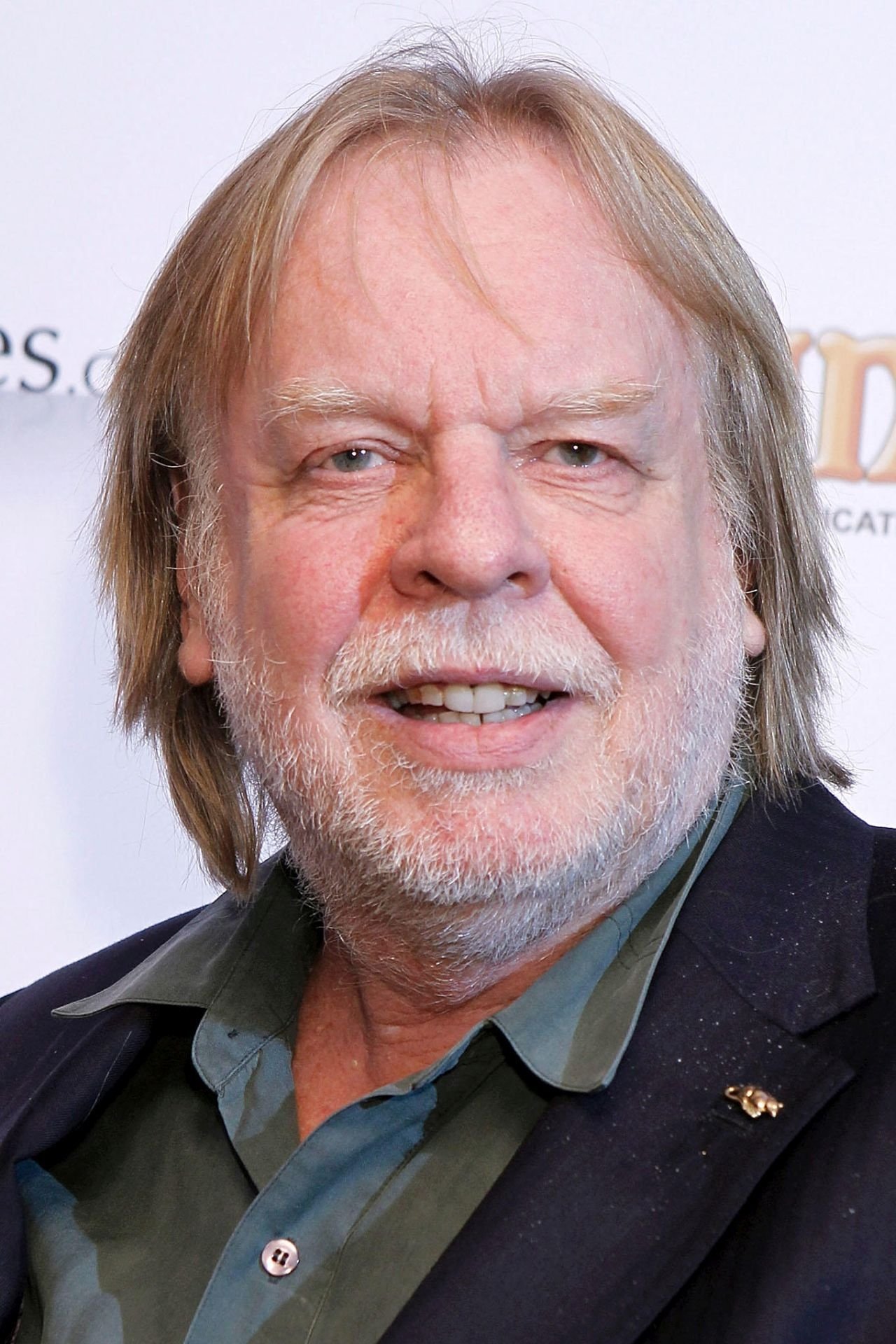
Profile via TMDB · Courtesy of TMDB
Rick Wakeman
Sign in to saveAlso known as Richard Christopher Wakeman, Richard Wakeman
English keyboardist
OverviewAI-generated
Rick Wakeman is a British composer, keyboardist, songwriter, and pianist born in Perivale, London, England, on May 18, 1949. He is a member of the bands Yes, Strawbs, Anderson Bruford Wakeman Howe, and Warhorse. His musical work spans progressive rock, classical music, hard rock, and ambient music. He has recorded for labels including A&M Records, Charisma, Voiceprint Records, and EMI Classics.
Wakeman was educated at the Royal College of Music and began his professional work period in 1969. He performs on the pipe organ, piano, Hammond organ, and mellotron. He is the father of Adam Wakeman and Oliver Wakeman and is a relative of Alan Wakeman. He supports the sports team SSC Napoli and is represented by PRS for Music.
He has authored seven works, including *Grumpy Old Rock Star And Other Wondrous Stories* and *Say Yes*. His music is also categorized under new age and piano rock genres.
Synthesized by Vinony from 39 facts across 7 sources: Wikidata, Open Library, Crossref, MusicBrainz, Last.fm, TMDb, Vinony graph. Generated from structured data (not the Wikipedia text) and checked against those facts — may still contain errors.
Person · Open Library
- Works
- 7
Top works
- Grumpy Old Rock Star And Other Wondrous Stories
- Grumpy Old Rock Star And Other Wondrous Stories
- And other wondrous stories
- Say Yes
- Further Adventures of a Grumpy Old Rock Star
via Open Library + Wikidata
Film & TV
Perivale, London, England
From Wikipedia, the free encyclopedia. Richard Christopher Wakeman (born 18 May 1949) is an English keyboard player, composer and songwriter best known for being the former keyboardist in the progressive rock band Yes. He is also known for his solo albums, contributing to the BBC comedy series Grumpy Old Men and for Rick's Place, his former radio show on Planet Rock that aired until December…
Known for
- Rick Wakeman: The Return of the Caped Crusader Part 2 — Self2025
- David Bowie: London Boy — Self2021
- Rick Wakeman - Live Portraits2019
- David Bowie: Finding Fame — Self2019
- Yes - Live at the Apollo — Keyboards2018
- BowieNext - Nascita di una galassia2018
- Beside Bowie - The Mick Ronson Story — Self2017
- When Pop Went Epic: The Crazy World of the Concept Album — Self - Presenter2016
- Tales from the Tour Bus: Rock 'n' Roll on the Road — Self - Presenter2015
- Rick Wakeman on Vivaldi's Four Seasons2015
via TMDB
Music · MusicBrainz
- Type
- Person
- Gender
- Male
- Origin
- United Kingdom
- Active from
- 1949-05-18
Discography
Member of
- Strawbs1970–1971
- Yes1971–1974
- The English Rock Ensemblesince 1974
- Yes1976–1979
- Anderson Bruford Wakeman Howe1988–1990
- Yes1990–1992
- Yes1996–1997
- Yes2002–2004
- The “Just a Minute” Team2011–2011
- Yes featuring Jon Anderson, Trevor Rabin, Rick Wakeman
- The Crowd
- Dib Cochran & The Earwigs
via MusicBrainz · CC0
Listeners · Last.fm
- Listeners
- 229,372
- Total plays
- 3,208,056
Tags
Richard Christopher Wakeman (born 18 May 1949 in Perivale, London) is an English keyboard player best known as the keyboardist for progressive rock group Yes. Originally a classically trained pianist, he was a pioneer in the use of electronic keyboards and in the use of a rock band in combination with orchestra and choir. He purchased his first electronic keyboard, a Minimoog, from the actor Jack Wild. Wakeman was able to buy it for half the regular selling price because Wild thought it did not
Key facts
- Born
- Richard Christopher Wakeman , ( 1949-05-18 ) 18 May 1949 (age 77) , Perivale , Middlesex , England
- Occupations
- Keyboardist songwriter producer television and radio presenter author
- Years active
- 1969–present
- Children
- 6, including Oliver and Adam
- Genres
- Progressive rock classical ambient new-age Christian instrumental rock
- Instrument
- Keyboards
- Labels
- A&M Charisma Moon Griffin President Coda Stylus Ambient Asaph Hope Music Fusion Castle Communications Pinnacle RPM EMI Voiceprint Legends Classic Pictures Eagle Gonzo Universal Music Group Sony Classical R&D Madfish
- Formerly of
- The Strawbs Yes Anderson Bruford Wakeman Howe Yes Featuring Jon Anderson, Trevor Rabin, Rick Wakeman
- Website
- rwcc .com
via Wikipedia infobox
Wikidata facts
- Instance of
- human
- Given name
- Richard
- Gender
- male
- Citizenship
- United Kingdom
- Place of birth
- Perivale
- Occupation
- session musician
- Languages spoken
- English language
- Genre
- Christian music
- Instrument
- harpsichord
- Official website
- www.rwcc.com
- Image
- Rick Wakeman - July 2017 (cropped).jpg
Show 9 more facts
- Commons category
- Rick Wakeman
- date of birth
- 1949-05-18
- member of
- Freemasonry
- relative
- Alan Wakeman
- start of work period
- 1969-00-00
- social media followers
- 92600
- name in native language
- Rick Wakeman
- copyright representative
- PRS for Music
- supported sports team
- SSC Napoli
Sources (3)
via Wikidata · CC0
~40 min read
Encyclopedic overview
Richard Christopher Wakeman (born 18 May 1949) is an English keyboardist and composer best known for his multiple tenures in the progressive rock band Yes and for his prolific solo career, which has spanned six decades. His most successful and acclaimed albums are his first three progressive rock concept albums–The Six Wives of Henry VIII (1973), the UK number-one Journey to the Centre of the Earth (1974), and The Myths and Legends of King Arthur and the Knights of the Round Table (1975). AllMusic describes Wakeman as a "classically trained keyboardist extraordinaire who plied his trade with Yes and developed his own brand of live spectacular in a solo act."
Born and raised in West London, Wakeman intended to become a concert pianist but quit the Royal College of Music in 1969 and became a sought after session musician. Amongst the estimated 2,000 sessions he did, he played on "Space Oddity" and "Life on Mars?" for David Bowie, "Morning Has Broken" by Cat Stevens, and on tracks for Elton John, Marc Bolan, and Lou Reed. After a brief stint in the folk rock group Strawbs, during which he received national press attention, he joined Yes in 1971, playing on seminal albums such as Fragile (1971), Close to the Edge (1972) and Tales From Topographic Oceans (1973). His technical virtuosity on keyboards such as the Hammond organ, Moog synthesizer, and Mellotron, combined with his flamboyant stage presence and trademark capes, made him an iconic figure in 1970s progressive rock. In 1974, he formed his touring and recording band, the English Rock Ensemble, and in the following year, expanded into soundtrack work for Ken Russell's feature film Lisztomania (1975).
Excerpted from Wikipedia’s “Rick Wakeman” article, available under the CC BY-SA 4.0 licence.