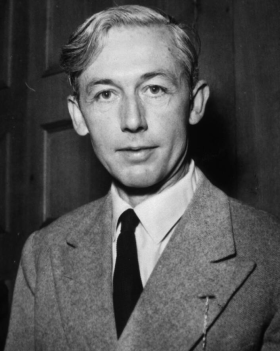
File:Robert_Bresson.png · Wikimedia Commons · See Wikimedia Commons
Robert Bresson
Sign in to saveFrench film director (1901–1999)
Robert Bresson was a French film director (1901–1999) known for developing a distinctive cinematic style that influenced generations of filmmakers. His work matters because he pioneered innovative approaches to filmmaking that became foundational to modern cinema.
AI-generated from the Wikipedia summary — may contain errors.
Wikidata facts
- Instance of
- human
- Given name
- Robert
- Gender
- male
- Citizenship
- France
- Place of birth
- Bromont-Lamothe
- Place of death
- Paris
- Occupation
- director
- Educated at
- Lycée Lakanal
- Languages spoken
- French
- Religion
- Catholicism
- Award
- René Clair Award
Show 11 more facts
- date of birth
- 1901-09-25
- date of death
- 1999-12-18
- birth name
- Robert Bresson
- start of work period
- 1926-00-00
- manner of death
- natural causes
- name in native language
- Robert Bresson
- related category
- Category:Films directed by Robert Bresson
- Commons category
- Robert Bresson
- topic has template
- Template:Robert Bresson
- end of work period
- 1996-00-00
Sources (6)
via Wikidata · CC0
~21 min read
Encyclopedic overview
Robert Bresson ( French: [ʁɔbɛʁ bʁɛsɔ̃]; 25 September 1901 – 18 December 1999) was a French filmmaker. Known for his ascetic approach, Bresson made a notable contribution to the art of cinema; his non-professional actors, ellipses, and sparse use of scoring have led his works to be regarded as preeminent examples of minimalist film. Much of his work is known for being tragic in story and nature.
Bresson is among the most highly regarded filmmakers of all time. He has the highest number of films (seven) that made the 2012 Sight and Sound critics' poll of the Greatest Films of All Time. His works A Man Escaped (1956), Pickpocket (1959) and Au hasard Balthazar (1966) were ranked among the top 100, and other films like Mouchette (1967) and L'Argent (1983) also received many votes. Jean-Luc Godard once wrote, "He is the French cinema, as Dostoevsky is the Russian novel and Mozart is German music."
Excerpted from Wikipedia’s “Robert Bresson” article, available under the CC BY-SA 4.0 licence.